Archive for alumina
You are browsing the archives of alumina.
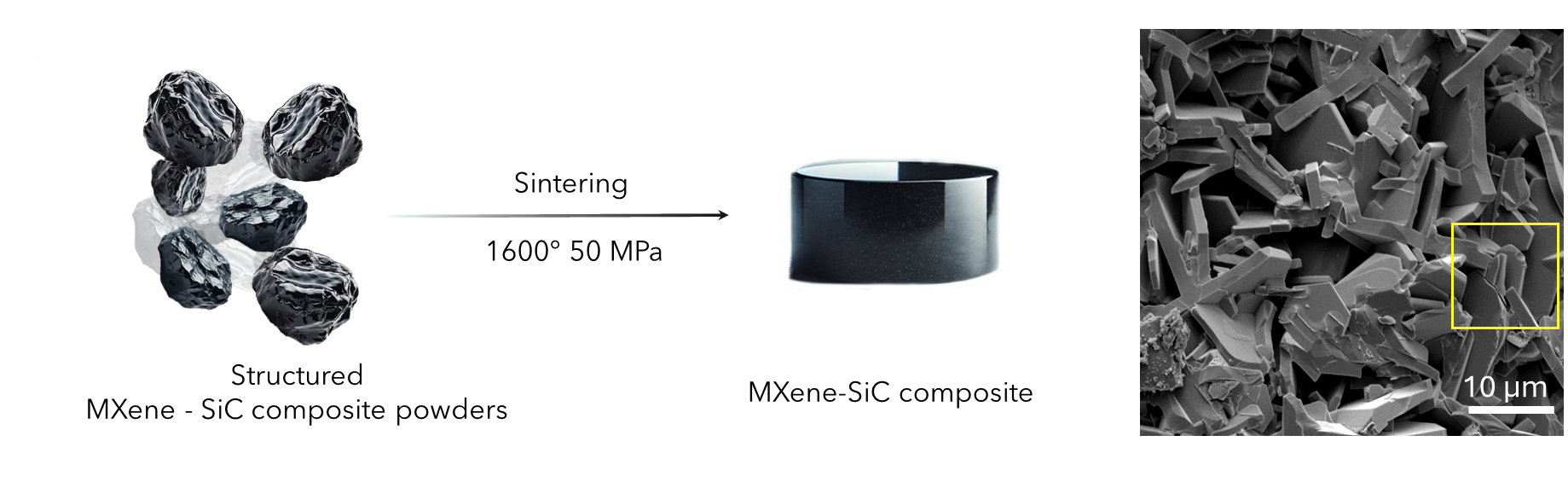
Scanning electron micrograph of a partially agglomerated suspension of alumina particles, which have been directionally freeze-cast resulting in large alumina agglomerates laced with a fine freeze-cast structure. Credit: Materials Science and Engineering, University of Washington.
As far as we know, William Shakespeare was not a ceramist, but ceramists can be writers!
In fact, most are, whether it is to write lab reports, progress reports, journal articles, memos, theses, PowerPoint presentations, résumés, product descriptions, proposals, performance reviews … ad infinitim.
So why not hone those skills and release your inner Shakespeare by participating in the “Ceramics-in-Writing” contest sponsored by the President’s Council of Student Advisors?
Students are invited to submit an original work of creative writing, 250 words or less, inspired by the micrograph pictured above to ceramicsinwriting@ceramics.org.
As with any contest, there is a prize! Here’s your chance to win an ACerS polo shirt, and the winning entry will be published in the June/July issue of the ACerS Bulletin.
Entries are due by March 29, 2013, by 5 pm PST.
Global bauxite production. Asian supply has grown from 16 percent to 45 percent over the last decade. Credit: Roskill.
In what is probably good news for refractory ceramics producers, a new report from a UK-based market research company, Roskill, says that alumina refining and bauxite production have caught up—at least temporarily—with the disrupting surge in demand from Asia, particularly China, for feedstock for the aluminum industry.
China’s enormous appetite for bauxite and alumina has been a game-changer for at least the past five years, and with that demand, the market responded with higher prices in the 2007-09 period. Unfortunately for United States refractory makers, this was also the same timeframe in which they were just starting to benefit from more demand for their products from the steel industry. This effectively put a big squeeze on their profits.
Times changed, however, and the economic turbulence of the last half-decade eased some of the supply–demand issues. Demand particularly tapered in the West, though, according to Roskill, demand has remained fairly strong in China (in addition to big buying from businesses India and the Middle East).
But the lull in demand provided enough breathing space for bauxite producers to expand capacity. China, Indonesia and India have joined Australia as major producers (and Asia now accounts for 45 percent of global supply, compared with 16 percent a decade ago, reports Roskill).
Roskill says, “Global alumina production increased from 80 million tons to 96 million tons between 2007 and 2011, with most of the supply increase from China, which is now the largest producer. More refinery capacity is planned over the next three years, with another 14 million tons in China alone.” New production projects also are underway in Australia, Guinea, Ghana, Indonesia and Fiji.”
If all of the planned production comes online in the next three years, Roskill predicts that the market effectively shifts to an oversupplied state—at least in the short term.
Some of the above doesn’t necessarily impact refractory makers, who generally fret over the prices and supply stabilities of calcined bauxites. There tends to be fewer producers for this market. But, according to Roskill, “[N]ew sources of supply and expansions in Guyana and Brazil may ease fears of future shortages going forward.” The report also notes, “European supply of non-metallurgical bauxites has increased over the last five years, mainly through growing production in Greece, Turkey and Russia.”
Of course, the demand for refractory grade bauxite will continue to be connected mainly to the ups and downs of the iron and steel industry, but Roskill predicts that the shale gas/oil industry’s demand for proppants will also have a larger influence over supplies and prices than in previous periods.
Roskill’s website currently offers a discount of 15 percent for the entire report, but inquire first about this as this may have only applied to advanced-sales orders. Also, despite some conflicting information on some of Roskill’s web pages, the final version of the company’s report now available.
Here is what we are hearing:
Netzsch to supply SpaceX’s thermal analysis lab
Netzsch Instruments North America LLC is proud to announce that it is currently the sole supplier to Space Exploration Technologies Corp. (SpaceX) of high temperature thermal analysis instruments used to characterize material properties for space applications. SpaceX was founded in 2002 by Elon Musk to revolutionize space transportation, with the ultimate goal of enabling people to live on other planets. Netzsch’s instruments will be used to fine tune properties of existing materials and to develop new materials for use in the demanding, harsh environments of space. The ability of Netzsch to custom engineer and modify the instruments to meet SpaceX’s requirements was a key factor in their choice of vendors. Mission critical material will be developed, tested and modeled using data from Netzsch’s Thermokinetics software. Netzsch instruments also will be used to measure basic material properties along with other thermophysical properties. Some of these properties will include 1st, 2nd and 3rd order transitions, coefficient of thermal expansion and contraction, modulus, energy adsorption dampening, heat capacity, thermal diffusivity, thermal conductivity along with software and heat transfer data to model and build heat management systems.
Visiongain: Global ceramic coatings market to be worth $5.98B in 2013
Visiongain, a business market research group based in London, has issued an analysis that indicates that the global ceramic coatings market will reach a value of $5.98 billion in 2013, as emerging market demand for various consumer items indirectly increases demand for ceramic coatings, and as the need for cost-effective solutions for ceramic coatings to improve productivity and efficiency of machining equipment grows in importance. The ceramic coatings market is therefore forecast by Visiongain to record solid growth over the next decade, as ceramic coatings become more popular. The company also noted that ceramic coatings are in demand in the developed world, where they are increasingly used to improve efficiency and productivity, and strengthen parts, delivering cost-savings.
Sage files patent infringement lawsuit in U.S. District Court against View Inc.
Sage Electrochromics Inc., a world leader in the development and manufacture of dynamic glass, located in Faribault, Minn., has announced it has filed a lawsuit in U.S. District Court, Northern District of California, against View, Inc. (formerly Soladigm, Inc.) of Milpitas, Calif. “We filed this lawsuit to enforce our patented intellectual property that protects our substantial investment in developing our pioneering, game-changing dynamic glass technology” The nature of the lawsuit is a complaint for patent infringement involving U.S. Patent #5,724,177 entitled “Electrochromic Devices and Methods” and U.S. Patent #7,372,610 entitled “Electrochromic Devices and Methods.” Sage is seeking damages and injunctive relief to prevent View Inc. from continuing to infringe on Sage’s intellectual property. “We have worked for more than twenty years to bring our patented electrochromic glass to market, ” says John Van Dine, CEO, founder of Sage, and coinventor of the ‘177 patent. “Our hundreds of installed projects and delighted customers validate our research and intellectual property. We believe we will prevail in this important case. We look forward to continuing our long heritage of bringing innovations in dynamic glass to our global clients.”
MTC announces extensive range of mastics for maintenance and hot spot repair
Morgan Thermal Ceramics announces the availability of an extensive range of pumpable mastics, ideal for maintenance and repair of hot spots in the power generation industry. Complementing a full line of fiber and refractory insulation products, the Mastics range includes pumpables and moldables. Hot spot repair pumpables are designed for injection filling of refractory joints and cracks, even while the boilers are in operation. Rather than shutting down the furnace and idling it for days or weeks until the temperature cools, resulting in potentially costly downtime, pumpable wet fiber technology can be used to make repairs within hours. Designed for pumping into voids caused by deteriorated insulation, grouting cracks and gaps in refractory linings, these pumpable products are ideal for providing quick and easy re-insulation behind boiler tubes in sidewalls, seals and floors, as well as repairs of ovens, furnaces and process equipment.
Orbite Aluminae Inc. named as national winner of Canada’s 2012 new technology awards
Canadian Manufacturers & Exporters, in collaboration with the National Research Council of Canada Industrial Research Assistance Program, recognize Orbite Aluminae Inc., based in Montréal, Québec, as national winner of the 2012 Regional Awards for New Technology. Orbite is a Canadian cleantech company whose innovative technologies are setting the new standard for alumina production. Orbite technologies enable environmentally neutral extraction of smelter-grade alumina, high-purity alumina and high-value elements, including rare earths and rare metals, from a variety of sources such as aluminous clay and bauxite, without generating toxic red mud residue. Orbite’s operations have a negligible environmental impact compared to the conventional process of extracting alumina from bauxite. The Orbite process of producing metallurgical-grade alumina involves crushing and then acid leaching the aluminous claystone found at the company’s Grande-Vallée property. Orbite’s unique technology consumes less energy and generates less pollution then and no caustic by-products. The award recognizes innovative excellence in the development, adoption, and application of new technology in process or products.
Cabot Aerogel introduces industrial insulation blanket for high temp applications
Cabot Corporation announces that it has developed the Aeroclad blanket, a flexible high-temperature insulation material formed by integrating Cabot’s silica aerogel within a non-woven, inorganic fiber batting. The Aeroclad blanket delivers a dust free, flexible wrap that takes advantage of the superior thermal insulation performance and hydrophobic nature of aerogel. Cabot has created this new aerogel blanket product with exceptional corrosion-under-insulation (CUI) characteristics, and without dust, to significantly outperform the currently available competing products. The blanket can be field-modified and easily installed for use in a wide range of industrial applications such as pipelines, refineries, steam lines, tanks, and other equipment. Aeroclad insulation delivers more than twice the thermal insulation protection compared to conventional high temperature insulation materials such as mineral wool, calcium silicate, and fiberglass. The blanket also offers significantly lower water retention and faster drying, minimizing the potential for CUI.
The inaugural conference of the newly minted International Bauxite, Alumina & Aluminium Society recently concluded in Nagpur, India, and several apparently noteworthy developments came out of that meeting.
The IBAAS, from what I recall, is new and was established earlier this year. The group’s website indicates that it was launched with a particular focus on supporting businesses and research in Asia. IBAAS notes the competitive and regulatory challenges to the field that underlined the society’s formation:
“The bauxite, alumina and aluminium industry is developing at a fairly good pace in the world and spectacular growth is visible in China, India and Brazil. Several other countries like Vietnam, Saudi Arabia, Indonesia and Guinea are proposing to invest huge amounts into development of the vast resources of Bauxite.
While the downstream industry is facing the challenge of technology upgradation and high investment costs, the upstream industry is constantly under the threat of ever-changing regulatory laws with respect to mining, social development and technology, besides the need for a huge investment in infrastructure for the mining, refining and smelting operations.
It is strongly felt that an organization is specifically needed to focus on these issues and work in the field of bauxite geology, mining, beneficiation, alumina refining and aluminum smelting technology particularly in Asian region. A group of leading scientists, engineers, managers and experts in this line have set up a registered society IBAAS to promote this industry in this part of the world.”
IBAAS says it is initially giving special attention to India, China, Vietnam, Saudi Arabia and UAE, and hopes eventually to expand to the BRIC nations.
The group’s first meeting, held with support from over 70 institutions and businesses (including many known well in the ceramics community, such as Ace Calderys, Almatis, Aluchem, Bharat Heavy Electrical Ltd., Central Glass & Ceramic Research Institute, IFGL Bioceramics Ltd., Jyoti Ceramics, Panalytical, Rio Tinto, Saint Gobain, SKG Refractories and The Indian Ceramic Society) was cosponsored by the Jawaharlal Nehru Aluminium Research Development and Design Centre, and was held December 3-5.
Besides technical papers in scientific sessions, the conference had special sessions on “processing innovations in aluminum ceramics” and “new and emerging application of alumina ceramics.” The meeting seems to have gotten quite a bit of publicity in India, and the Times of India reported that the symposium also served as a platform for researchers and industry “to work out plans for metallurgical bauxite and special alumina products.”
Now, it’s hard to report on a conference such as this from afar, but several developments announced at the meeting are worth noting.
The first comes from the Central Glass and Ceramic Research Institute, which says it has developed a process to convert extremely inferior grade bauxite into refractory grade bauxite. CGCRI says its process removes impurities, such as calcium oxide, titanium oxide and iron oxide, from bauxite. The institute says it uses certain natural materials that selectively absorb these impurities and effectively increases the melting point to 1,600°C.
In an interview with the Times, CGCRI’s Anup Ghosh says, “We have converted the low-melting-point phase bauxite into high-temperature phase. This can be used even in steel melting process.” Institute leaders report that they have received industrial support to scale up the technology to at least one-ton capacity. One clear goal is to help India’s industries reduce the amount of refractory-grade bauxite it must import from China and other countries.
Separately, CGCRI also announced that it has succeeded in using “extremely inferior grade” bauxite to make extremely hard ceramic tiles. “The hardness has been brought by blending other industrial wastes like fly ash and iron ore tailings to make the new ceramic. It can be used as a lining in hoppers and chutes used in steel plants and coal washeries. It helps prevent corrosion and abrasion,” Swapan Kumar Das, chief scientist at refractories division in CGCRI, explains to the newspaper.
CGCRI has a history of working with alumina and also been active in researching its use in bioceramic applications, ceramic membranes and coated ceramic tubing.
Another meeting development drew considerable interest, if for no other reason than it may avoid some of the bauxite shortage and price jumps that have plagued the worldwide refractory industry in recent years. A Canadian company, Orbite Aluminae Inc., announced at the IBAAS conference that it has pioneered an unconventional source of alumina for the efficient production of aluminum. Again according to a story in the Times, OAI says that instead of using bauxite, it can efficiently use aluminous clay or clay rich in alumina and silica to produce extremely pure alumina. The company says its methods also are environmentally friendly.
The Times piece used words like “new” and “revolutionary” to describe OLI’s technology. I am not too convinced that it is new, and the company admits that much of its proprietary process builds on work done in 2004-2007. Also, it is probably much too early to judge whether it delivers a revolution. Nevertheless, OLI says it succeeded for the first time in achieving a one-ton-per-day production rate of purified alumina in early 2011. That was apparently on a prototype-production basis, but the company says that it will launch a one-ton-per-day plant in January 2013 in Quebec. OLI says this alumina initially will be used in LED production, not aluminum.
Besides bauxite, OLI says it can process red mud and fly ash, and brags that the method also generates rare earth elements. The company says its vision is to build high-purity alumina plants across North America. It hopes to start producing smelter-grade alumina by 2015 and eventually to have ten plants in Quebec alone. If all of this works out, there should be a lot of happy alumina consumers.
But, regardless of how these reported developments pan out, reading about them has been fun. The field of refractory ceramics tends to be unfairly pigeonholed as a stodgy field, so I find the enthusiasm and innovations platformed at the IBAAS sessions refreshing.
Here is what we are hearing:
Harper contracts with Orbite Aluminae for revolutionary high-purity alumina processing systems
Harper International, world leader in thermal processing solutions for advanced materials, announced a new project with Orbite Aluminae Inc. for two high temperature systems in series for conversion of aluminum chloride. Orbite conducted on-site testing at Harper’s Technology Research Center in exploration of the best furnace design to support the 99.99+ percent purity goal of their game-changing technology. The resulting two systems include a rotary furnace for removing volatiles (calcination) and a higher temperature vertical furnace for phase transformation. Orbite’s material loses 80 percent mass as hydrochloric acid and water during the processing. In consideration of the corrosive by-products and high purity requirement, the first system is designed with a quartz tube and the second system has an alumina tube as the contact surface with the powder.
President Tetsuo Kuba fulfilling his mission at Kyocera
(Barrons) Three years ago, with Kyocera reeling, President Tetsuo Kuba vowed to make it stronger and bigger. He’s done just that, leading bulls to predict at least 30% more upside in its stock.When Tetsuo Kuba was promoted to president of Kyocera in April 2009, the Japanese company was marking its 50th anniversary year, but had little to celebrate. Battered by the global recession and the financial crisis, most of its main product lines-ceramic and semiconductor components, electronic devices, solar panels, copiers, and cellphones-were struggling. Profits were plummeting, and the outlook was grim. Recalls the now 59-year-old executive: “Those were rough times, but I felt like I was on some kind of divine mission to make sure that Kyocera not only survived, but moved up to a new level.” (sub. req’d)
3M anti-soiling technology helps increase power output in photovoltaic modules
3M will introduce an innovative new coating for photovoltaic modules and concentrated solar power mirrors at Solar Power International, September 10-13 in Orlando, Fla. 3MTM Anti-Soiling Liquid is an easy-to-apply coating designed for aftermarket use that helps solar modules stay cleaner, longer. The product significantly reduces dry dust accumulation that often occurs on sun-facing surfaces. This helps increase light transmission to the photovoltaic cells and improve overall power output. Data has shown that modules coated with the 3M Anti-Soiling Liquid generate five to ten percent more energy than uncoated modules.
Facades will be an important topic at glasstec 2012
Large-format glass facades are a striking element of modern architecture all over the world. They do not only create maximum transparency but also assume diverse functions to guarantee the building’s energy efficiency and utility convenience. At glasstec 2012, the leading international trade fair for the glass industry (to be held from October 23 - 26, 2012 in Düsseldorf, Germany), the glass facades topic will therefore play a key role and be an important element in several special presentations. The central contact point for all those interested in facades will be Hall 11 - the location of the “facades center” with the “competence center glass, window, facade” and the “glass technology live” special show.
Netzsch acquires Bruker’s Thermal Analysis Instruments business in Japan
The Netzsch Analyzing & Testing division and Bruker Corporation has acquired Bruker’s Thermal Analysis instruments business in Japan. Together with the international Netzsch group, Netzsch Japan will further develop, produce, distribute and service the existing and new thermal analysis product lines. Financial details of the transaction were not disclosed. In Japan, Netzsch was previously distributing its thermal analysis instruments via Bruker AXS K.K., headquartered in Yokohama. Japan is viewed as one of the most important markets for high-performance thermal analysis instrumentation because of their being one of the leading countries in top level materials research and development.
National Science Foundation Awards YSU $445,000
The National Science Foundation has awarded a grant in the amount of $444,555 to Youngstown State University for the acquisition of a variable scanning electron microscope, U.S. Rep. Tim Ryan, D-Niles, announced Friday. The equipment will be integrated into undergraduate and graduate programs and be used by hundreds of students at YSU and partner institutions, the congressman said, and be used to train students in science, technology, engineering and math curricula. Partner institutions include Westminster College, Eastern Gateway Community College, Poland Seminary High School and LaBrae High School, Trumbull Career & Technical Center and Mahoning Valley Historical Society.