Archive for NIST
You are browsing the archives of NIST.
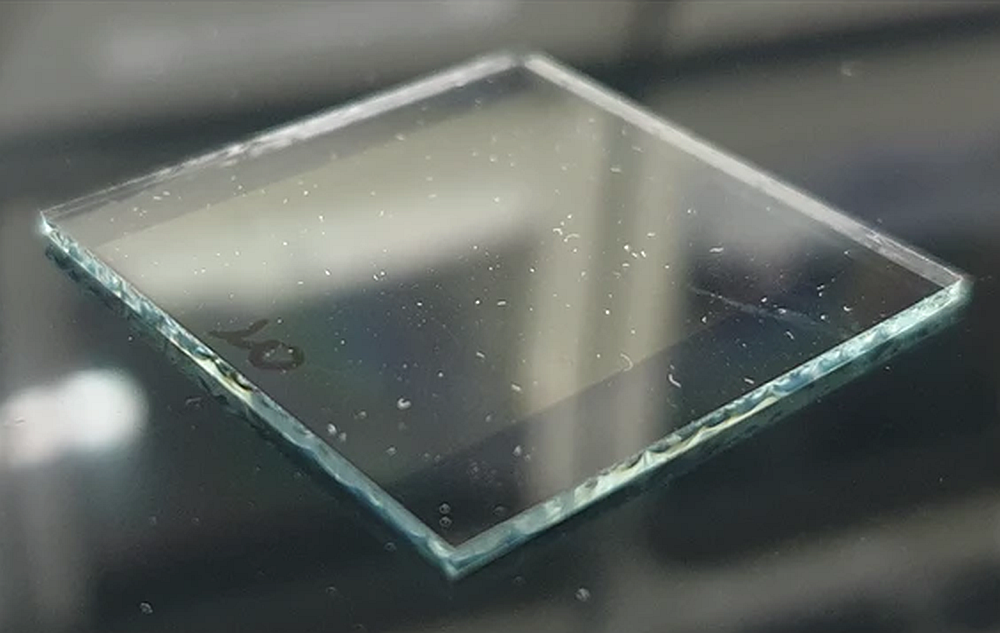
Micrograph of one strand of a new spray-on super-nanotube composite developed by the National Institute of Standards and Technology (NIST) and Kansas State University. A ceramic shell surrounds the multiwall nanotube core. The composite is a promising coating for laser power detectors. (Color added for clarity.) Credit: Kansas State University.
How does one measure the optical power output of lasers that are able to—and even designed to—destroy materials? Some lasers with optical output that high are built to be weapons; others are used for friendlier purposes like defusing unexploded landmines.
Designing a power detector that can capture and measure very high laser power without vaporizing away is one application of a new coating developed by researchers at Kansas State University and NIST. The team, led by Gurpreet Singh at KSU published results on a new carbon nanotube-ceramic composite coating in ACS Applied Materials and Interfaces, in their recent article, “Very high laser-damage threshold of polymer-derived Si(B)CN-carbon nanotube composite coatings.”
According to a NIST press release, NIST has been coating optical detectors with carbon nanotubes because their intense black color maximizes light absorption. This new coating comprises multiwall carbon nanotubes (MWCNT) encased in an amorphous SiBCN shell, as shown in the image above. Adding boron increases the refractoriness of the coating.
The KSU team developed the composite with an assist from the NIST researchers who suggested using toluene for both the preceramic polymer solvent and for the MWCNT dispersant. Singh explained in an email, “Toluene-CNT dispersions were more stable and homogeneous [than dispersions based on] chloroform, acetone, or water.” The NWCNTs are dispersed in toluene into which preceramic polymer is added. When the solution is heated to 1,100°C, an amorphous SiBCN shell forms over the MWCNTs. The composite is ground into a fine powder, dispersed in toluene, and sprayed onto copper substrates.
The optical power meter works by absorbing the high-intensity laser light on its inside surface, which is typically a copper cone calorimeter coated with a black absorbing material (for example, the new MWCNT-ceramic coating). It absorbs the incident light and converts it to heat. The heat transfers to water flowing behind the copper heat sink. By precisely measuring the water flow and temperature increase, the energy absorbed can be calculated. (See schematic of device.)
To test the efficacy of the composite coating, the team subjected it to 10.6-micrometer wavelength irradiation from a 2.5 kW CO2 laser. The composite coating outperformed other tested materials-MWCNT, single wall CNT, and carbon paint- by an order of magnitude or more. According to the paper’s abstract, the damage threshold for the composite coating was 15 kWcm-2 with an optical absorbance of 97 percent. Essentially, the coating absorbed all of the light.
In contrast, the MWCNT-only coating exhibited damage at 1.4 kWcm-2 with 76 percent absorbance. SWCNT broke down at 0.8 kWcm-2 and only 65 percent absorbance, and damage started in the carbon paint coating at 0.1 kWcm-2 and 87 percent absorbance.
According to the press release, the MWCNT component absorbs the irradiation and transmits the heat, while the ceramic shell provides oxidation and damage resistance. Apparently, though, under the right conditions, the outer shell oxidizes partially to form an external silica layer, which can be used to tune the coating depending on the application.
Singh said there are other possible applications for the MWCNT-ceramic coating, such as lithium-ion cycling. They are also looking into applications such as nanostructured coatings for protection in extreme environments like rocket nozzles.
This last application reminded me of an interview I did several years ago with NASA Space Shuttle astronaut, Danny Olivas. Olivas is a metallurgist and was very involved in the materials aspects of the failure analysis after Columbia disintegrated in 2003. In the aftermath, he also led the effort to develop an in-flight repair kit to mitigate damage to the heat shield tiles. (It was determined that a breach of the heat shield contributed to the Columbia tragedy.) The team developed a similar material: a preceramic polymer that fired to silicon carbide. The idea was that the polymer would be “painted” onto the damaged area and would fire, literally, using the reentry atmosphere itself as the “furnace.”
To the best of my knowledge, the system was never used (thankfully). The Shuttle program ended in 2011, so we will never know whether it would have worked.
MIT researchers improve efficiency of quantum-dot photovoltaic system by adding a forest of nanowires
Photovoltaics based on tiny colloidal quantum dots have several potential advantages over other approaches to making solar cells. But there’s a tradeoff in designing such devices because of two contradictory needs for an effective PV: A solar cell’s absorbing layer needs to be thin to allow charges to pass readily from the sites where solar energy is absorbed to the wires that carry current away—but it also needs to be thick enough to absorb light efficiently. Improved performance in one of these areas tends to worsen the other, says Joel Jean, a doctoral student in MIT’s Department of Electrical Engineering and Computer Science. The addition of zinc oxide nanowires can play a useful role, says Jean, who is the lead author of a paper to be published in the journal Advanced Materials. These nanowires are conductive enough to extract charges easily, but long enough to provide the depth needed for light absorption, Jean says. Using a bottom-up growth process to grow these nanowires and infiltrating them with lead-sulfide quantum dots produces a 50 percent boost in the current generated by the solar cell, and a 35 percent increase in overall efficiency, Jean says. The process produces a vertical array of these nanowires, which are transparent to visible light, interspersed with quantum dots.
Nanotubes boost potential of salinity power as a renewable energy source
(Gizmag) In November 2009, Norwegian state owned electricity company Statkraft opened the world’s first osmotic power plant prototype, which generates electricity from the difference in the salt concentration between river water and sea water. While osmotic power is a clean, renewable energy source, its commercial use has been limited due to the low generating capacities offered by current technology - the Statkraft plant, for example, has a capacity of about 4 kW. Now esearchers have discovered a new way to harness osmotic power that they claim would enable a 1 square meter (10.7 sq. ft.) membrane to have the same 4 kW capacity as the entire Statkraft plant. The global osmotic, or salinity gradient, power capacity, which is concentrated at the mouths of rivers, is estimated by Statkraft to be in the region of 1,600 to 1,700 TWh annually. Electricity can be generated through the osmotic phenomena that results when a reservoir of fresh water is brought into contact with a reservoir of salt water through the use of a special kind of semipermeable membrane in one of two ways—either by harnessing the osmotic pressure differential between the two reservoirs to drive a turbine, or by using a membrane that only allows the passage of ions to produce an electric current.
Don’t call it vaporware: Scientists use cloud of atoms as optical memory device
(NIST Tech Beat) Talk about storing data in the cloud. Scientists at the Joint Quantum Institute (JQI) of the NIST and the University of Maryland have taken this to a whole new level by demonstrating that they can store visual images within quite an ethereal memory device—a thin vapor of rubidium atoms. The effort may prove helpful in creating memory for quantum computers. Their work builds on an approach developed at the Australian National University, where scientists showed that a rubidium vapor could be manipulated in interesting ways using magnetic fields and lasers. The vapor is contained in a small tube and magnetized, and a laser pulse made up of multiple light frequencies is fired through the tube. The energy level of each rubidium atom changes depending on which frequency strikes it, and these changes within the vapor become a sort of fingerprint of the pulse’s characteristics. If the field’s orientation is flipped, a second pulse fired through the vapor takes on the exact characteristics of the first pulse-in essence, a readout of the fingerprint.
Recyclable solar cells made from trees
Fabricating new plant-based solar cells on cellulose nanocrystal substrates means that they’re recyclable in water. Researchers report that the organic solar cells reach a power conversion efficiency of 2.7 percent, an unprecedented figure for cells on substrates derived from renewable raw materials. The cellulose nanocrystal (CNC) substrates on which the solar cells are fabricated are optically transparent, which lets light pass through them before being absorbed by a very thin layer of an organic semiconductor. During the recycling process, the solar cells are simply immersed in water at room temperature. Within minutes, the CNC substrate dissolves and the solar cell can be separated easily into its major components. To date, organic solar cells have been typically fabricated on glass or plastic. Neither is easily recyclable, and petroleum-based substrates are not very eco-friendly. For instance, if cells fabricated on glass were to break during manufacturing or installation, the useless materials would be difficult to dispose of. ”Our next steps will be to work toward improving the power conversion efficiency over 10 percent, levels similar to solar cells fabricated on glass or petroleum-based substrates,” says Bernard Kippelen, a professor at the Georgia Institute of Technology’s College of Engineering, who led the study. The group plans to achieve this by optimizing the optical properties of the solar cell’s electrode.
A step toward optical transistors?
As demand for computing and communication capacity surges, the global communication infrastructure struggles to keep pace, since the light signals transmitted through fiber-optic lines must still be processed electronically, creating a bottleneck in telecommunications networks. While the idea of developing an optical transistor to get around this problem is alluring to scientists and engineers, it has also remained an elusive vision, despite years of experiments with various approaches. Now, McGill University researchers have taken a significant, early step toward this goal by showing a new way to control light in the semiconductor nanocrystals known as “quantum dots.” In results published online recently, researchers show that all-optical modulation and basic Boolean logic functionality—key steps in the processing and generation of signals—can be achieved by using laser-pulse inputs to manipulate the quantum mechanical state of a semiconductor nanocrystal. Quantum dots already are used in applications ranging from photovoltaics, to light-emitting diodes and lasers, to biological imaging. Patanjali (Pat) Kambhampati’s McGill group’s, latest findings point toward an important new area of potential impact, based on the ability of these nanocrystals to modulate light in an optical gating scheme. “These results demonstrate the proof of the concept,” Kambhampati says. “Now we are working to extend these results to integrated devices, and to generate more complex gates in hopes of making a true optical transistor.”
Nanotechnology imaging breakthrough
A team of researchers has made a major breakthrough in measuring the structure of nanomaterials under extremely high pressures. For the first time, they developed a way to get around the severe distortions of high-energy X-ray beams that are used to image the structure of a gold nanocrystal. The technique, described in Nature Communications, could lead to advancements of new nanomaterials created under high pressures and a greater understanding of what is happening in planetary interiors. Lead author of the study, Wenge Yang of the Carnegie Institution’s High Pressure Synergetic Consortium explains, “The only way to see what happens to such samples when under pressure is to use high-energy X-rays produced by synchrotron sources. Synchrotrons can provide highly coherent X-rays for advanced 3D imaging with tens of nanometers of resolution. This is different from incoherent X-ray imaging used for medical examination that has micron spatial resolution. The high pressures fundamentally change many properties of the material.” The team found that by averaging the patterns of the bent waves-the diffraction patterns-of the same crystal using different sample alignments in the instrumentation, and by using an algorithm developed by researchers at the London Centre for Nanotechnology, they can compensate for the distortion and improve spatial resolution by two orders of magnitude.
Nanowire crystals used as the solar cells. SEM image of GaAs nanowire crystal grown on a silicon substrate. Credit: Krogstrup et al., Niels Bohr Institute.
Nanowire solar cells raise efficiency limit
Scientists from the Nano-Science Center at the Niels Bohr Institute, Denmark, and the Ecole Polytechnique Fédérale de Lausanne, Switzerland, have shown that a single GaAs nanowire can concentrate the sunlight up to 15 times of the normal sun light intensity. These results demonstrate the great potential of development of nanowire-based solar cells, says Peter Krogstrup on the surprising discovery that is described in the journal Nature Photonics. In recent years, the research groups have studied how to develop and improve the quality of the nanowire crystals. It turns out that the nanowires naturally concentrate the sun’s rays into a very small area in the crystal by up to a factor 15. Because the diameter of a nanowire crystal is smaller than the wavelength of the light coming from the sun, it can cause resonances in the intensity of light in and around nanowires. Thus, the resonances can give a concentrated sunlight, where the energy is converted, which can be used to give a higher conversion efficiency. The typical efficiency limit—the so-called “Shockley-Queisser Limit”—is a limit, which for many years has been a landmark for solar cells efficiency among researchers, but now it seems that it may be increased.
Two new joint large-scale research projects at Mainz and Kaiserslautern to supply state-of-the-art technologies to businesses
Two €3.8 million research projects in materials science and spintronics have been initiated at Johannes Gutenberg University Mainz and the University of Kaiserslautern. The two new projects, STeP and TT-DINEMA, are designed to help speed up the process of conversion to marketable procedures and products. The purpose of the Spintronic Technology Platform in Rhineland-Palatinate (STeP) is to promote the sustained build-up of technical competencies and to support regional companies working in the spintronics sector. The platform has been specifically designed to bolster research into and the development of magnetic coating systems, which are particularly suitable for use in products such as sensors and memory storage units. At the core of the research being undertaken by STeP are so-called Heusler materials. The objective is to develop “building block systems” that can then be flexibly adapted to meet the wide range of different functional and technological challenges. The aim of the TT-DINEMA project is to establish an internationally competitive and independent service center that can provide original new material concepts. It represents the starting point for innovative development projects in various fields of applications, ranging from solar technology through medical technology to thermoelectrics, and is likely to be of particular benefit to small and medium-sized companies. Again, Heusler compounds are at the focus of attention concerning the applied materials. In addition to their broad application potential, these materials are also interesting from the commercial point of view because of their low cost, sustainability, environmental friendliness, and ease of processing.
New Sandia book highlights pressing need for hydrogen-powered vehicles
Sandia National Laboratories reveals the breadth of its hydrogen fuel expertise in the recently published Hydrogen Storage Technology—Materials and Applications. Sandia researcher Lennie Klebanoff is confident that the book’s content will give readers a sense of urgency about the need to get zero-emission hydrogen fuel cell vehicles on the road, and to get other hydrogen-based power equipment into the marketplace. Klebanoff, who serves as the book’s editor and cowrote half the chapters, knows his topic well. He was director of the Metal Hydride Center of Excellence, one of three DOE Hydrogen Storage Centers of Excellence dedicated to solving the problem of storing hydrogen on automobiles. This Center, competitively selected and funded through DOE’s Office of Energy Efficiency and Renewable Energy, included 21 partners from industry, academia, and national laboratories from 2005 through 2010. Klebanoff himself said storage isn’t the technical hurdle some believe it to be. “We actually make the argument that storage is not a huge barrier,” he says. “All of the major car manufacturers have produced hydrogen vehicles, and they can all run for at least 240 miles, and in one case, even up to 430 miles.” He acknowledged that the research community must work harder to meet the government and industry consumer vehicle target of at least 300 miles across a range of vehicle types and sizes. “However, there is no technical hydrogen storage barrier preventing the roll-out of the first hydrogen-powered vehicles today,” Klebanoff asserts.
Holes in silicon hold on to their spin
Spintronic devices are almost exclusively fabricated out of n-type semiconductors as opposed to p-type semiconductors, which may seem surprising since both electrons and holes have spin. The reason is that holes have been assumed to be unable to preserve their spin polarization over distances longer than a few tens of nanometers. This perspective is changing, as several recent experiments have shown that hole spins in p-type silicon can be polarized and retain their polarization for a surprisingly long time. However, experiments that directly probe the spin of the holes as they travel through the material have been lacking. Eiji Shikoh at Osaka University, Japan, and colleagues have now performed such an experiment. Writing in Physical Review Letters, Shikoh et al. use a new approach to show that holes in p-type silicon can preserve spin-based information and transport it over distances much longer than previously thought. Taken together, the new work and the previous experiments support the view that spin transport is realistic in p-type semiconductors. This opens the door to developing spintronic devices and circuits that exploit the unique features of p-type semiconductors and their combination with n-type materials.
Laser-based glass soldering packages temperature-sensitive glass/glass and glass/ceramics
(Laser Focus World) To package temperature-sensitive glass/glass and glass/ceramics components, especially those with large substrate surfaces to be sealed, a laser-based joining process that uses glass solder is becoming more and more significant. The Fraunhofer Institute for Laser Technology (ILT) is developing the appropriate irradiation strategies and processing heads to achieve this. The advantage of the laser-based joining process is that the laser beam is able to apply energy to a limited space in order to melt the glass solder precisely, thus generating a bond with long-term, stable hermeticity. In laser-based glass soldering, the laser beam is guided over the workpiece and applies the energy solely into the glass solder itself to melt it. One radiation approach for this is quasi-simultaneous laser soldering, but it is technically restricted by the maximum processing field size of the focusing optics, and is also limited, from an economic point of view, by the laser power required. In ILT’s new approach is “contour soldering with energy input adapted laterally to feed movement” that enables large substrates to be joined at significantly lower laser power. For contour soldering, continuous-beam sources run at a power of less than 100 W, independent of the substrate sizes to be joined.
New NIST microscope measures nanomagnet property vital to spintronics
Researchers at NIST have developed a new microscope able to view and measure an important but elusive property of the nanoscale magnets used in an advanced, experimental form of digital memory. The new instrument already has demonstrated its utility with initial results that suggest how to limit power consumption in future computer memories. NIST’s heterodyne magneto-optic microwave microscope, or H-MOMM, can measure collective dynamics of the electrons’ spins-the basic phenomenon behind magnetism-in individual magnets as small as 100 nanometers in diameter. “The measurement technique is entirely novel, the capability that it has enabled is unprecedented, and the scientific results are groundbreaking,” project leader Tom Silva says. As described in a new paper, NIST researchers used the H-MOMM to quantify, for the first time, the spin relaxation process-or damping-in individual nanomagnets. Spin relaxation is related to how much energy is required to switch a unit of spintronic memory between a 0 and a 1. The nanomagnets used in experimental spintronic systems are too big to yield their secrets to conventional atomic physics tools yet too small for techniques used with bulk materials. Until now, researchers have been forced to measure the average damping from groups of nanomagnets. The new microscope enabled NIST researchers to study, in detail, the ups and downs of spin excitation in individual magnets made of a layer of a nickel-iron alloy on a sapphire base.
Have you ever thrown into the fire—even if you shouldn’t have—an empty packet of crisps? The outcome is striking: the plastic shrivels and bends into itself, until it turns into a small crumpled and blackened ball. This phenomenon is explained by the tendency of materials to pick up their original features in the presence of the right stimulus. Hence, this usually happens when heating materials that were originally shaped at high temperatures and cooled afterwards. EPFL researchers realized that this phenomenon occurred to ultrathin quartz tubes (capillary tubes) under the beam of a scanning electron microscope. “This is not the original microscope’s purpose. The temperature increase is explained by an accumulation of electrons in the glass. Electrons accumulate because glass is a non-conductive material,” explains Lorentz Steinbock, researcher at the Laboratory of Nanoscale Biology and co-author of a paper on this subject published in Nano Letters. As the glass shrinks, it can be seen live on the microscope screen. “It’s like a glass-blower. Thanks to the possibilities provided by the new microscope at EPFL’s Center of Micronanotechnology, the operator can adjust the microscope’s voltage and electric field strength while observing the tube’s reaction. Thus, the person operating the microscope can very precisely control the shape he wants to give to the glass”, says Aleksandra Radenovic, tenure-track assistant professor in charge of the laboratory. At the end of this process, the capillary tube’s ends are perfectly controllable in diameter, ranging from 200 nanometers to fully closed.
Credit: J. Stroscio, R. Celotta/NIST.
I am not sure how much (if any) of this could be affected by the sequestration decisions, but this is a reminder that NIST has issued a call for grant proposals covering the institute’s interests in measurement science and engineering (MSE), spanning eight research units:
In 2012, these programs supported $31.5 million in research. Funds can also be used to support conferences, workshops, or other technical research meetings that are relevant to NIST’s work.
NIST says proposals for all programs—except the EL grants—will be considered on a continuing/rolling basis. Proposals received after 5 p.m. Eastern Time on June 3, 2013 may be processed and considered for funding in the current fiscal year or in the next fiscal year, subject to the availability of funds.
Note: the primary deadline for applications to the EL Grant Program is Friday, March 1, 2013. EL will continue to accept applications on a continuing/rolling basis in the current fiscal year and the next fiscal year, depending on available funds.
The grants.gov website has details of scope, anticipated award sizes, requirements and the proposal submission and review process for each of the grant programs. Search under “Opportunity Number” 2013-NIST-MSE-01.
Credit: Purdue University and INDOT Joint Transportation Research Program.
Many people in the field of high-performance cements and materials have been working on the goal of improving the performance of structures such as roadways and bridge decks, and recently there have been interesting developments in regard to the use of internal curing (IC) techniques and the creation of a new standard specification by ASTM International.
For researchers involved in cements and concrete, a fundamental task has been to prevent deterioration caused, to a large extent by ions from salts and other materials that can lead to crack formation and corrosion of steel reinforcements. A basic consideration is that cement systems must “cure” or hydrate sufficiently to become useful. A nemesis is early-age cracking that can lead to accelerated deterioration of concrete, which can lead to catastrophic outcome in the case of concrete bridge components.
A couple of factors come into play. First, curing is not instantaneous and requires access to water. Curing to a serviceable extent (e.g., to 75 percent of full curing) is typically measured in days and weeks, but the curing process can go on for years if conditions are right.
Another factor is the composition of the concrete constituents. Engineers are employing both “high-performance” concrete and cementitious materials that can substitute for some of the cements, such as fly ash. Unfortunately, both can also lead to curing problems. In the case of the former, although the high-performance materials have the positive property of limiting the ingress of briny fluids and destructive ions, according to John Ries, technical director of the Expanded Shale, Clay and Slate Institute, “these properties also limit the ability of externally applied curing water to reach the interior of the concrete.”
In the case of the latter, cement alternatives can lead to extended curing times. In a recent NIST Tech Beat story, NIST engineer Dale Bentz explains, “In these high-volume fly ash mixtures, internal curing is important because while the fly ash will react with the cement, it takes a lot longer. After 28 days, maybe 30 percent or less of the fly ash has reacted, so you really need to keep the concrete saturated for an extended period of time.”
In both cases, the solution is to achieve a way to encourage internal curing and, says Reis, “provide a source of additional water to maintain saturation of the cementitious paste and avoid its self-desiccation.”
As discussed in the above video, engineers from Purdue University and the Indiana Department of Transportation (INDOT) have been developing an IC approach that involves creating a longer-term internal water source instead of relying water in the mix or externally applied water. A Purdue news release reports that the IC approach is based on creating “water pockets” formed from small porous stones—or fine aggregate, as it is known in the industry—to replace some of the sand in the mixture. Purdue’s Jason Weiss says, “A key step in the process is to pre-wet the lightweight aggregate with water before mixing the concrete.”
Weiss, who is a professor of civil engineering and director of the Pankow Materials Laboratory, as well as a long-time collaborator on the annual meetings of ACerS’ Cements Division, reports that coming up with a suitable IC system did not happen overnight. “Nearly five years of research has been performed to fully understand how to proportion these mixtures and the level of performance that can be expected,” Weiss says.
The video and the Purdue release say a real-world IC study is underway. In 2010, INDOT (with the support of NIST, Lafarge North America and the Expanded Shale Clay and Slate Institute) built two adjacent bridges—one based on IC specifications and one based on traditional specs—and, so far, the results are looking good. In Purdue release, Weiss reports, “The control bridge has developed three cracks, but no cracks have developed in the internally cured bridge. Tests also show the internally cured concrete is approximately 30 percent more resistant to salt ingress.”
Another recent development is that NIST and Purdue successfully gained the approval of the ASTM’s Standard Specification for Lightweight Aggregate for Internal Curing of Concrete (ASTM C1761-12).
Finally, this is a good place to mention that the “4th Advances in Cement-based Materials: Characterization, Processing, Modeling and Sensing” meeting co-organized by ACerS’s Cements Division and the Center for Advanced Cement-based Materials will be he held July 8-10, 2013, at the University of Illinois at Urbana-Champaign.