
The Inamori-KYOCERA Award
The Inamori-KYOCERA Award is designed to honor those who have substantially aided the ceramics industries through scholarship, invention, process development and international collaboration. The prize is endowed by KYOCERA and named in honor of the founder of the company, Kazuo Inamori. A major purpose of this award is to publicize the role of ceramic materials in the daily lives of people throughout the world. The Award is administered by the International Ceramic Federation and will be announced annually on or around the International Day of Ceramics (March 12 each year). The Japan Fine Ceramics Association is the instigator of the prize. There will be a maximum of two recipients (individuals or small teams) every second year beginning 2026, each award being 10,000 USD. The Award will be given at the ICC meeting every two years. The recipients can be from industry, academia, government, or other research institutes and laboratories. International impact and collaboration are key. Promotion of the ceramic industry can be through such activities as invention or improvement of critical technology, processes, materials applications, or facilitating international awareness and collaboration. Environmental implications are important considerations. Although scientific and engineering breakthroughs or innovations are critical to the success of industry, so is innovation in company leadership and the management of resources and markets. A key purpose of the Award is the expansion of the use of ceramic materials in an environmentally- and socially-conscious manner that has global benefits.
2026 Awardees

Richard White
Richard White is a Geochemist by training graduating from Manchester University and a PhD from University of Sheffield. He over 35 years’ experience within the ceramics industry. After graduation, he ran the microstructure section for over ten years at Ceram Research, now Luciedon, in the UK, focusing on microscopy as a tool to better understand ceramic materials, their performance and failure mechanisms. The work was conducted on behalf of clients across a range of industries from ceramic raw materials, tableware, refractories and technical ceramics.
This gave Richard an excellent foundation in ceramics and ceramic analysis, leading to ten years of managing the testing laboratories at Lucideon, covering all aspects of analysis and testing from chemical analysis to thermomechanical properties. Throughout this period, he continued to interact with clients to better understand their problems and what they were trying to achieve. He has worked across a range of industries including refractories, tableware, medical devices, and functional materials. He has been involved with a number of legal cases involving ceramic materials and products. As part of the role, he became involved with standardisation within BSI, CEN and ISO and continues to represent the UK on a range of technical standards committees covering refractories, tableware, technical ceramics and materials for medical devices. He continues to convene and chair a number of working groups and subcommittees at both CEN and ISO.
For the past ten years, Richard has been Principal Consultant – Materials at Lucideon where he is actively involved in working with clients to identify and enable material solution technologies for a wide range of industries. This work has involved functional ceramics to CMCs and included materials as diverse as ceramic scintillators, high entropy ceramics to non-active surrogates of nuclear wastes and fuels to systems derived from lunar regolith.
Richard mentors and supports development of colleagues and is actively involved with the IoM3 (Institute of Materials, Minerals and Mining) through local societies and the Defence, Security and Safety Group. He has published papers on a wide variety of topics and presented papers in Europe, USA, Japan and Korea.
He is married with two grown daughters with a passion for travel, mountains, natural history and geology.
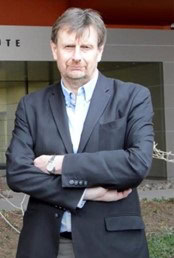
Clive A. Randall
Clive A. Randall is an Evan Pugh Professor, in the Department of Materials Science and Engineering. He is also the Director of the Materials Research Institute at Pennsylvania State University. He received a B.Sc. with honors in Physics in 1983 from the University of East Anglia (UK), and a Ph.D. in Experimental Physics from the University of Essex (UK) in 1987. He was Director for the Center for Dielectric Studies 1997-2013, and Co-Director of the Center for Dielectrics and Piezoelectrics 2013-2015, still serving as Technical Advisor. He has authored/co-authored over 600 technical papers (over 40,000 citations H-index 110) and holds 30 patents (with 5 pending) in the field of electroceramics. His research interests are around discovery, processing, material physics, and compositional design of functional materials; with different processing and characterization methods. Prof. Randall has received several honors including a member of the European Academy of Sciences, National Academy of Inventors, and World Academy of Ceramics. He has also been given a number of awards from various societies, including the American Ceramic Society Fulrath Award, Fellow of the American Ceramic Society, Spriggs Phase Equilibria Award; Friedberg Lecture at the American Ceramic Society; Edward C. Henry Best Paper of the Year from the American Ceramics Society Electronics Division (2012 and 2017), Fellow of European Ceramics Society, Fellow of IEEE, received the IEEE UFFC-S Ferroelectrics Recognition Award, Robertson Breakthrough of the Year Award (College of Earth and Mineral Sciences, Penn State University, 2017), Orton Lecture for the American Ceramics Society, and Sir Richard Brook Lecture for the European Ceramic Society. He has graduated over 45 PH. D students, 12 master’s students, and trained over 40 postdoctoral scholars and visiting scientists. Recently, his group’s work is interested in various aspects of the far from equilibrium state in ceramic materials.