
The Distinguished Lifetime Membership Award for current Society members recognizes outstanding lifetime achievements in the ceramic arts, sciences or engineering, or service to the Society. The winner receives complimentary membership to the society, registration to meetings, and Society journal subscriptions.
The Distinguished Life Member grade of Society membership is the Society’s most prestigious level of membership and is awarded in recognition of a member’s contribution to the ceramics profession. The Constitution of the Society states: “Distinguished Life Members shall be current members of the Society of professional eminence who, because of their achievements in the ceramic arts or sciences, or their service to the Society, are elected to such membership by the Board of Directors.”
The awardees receive a certificate, all privileges granted their respective former grades of membership, and shall be exempt from the payment of ACerS annual dues and meeting registration fees. They shall receive the periodical publications of ACerS without charge.
Nomination Process
Two sponsors are required, who must be ACerS members. A nomination form is available on the ACerS website, in the Awards Portal. Up to three supporting letters will be accepted, along with a resume or CV. Up to three winners will be chosen per year. Nominations will remain active for five years. Self nominations are not permitted.
Award Winners
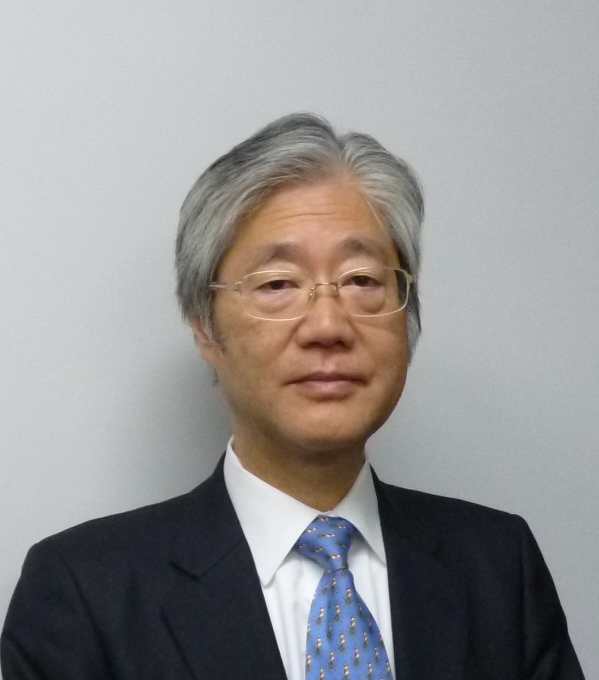
Makio Naito
Makio Naito is an emeritus professor, Osaka university in Japan since 2023. He received his Ph.D. degree in chemical engineering from Nagoya University in Japan in 1987. Then, he worked at Hosokawa Micron Corporation from 1982 to 1993, where he engaged in research and development on powder processing technology for advanced materials. He joined the Japan Fine Ceramics Center, Nagoya in 1993, where his work focused on powder characterization and powder processing in ceramics manufacturing. He has developed advanced characterization tools to identify and track the evolution of defects in ceramics during processing. He became a professor of Joining and Welding Research Institute (JWRI) at Osaka University in 2002 where he continued his research on powder and nanoparticle processing to develop advanced materials to address energy and environmental issues. This includes the development of smart powder processing techniques to support green and sustainable manufacturing. He served as Director of the JWRI Smart Processing Research Center from 2007 to 2010, and as the JWRI Vice Director from 2009 to 2010. He served as the President of The Society of Powder Technology, Japan from 2015 to 2019. He has authored or coauthored more than 300 journal papers and more than 100 review articles. He has contributed to 79 books, edited 27 books and holds more than 60 patents. He is the global leader on Powder Technology, and the leading editor of globally distributed “Nanoparticle Technology Handbook” published by Elsevier. He has been a member of the ACerS since 1998, and a Fellow since 2010. He served as BOD member during 2020-2023. He became an Academician Member of the World Academy of Ceramics in 2012.

George D. Quinn
Mr. Quinn started his career at the Army Materials and Mechanics Research Center (AMMRC) in 1969 as a
cooperative education student. Upon completion of this BS degree in Mechanical Engineering from
Northeastern University he was hired as a Research Ceramic Engineer by AMMRC. He conducted
independently planned and developed research covering the fundamental relationships between properties,
process and characterization, to test method development and standardization as well as fractographic analysis
of advanced ceramics for Army applications. He served two years as a the Chief of the High Temperature
Structural Ceramics team directing research, preparing budgets and proposals as well as managing team
personnel. He also spent a year at the German Aerospace Research Institute in Cologne, West Germany as an
Exchange Scientist performing research on biaxial stress rupture of silicon nitride and promoted international
standardization. Outside of his official responsibilities he taught graduate level physical ceramics courses in the
school of engineering at Northeastern University from 1986-1900. In 1990 he left the Army Materials
Technology Laboratory (AMMRC had been renamed) and became a Research Ceramic Engineer at the
National Institute of Standards and Technology where he conducted research on mechanical testing and
reliability analysis of advanced ceramics with an emphases on test refinement and the development of
standardized test methodologies. He led national and international standardization programs and committees in ASTM, VAMAS and ISO.
Upon retiring from NIST in 2009 George remained as a guest researcher NIST conducting research on the
mechanical properties of glasses and ceramics as well as providing fracture analysis. He served as a consultant
to the American Dental Association (ADA) from 2009-2014 during which he performed research on edge chipping resistance and fracture toughness of dental materials and conducted dental restoration failure analysis. As part of his consultation he co-taught a 3-day short on Fractography of Dental Materials from 2007-2011.
George has been a member of the American Ceramic Society since 1975. He served as the Classification,
Nomenclature and Standards Representative of the Engineering Ceramics Division from 1985 to 1987. Since
2011 he has been one of the co-lecturers in the Mechanical Properties of Ceramics and Glasses course
sponsored by the Society. Between 1995 and 2006 he was a co-organizer of the quadrennial conferences on
Fractography of Glasses and Ceramics at Alfred University which were sponsored by the Society. George has been a Fellow of the Society since 2001 and received the Global Ambassador and the Educator of the Year
awards from the Society in 2020.