
Every year, three early/mid-career women and minority professionals are selected for the Engineering Ceramics Division’s Jubilee Global Excellence Award and are invited to present at the International Conference and Exposition on Advanced Ceramics and Composites (ICACC) in Daytona Beach, FL (annual meeting of the Division). The awardees are encouraged to mentor students and promote society related activities at their institutions.
This award is intended to recognize exceptional early- to mid-career professionals who are women and/or underrepresented minorities (i.e. based on race, ethnicity, nationality and/or geographic location) in the area of ceramic science and engineering.
Criteria:
1) Contributions to the field of ceramic science and engineering
2) Demonstrated commitment to mentoring students and young professionals
3) Promotion of the society and its related activities in the broader community
The nominee must be 45 years old or younger at the time of the award presentation (January 1st of the Award Year) and a member of The American Ceramic Society and Engineering Ceramics Division. However, the award committee can consider special situations (extended time away due to family and health reasons, military service, etc.) and consider waiving the age requirements for exceptional candidates in special cases.
Nomination Process
Nominations can be made by any individual or group that is a member of ACerS. Self-nominations are allowed and encouraged. A one page nomination letter along with a brief CV (up to 3 pages) highlighting the nominee’s contributions listed in the criteria above are required.
Three awards are given each year including a certificate, complimentary registration to ICACC, and a $1,500 honorarium to be presented during the plenary session at ICACC. The awardees are invited to present at ICACC.
Contact
Submit nominations to: ECD Trustee Michael Halbig at michael.c.halbig@nasa.gov
Award Winners
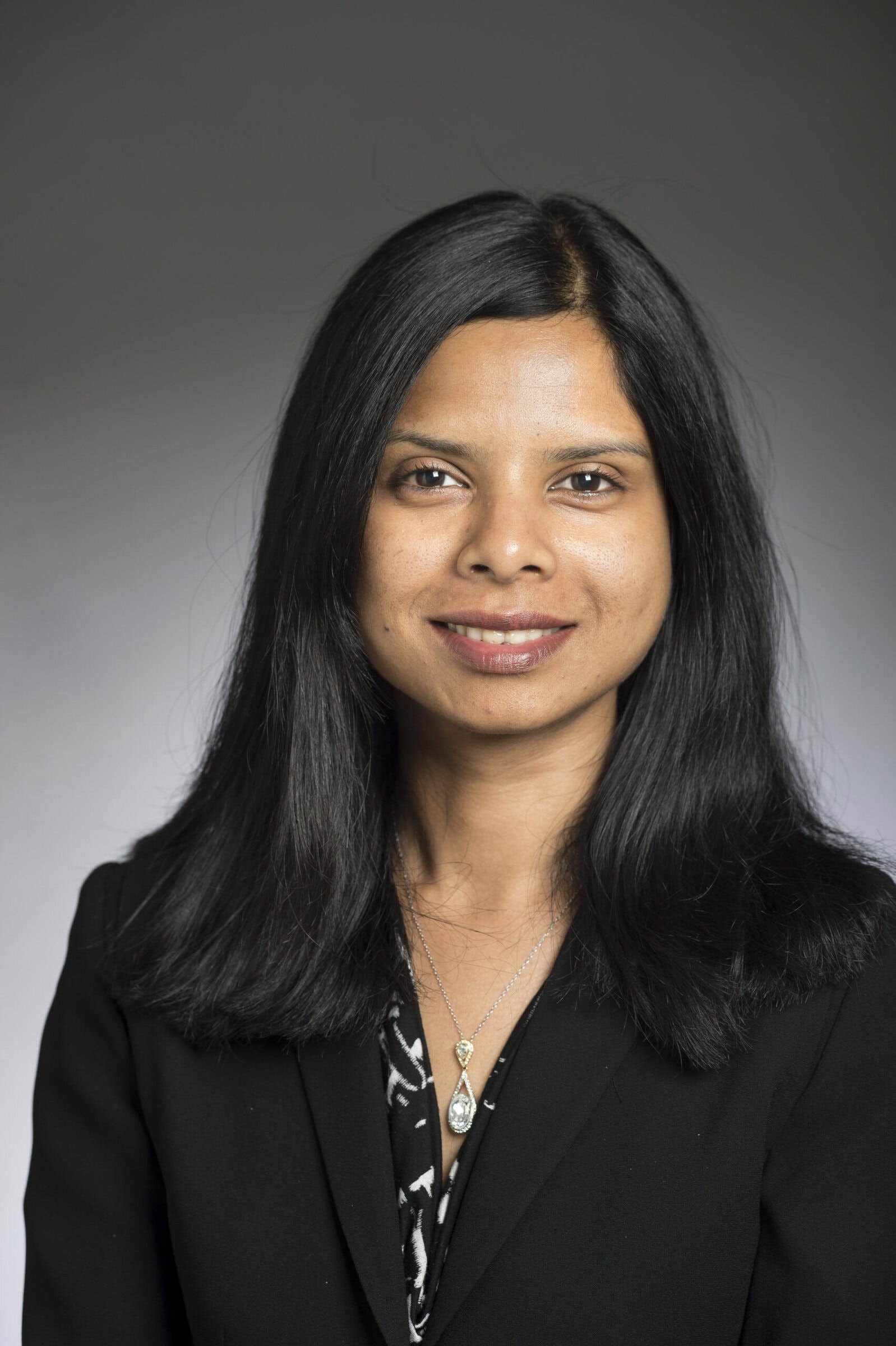
Reeja Jayan
Reeja Jayan is a professor in the Departments of Mechanical Engineering, Electrical and Computer Engineering, and Materials Science & Engineering at Carnegie Mellon University, where she also serves as director of the Center for Faculty Success. She leads interdisciplinary research exploring how electromagnetic fields can control materials synthesis and energy storage behavior.
Jayan is the founder and chief executive officer of SeaLion Energy Inc., a CMU spinout advancing polymer coatings that extend battery life and enable regeneration of lithium-ion cells. Since its launch in 2023, SeaLion has secured over $2 million in grant funding and is scaling its technology with industrial and government partners.
She has led a research portfolio of over $22 million, collaborated with and mentored more than 50 researchers, and taught over 1,000 students. Her work has earned recognition including the National Science Foundation (NSF) CAREER Award, Army Research Office (ARO) Young Investigator Award, Air Force Office of Scientific Research (AFOSR) Young Investigator Award, and selection to the U.S. National Academy of Sciences panel advising the Army Research Lab. She was also a 2024 finalist for the U.S. Department of Energy’s Clean Energy Education & Empowerment (C3E) Award, recognizing women leaders in clean energy.
She serves as associate editor of Science Advances, was elected to the Board of the International Microwave Power Institute (IMPI) and has chaired or served on multiple national and international scientific committees.

Fiona Spirrett
Dr. Fiona Spirrett is an Assistant Professor at The University of Osaka’s Joining and Welding Research Institute (JWRI). Her role includes both research and teaching in the Department of Environmental and Energy Engineering, where she leads research projects and supervises student projects focused on developing sustainable societies.
Within the Lithographic Additive Manufacturing Group, Fiona’s research focuses on stereolithography of ceramic materials, exploring how the desirable properties of ceramics can be integrated into functional, geometrically complex structures for enhanced performance or reduced environmental burden. Her work bridges computational modelling, material science, and additive manufacturing, with a focus on developing sustainable ceramic-based components for next-generation manufacturing systems. Since joining the JWRI, Fiona has been awarded with three competitive research grants from the Okura Kazuchika Memorial Foundation, Mazda Foundation, and JFE 21st Century Foundation to support her work. Her current projects work towards developing highly efficient ceramic heat exchangers for various applications and Yttria-Stabilized Zirconia electrodes for aluminium smelting through geometry design and optimisation, development of high-volume dispersion ceramic pastes, and component fabrication by stereolithography, utilising various computational analysis methods to support each stage of investigations.
In addition to her research, Fiona plays an active role in teaching and mentoring, guiding students in projects that integrate engineering design with environmental responsibility. She also collaborates with industry partners across Japan to support industry-academia co-operation towards sustainable manufacturing.
Originally from the United Kingdom, Fiona earned her Master’s degree in Medicinal and Biological Chemistry from the University of Nottingham, where she focused on computational modelling. She continued her studies at Nottingham, joining the Centre for Additive Manufacturing in 2016 to pursue a PhD in Additive Manufacturing and 3D printing. Her doctoral research explored laser based additive manufacturing of bespoke glass compositions, forming a solid foundation for facing the challenges of processing high performance ceramics and glasses by additive manufacturing techniques.
Beyond her research, Fiona is a keen photographer and traveller with a goal of visiting all 47 prefectures in Japan to experience the diverse landscapes, traditions, and cultures.

Joanna Wojewoda-Budka
Prof. Joanna Wojewoda-Budka is a dedicated scholar in the field of Materials Science, currently serving as the Director of the Institute of Metallurgy and Materials Science of the Polish Academy of Sciences. She graduated from Jagiellonian University, Department of Chemistry, in 2002, earned her Ph.D. in Materials Science in 2007, and became an Assistant Professor in 2014. She is also leading the Multilayer Department since 2021.
Her research encompasses diffusion phenomena in metals and ceramics, metal-ceramic composites, and joining technologies such as diffusion soldering and explosive welding, with recent work focusing on copper coatings reinforced with oxide particles. Prof. Wojewoda-Budka has co-authored 95 journal articles, over 85 of which are indexed in JCR, and actively participates in international conferences, including her role as Chair Lady for the XVIIIth International Conference on Electron Microscopy (EM2024). She also contributes to the organization of major materials science congresses, including her current role as the organizer of the Euromat 2025 Area D panel focused on Characterization, Modeling, and Artificial Intelligence.
As the General Secretary of the Polish Materials Society, she engages in promoting Materials Science and Engineering through various activities while supporting research efforts with Ph.D. candidates and young scientists from Poland and abroad.
Her research on Co-Continuous Ceramic Composites (C4 structure) offers potential applications in various industries. She has conducted extensive studies on Al/MeO couples and worked on projects related to layered periodic structures in metal-ceramic systems. Additionally, her project under the EU M-Era.Net program focuses on next-generation copper-based coatings with enhanced resistance to pathogens, significantly advancing the field.
Prof. Wojewoda-Budka is also a Board Member of the Federation of Materials Societies (FEMS) for 2024-2025 and has strong ties to industry through approximately 30 research projects, contributing to both academia and practical applications in materials science. She has garnered significant awards, including the NATO scholarship in 2004, the Silver Cross of Merit for scientific activity in the development of science in 2017 and Knight’s Cross of Polonia Restituta Order for the overall scientific achievements in 2023 – last two honors were awarded by the President of Poland.