
This award honors the most valuable contribution to phase stability relationships in ceramic-based systems literature during the calendar year prior to selection.
The Spriggs Phase Equilibria Award shall be given to the author or authors who, in the judgment of the award committee, made the most valuable contribution to phase stability relationships in ceramic-based systems literature during the calendar year prior to the selection.
A phase equilibria article is defined as a paper, article, or report published in a technical or trade journal, or in a bulletin from a school, laboratory, technical bureau, or experimental station, or in a pamphlet or book form. It must be complete and readily available to the public.
The annual award of the Spriggs Phase Equilibria Award shall be a certificate, and an honorarium of $1,000 to be divided equally among multiple authors.
Nomination Process
The eligibility for the Spriggs Phase Equilibria Award is open to all persons world-wide. To submit an article for consideration, go to the awards portal on the ACerS website.
Award Namesake
Richard M. Spriggs was professor emeritus of ceramic engineering at the NYS College of Ceramics at Alfred University. Prior to retiring in 1997, he was the first John F. McMahon Professor of Ceramic Engineering, the executive director of the NYS Center for Advanced Ceramic Technology, and director of Sponsored Research Programs at the College. He held BS, MS and PhD degrees in ceramics and ceramic engineering from The Pennsylvania State University and the University of Illinois at Urbana-Champaign. A Fellow, Past President, and Distinguished Life Member of the American Ceramic Society, he received numerous honors and awards for his contributions to ceramic science, technology and education. He most recently served as a board member of the Ceramics Corridor Innovation Centers (Alfred Technology Resources Inc.) and Sugar Hill Development Corp. Spriggs was widely known over many years as an outstanding ambassador for the American Ceramic Society. He was well-known for his kind and friendly demeanor.
Contact
Erica Zimmerman
ezimmerman@ceramics.org
Award Winners

2026 Spriggs Equilibria Award Article
Kim M-K, Lee J, Jung I-H. “Key phase diagram experiments and thermodynamic modeling of the ZnO‒B2O3, ZnO‒SiO2, and ZnO‒B2O3‒SiO2 systems” J Am Ceram Soc. 2025;108:e20252
Min-Kyung Kim
Dr. Min-Kyung Kim is a metallurgical engineer and researcher in Posco, South Korea, specializing in chemical thermodynamics and phase equilibria of high-temperature materials processing systems. She earned her Ph.D. in the Department of Materials Science and Engineering from Seoul National University, where her doctoral research focused on the thermodynamic modeling of multicomponent slag and molten oxide systems. Her PhD work was highly relevant to molten oxide electrolysis, a key emerging technology for sustainable and low-carbon metal production. Notably, she has contributed to the critical assessment and thermodynamic database development of the Na2O-B2O3-FeO-Fe2O3-ZnO-Al2O3-SiO2 system, by integrating high-temperature phase diagram experiments with computational thermodynamics (CALPHAD) in order to enhance the understanding of complex phase equilibria and thermodynamic reaction in various metallurgical processes. Dr. Kim currently works at Posco to develop next-generation ironmaking and steelmaking technologies with reduced carbon emissions.
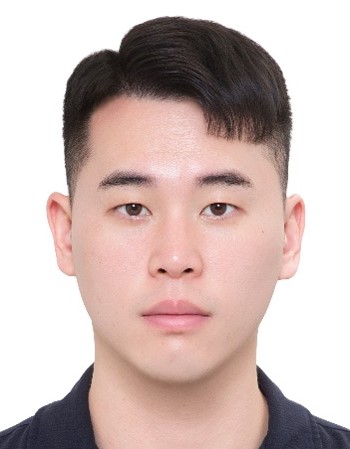
Jaesung Lee
Dr. Jaesung Lee is a postdoctoral researcher at Seoul National University in Seoul, Republic of Korea, with a specialization in materials thermodynamics, phase diagram experiments, and CALPHAD modeling. He earned his Ph.D. in Materials Science and Engineering from Seoul National University in 2025, where his research focused on phase diagram experiments and thermodynamic modeling of ZrO2– and SnOx-containing systems for glass applications. Prior to this, he completed his M.S. and B.S. in Materials Science and Engineering at Seoul National University, with a strong emphasis on experimental phase equilibria. His research integrates high-temperature phase diagram experiments with CALPHAD type thermodynamic modeling to optimize and support materials design and high-temperature processes. In recognition of his contributions, he won the 2024 Samsung Electro-mechanics Ceramics award and 2025 Next-generation glass technology award from the Korean Ceramic Society. Dr. Lee has authored 13 peer-reviewed publications. He delivered a invited talk on the coupled phase diagram study and thermodynamic database development for the Li2O-Na2O-Al2O3-SiO2-ZrO2 system at the 2024 American Ceramic Society Glass & Optical Materials Division annual meeting.
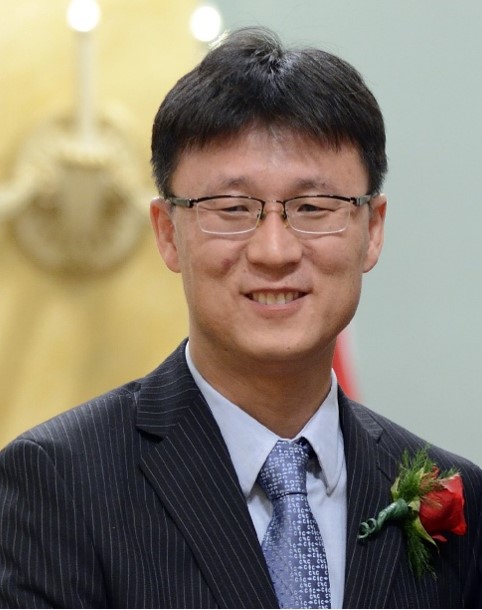
In-Ho Jung
Professor In-Ho Jung is a world-renowned expert in chemical metallurgy and thermodynamic database development. He earned his bachelor and master’s degree from POSTECH, South Korea and PhD degree from Ecole Polytechnique de Montreal, Canada in 2003, and is a professor in Seoul National University. He is a co-developer of FactSage thermodynamic software, which is accessed by more than 1000 sites around the world, and academic member of FIRE (Federation of International Refractory Research and Education). Since 2009, Prof. Jung has led the “FactSage Steelmaking Consortium Project” to develop thermodynamic databases and process simulation models for steelmaking industry, sponsored by 14 companies around the world. He has authored and co-authored 10 book chapters, and more than 300 journal papers.
Prof. Jung received various awards including 2012 NSERC Leo Derikx Synergy Award, Canada, and 2013 Helmholtz-Zentrum Geesthacht Magnesium Research Award, Germany, 2022 AIST John F Elliott Lectureship award, and 2025 TMS Sadoway Materials Innovation and Advocacy Award. He is an associate editor of JACerS and a recipient of ACerS 2021 John E. Marquis Award (Manufacturing Division’s award).