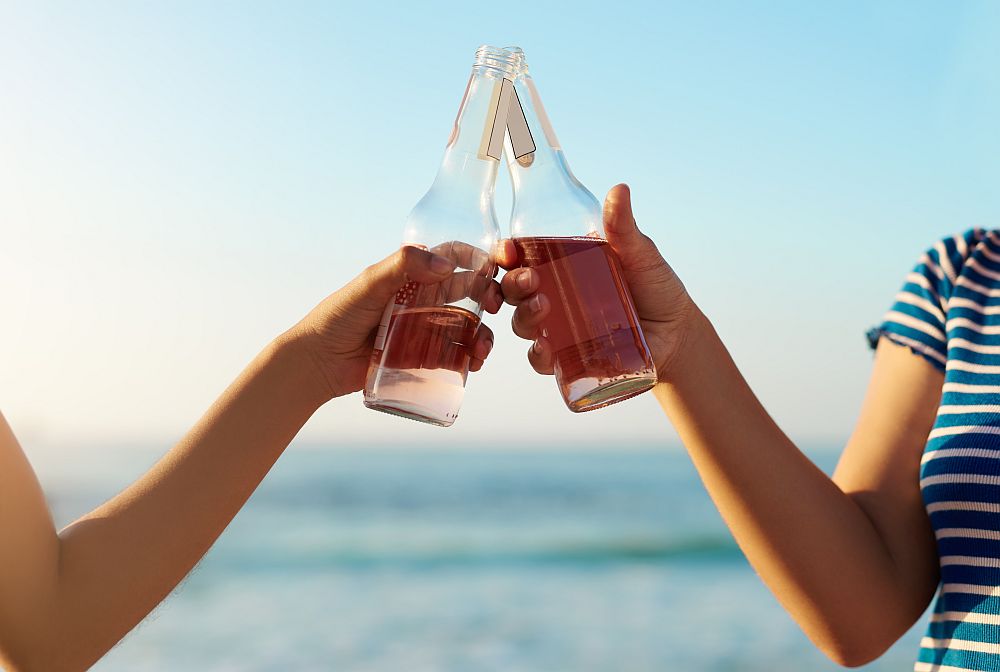
[Image above] Credit: PeopleImages / Shutterstock
Among the various container materials, glass is considered one of the best thanks to its durable, nonporous nature and high scores on sustainability assessments. Its downsides generally have more to do with broken recycling systems than the glass itself.
While efforts are being made to improve glass recycling rates, an open-access study published this past summer revealed another ancillary factor that impacts the sustainability of glass bottles. Fortunately, unlike recycling systems, this challenge has a straightforward solution.
In August 2025, researchers at the French Agency for Food, Environmental, and Occupational Health & Safety (ANSES) investigated the different levels of microplastic contamination in various beverages sold in France. Surprisingly, they found that beverages stored in glass bottles demonstrated higher levels of contamination than those stored in plastic bottles or aluminum cans.
The reason for this disparity is the caps used to seal glass bottles. As explained in the paper, the researchers confirmed that the microplastics found in glass bottles had the same color and composition as the paint on the caps, and this finding was supported by tiny scratches on the caps that likely were caused by friction during the sealing process.
Following this finding, the researchers tested the effects of different cleaning processes on the level of microplastic contamination in glass bottles. They either placed caps on the bottles without any treatment, blew on the caps with an air bomb, or blew and rinsed the caps with filtered water and alcohol. The result? While an average of 287 particles per liter were found in bottles sealed with uncleaned caps, this number decreased to 106 particles per liter after blowing and to 87 particles per liter after blowing and rinsing.
In an ANSES press release, the researchers note that in addition to cleaning the caps, manufacturers could explore alternative storing and sealing processes to reduce friction when placing the caps on the glass bottles or modifying the composition of the paint used on the caps. In any case, this contamination source is one that “manufacturers can easily take measures to address,” the press release states.
The open-access paper, published in Journal of Food Composition and Analysis, is “Microplastic contaminations in a set of beverages sold in France” (DOI: 10.1016/j.jfca.2025.107719).