Webinar Description
Hosted by: ACerS Art, Archaeology & Conservation Science Division
Friday, January 23, 2026; 12:00–1:00 p.m. Eastern US time
Sponsored by the ACerS Art, Archaeology & Conservation Science Division, the January webinar will feature one speaker: Exploring the Material Science Aspects of Tea Drinking During the Song Dynasty (960-1279)
Description
Exploring the Material Science Aspects of Tea Drinking During the Song Dynasty (960-1279)
Tea is one of the most widely consumed beverages worldwide, with billions of people enjoying it daily. Depending on the culture and the social trends, tea has been, and still is, served in a wide variety of ware, including cups, bowls, mugs and glasses. This diversity reflects the aesthetic preferences of tea enthusiasts, who desire to savour every drop and to fully appreciate the experience, as well as craftspeople who manufacture the vessels into reality.
In his presentation, Dr. Clément Holé will focus on the bowls manufactured for tea drinking under the Song Dynasty (960-1279): a key period for the consumption of this beverage. First he will introduce how the aesthetic preferences of tea drinkers influenced craftspeople to develop a new material: the ε-Fe2O3 brown-coloured glazes. He will then explore why this rare phase is so widespread in these productions and how understanding its growth mechanism can offer insights on the firing processes used in different kilns across the Song Empire. This study aims at providing an overview on Song black-to-brown glazes, from the material to the social aspects of these productions. This presentation may be best enjoyed with the appropriate beverage, so participants are encouraged to join with their favourite tea ware and tea during this webinar.
Biography
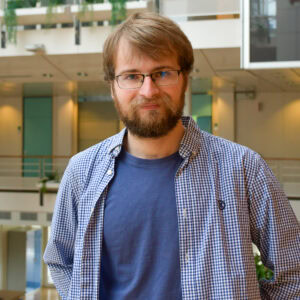
Dr. Clément Holé, beamline scientist, European Synchrotron Radiation Facility (ESRF)
Dr. Clément Holé is an engineer from Chimie ParisTech, PSL University, and holds a PhD in materials science from Toulouse University (France). During his doctoral studies, he worked on the growth of ε-Fe2O3, an uncommon ferric oxide, in Chinese brown-glazed ceramics. In 2023, he joined the ESRF in Grenoble (France) as a post-doctoral researcher on the ID21 beamline, which is dedicated to micro-/nano-X-ray microscopy and spectroscopy. His work involves applying micro-analytical synchrotron techniques to investigate the manufacturing processes and the physical properties of heritage objects. Additionally, his activities at the ESRF include developing data processing methods, providing support and training to international users from various scientific fields as a local contact, and coordinating the Historical Materials “Block Allocation Group” (BAG) to facilitate beamtime access for structural investigations of historical materials within the Cultural Heritage community. He was promoted to beamline scientist at ID21 in 2025.
Dr. Holé’s research focusses on exploring the fundamental aspects and the physico-chemical mechanisms related to the manufacturing of heritage objects. His goal is to utilise this knowledge to document the history of techniques and understand complex materials. To achieve this, he applies a range of complementary advanced analytical and imaging techniques. His research has extended to collaborations with several academic and museum institutions, such as the Shaanxi University of Science and Technology, the Universitat Politècnica de Catalunya BarcelonaTECH, The British Museum or the University of Turin for instance.
If you have any questions, please contact Vicki Evans.
This webinar is brought to you by the ACerS Art, Archaeology & Conservation Science Division. To view past ACerS webinars, click here.