

Webinar Description

Hosted by: ACerS Art, Archaeology & Conservation Science Division
Friday, July 24, 2026; 12:00–1:00 p.m. Eastern US time
Sponsored by the ACerS Art, Archaeology & Conservation Science Division, the July webinar will feature one speaker: From Ancient Pigment to Future Technology: The Renaissance of Egyptian Blue and Related 2D Silicates
Description
From Ancient Pigment to Future Technology: The Renaissance of Egyptian Blue and Related 2D Silicates
Egyptian blue, the first synthetic pigment developed over 5000 years ago, has recently experienced an unexpected renaissance in materials science. This talk explores the journey of CaCuSi₄O₁₀ (cuprorivaite) and its related compounds—Chinese blue (BaCuSi₄O₁₀), Chinese purple (BaCuSi₂O₆), and wesselsite (SrCuSi₄O₁₀)—from antiquity to cutting-edge technologies. The discovery in 1996 of their intense near-infrared (NIR) photoluminescence, excitable even by visible light, opened unprecedented application possibilities. In 2013, the successful exfoliation of these materials into luminescent nanosheets expanded the family of 2D nanomaterials. Today, these ancient silicates are finding innovative applications in diverse fields: NIR fluorescent probes for bioimaging and biophotonics, photothermal therapy in regenerative medicine taking advantage of their antibacterial and angiogenic properties, advanced sensors, luminescent solar concentrators for energy harvesting, and photocatalytic nitrogen fixation. Their exceptional stability, biocompatibility, sustainability and very high quantum yield could allow them to replace modern synthetic fluorophores based on critical elements. This presentation highlights how understanding ancient manufacturing techniques is inspiring tomorrow’s technologies, demonstrating the extraordinary potential of materials for sustainable innovation.
Biography
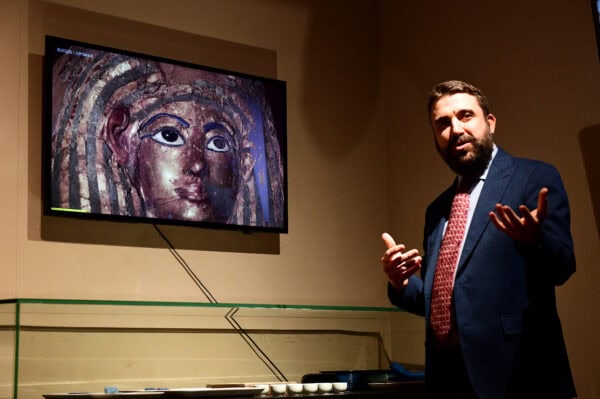
Marco Nicola, Research Fellow, University of Turin
Marco Nicola is a conservation scientist with over twenty years of experience in the fields of conservation science and materials technology. Born into a family of restorers, he graduated in chemistry and, in 2005, co-founded Adamantio srl – Science in Conservation together with Admir Masic (now a professor at the Massachusetts Institute of Technology – MIT). The company began as an academic spin-off of the University of Turin. Throughout his career, Nicola has applied advanced scientific methodologies to the conservation and restoration of significant cultural heritage sites and artworks. His notable projects include analytical work for the pilot restoration project of the Colonnade in St. Peter’s Square, the Pompeii excavations, the Domus Aurea, the Grottoes of Catullus in Sirmione, the Museo Egizio in Turin, the Royal Villa of Monza, Raphael’s frescoes at Villa Farnesina in Rome, and paintings by Caravaggio and other masters.
In 2024, Marco Nicola became a research fellow at the University of Turin after earning his PhD in Chemical and Materials Sciences with a thesis on Egyptian blue, exploring both its ancient origins and its potential modern and future applications. His research is characterized by an interdisciplinary approach that combines chemistry, materials science, history, and conservation, aiming to develop innovative solutions for the protection of artistic heritage and for the technologies of tomorrow.
If you have any questions, please contact Vicki Evans.
This webinar is brought to you by the ACerS Art, Archaeology & Conservation Science Division.
To view past ACerS webinars, click here.