

Webinar Description

Hosted by: ACerS Art, Archaeology & Conservation Science Division
Friday, May 22, 2026; 12:00–1:00 p.m. Eastern US time
Sponsored by the ACerS Art, Archaeology & Conservation Science Division, the May webinar will feature one speaker: Maiolica in a Changing World: A Non-Invasive Look Into 19th-Century Tin Glazes
Description
Maiolica in a Changing World: A Non-Invasive Look Into 19th-Century Tin Glazes
Italian maiolica represents an enduring and influential ceramic tradition in European art, spanning from the Middle Ages to the present day and preserved in major museum collections worldwide. The study of these tin-glazed artifacts increasingly relies on non-invasive analytical approaches, which are essential for the investigation of museum collections, where sampling is often not permitted, and conservation histories are complex.
The 19th-century revival of maiolica constitutes a particularly compelling field of investigation. A renewed interest in historical styles was driven by archaeological discoveries and the search for cultural roots within emerging nation-states. At the same time, major transformations in manufacturing practices were driven by chemical and industrial innovations.
In her webinar, Rosarosa Manca will focus on the non-invasive compositional analysis of important 19th-century Italian maiolica productions, such as those by the Ginori Manufactory, the Cantagalli firm, and the ceramist Torquato Castellani. Objects from the Victoria and Albert Museum, London (UK), and from private collections were analysed by X-ray fluorescence spectroscopy (XRF) and ion beam analysis (IBA). Furthermore, an ultraportable Vis–NIR hyperspectral camera was employed at the Museo Nazionale del Bargello in Florence (Italy) to study and discriminate authentic archaeological fragments, 19th-century forgeries, and ceramics of uncertain origin.
Overall, the presentation aims to highlight how non-invasive analytical techniques can contribute to a deeper understanding of 19th-century maiolica production.
Biography
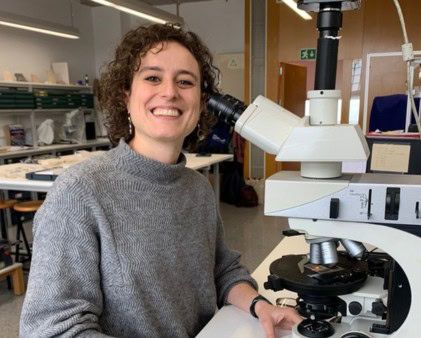
Rosarosa Manca, heritage scientist, University of Florence, Italy
Dr Rosarosa Manca is a heritage scientist with a PhD in Earth Sciences from the University of Florence, Italy. Her academic career has taken place in an interdisciplinary and international setting, with a focus on the application of analytical techniques to the study and conservation of cultural heritage materials. Her research centres on the non-invasive analysis of geomaterials of cultural interest, particularly pigments, tin-glazed pottery and jewellery in museum collections. During her doctoral research, she investigated the impact of 19th-century chemical and industrial innovations on the production of revival gold jewellery and maiolica in Italy. More recently she investigated the past use of mercury-based conservation treatments in natural history museum collections.
Dr Manca supervises and co-supervises BSc, MSc and PhD theses, and teaches at postgraduate level. She collaborates with several museums and research institutions in Italy and abroad, including the Victoria and Albert Museum, the Bargello Museum, the Italian National Research Council and National Institute of Nuclear Physics, the University of Seville, and Archéosciences Bordeaux.
She is a board member of the National Association of Experts in Diagnostics, Sciences and Technologies Applied to Cultural Heritage (ANEDbc) and a member of ICOM, AIAr, and SIMP.
If you have any questions, please contact Vicki Evans.
This webinar is brought to you by the ACerS Art, Archaeology & Conservation Science Division.
To view past ACerS webinars, click here.