
Webinar Description
Hosted by: ACerS Art, Archaeology & Conservation Science Division
Friday, October 23, 2026; 12:00–1:00 p.m. Eastern US time
Sponsored by the ACerS Art, Archaeology & Conservation Science Division, the October webinar will feature one speaker: Porcelain Fever(s): Decoding the Microstructures of 18th-Century European Porcelains using Modern Surrogates
Description
Porcelain Fever(s): Decoding the Microstructures of 18th-Century European Porcelains using Modern Surrogates
Grace will discuss their work on determining the firing conditions of early 18th century European porcelains through surrogate generation and subsequent microanalysis. They are an artist and scientist and approach the recreation of historical ceramics from this perspective. They will describe the complexities of formulating and working with these bodies and the methods used for generating a diverse fired sample set.
Chemical analysis, via microscopy techniques, was performed on sub-mm samples (removed by Sarah Barack, former Head of Conservation and Senior Objects Conservator at the Cooper Hewitt Smithsonian Design Museum CHSDM) from a Capodimonte figure in the CHSDM collection. The results of this chemical analysis were used to create a surrogate from contemporary raw materials. Using quantitative EDS methods developed by Dr. Thomas Lam at the Smithsonian’s Museum Conservation Institute, meaningful comparisons are made between the phase evolution and chemistries of fired surrogates and historical samples.
Further, they’ll discuss how, through their surrogate studies, the mystery of 35 “A” marked porcelains may finally be closed after 100 years. The microstructural features of early Bow and “A” marked wares are definitively linked to the first Bow patent of Frye and Heylyn 1744.
Biography
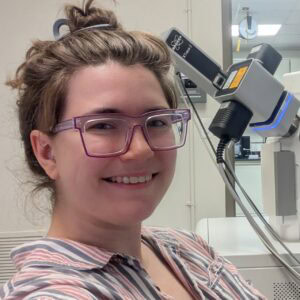
Grace Dunham, Smithsonian Predoctoral Fellow, New York State College of Ceramics at Alfred University
Grace is a Ph.D. candidate working with Professor Emeritus Willam Carty, Ph.D., to uncover ceramic processes lost to time and reimagine how porcelain-like behavior is obtained from a chemically diverse set of bodies by combining artistic making techniques and the fundamentals of ceramic engineering.
View the webinar here!(opens in new tab)
If you have any questions, please contact Vicki Evans.
This webinar is brought to you by the ACerS Art, Archaeology & Conservation Science Division.
To view past ACerS webinars, click here(opens in new tab).