Webinar Description
Hosted by: ACerS International Italy Chapter and ACerS International Türkiye Chapter
Monday, February 16, 2026; 8:00a.m. – 9:00a.m. Eastern US time
Sponsored by the ACerS International Italy Chapter and ACerS International Türkiye Chapter, the February webinar will feature two speakers: Engineered perovskite oxides for versatile applications in SOFCs, SOECs and rSOCs and Electrocaloric Ceramics for Solid-State Cooling with Emphasis on BaTiO₃-Based Lead-Free Materials Exhibiting High and Tunable Curie Temperatures
DESCRIPTION
Engineered perovskite oxides for versatile applications in SOFCs, SOECs and rSOCs
Solid oxide cells (SOCs) are among the most promising energy conversion technologies in terms of conversion efficiency, owing to the intermediate-to-high temperature of operation (600-1000 °C). In fuel cell mode (SOFC), high temperature ensures fast electrode kinetics, enabling the operation in a wide range of possible fuels, allowing the use of cost-effective and earth abundant electrocatalysts as well as the coupling with highly endothermic reforming reactions1. In electrolysis mode (SOEC), an increasing fraction of the total energy required by a solid oxide H2O or CO2 electrolyzer SOEC can be provided in the form of heat, considerably lowering the electrical energy demand compared to lower temperature electrolyzers (AWE; PEMWE, AEMWE)2. On the other hand, high temperature operation requires thermally stable, long-lasting yet high-performing materials, possibly including a limited extent of critical/strategical elements3.
The lecture will be focused on perovskite oxides (ABO3) as extremely versatile materials for reliable SOC operation. Optimized perovskite oxide compositions will be presented as air electrodes and as fuel electrodes, with the goal of designing multi-purpose stoichiometries that can reliably operate in symmetric and possibly SOFC/SOEC reversible devices (rSOCs).
Electrocaloric Ceramics for Solid-State Cooling with Emphasis on BaTiO₃-Based Lead-Free Materials Exhibiting High and Tunable Curie Temperatures
Electrocaloric materials exhibit a reversible temperature change under an applied electric field and are being explored for solid-state cooling as an energy-efficient and environmentally friendly alternative to conventional refrigeration. Lead-free ferroelectric ceramics are especially attractive due to sustainability and safety concerns. The electrocaloric performance of the materials is strongly linked to ferroelectric phase transitions, with the largest effects occurring near transition temperatures. This webinar will provide an overview of electrocaloric ceramics, by highlighting a comparison between Pb-containing benchmark material Pb(Sc0.5Ta0.5)O3 and Pb-free BaTiO3-rich BaTiO3–Na0.5Bi0.5TiO3 solid solutions in the context of ferroelectric phase transitions. Strategies for optimizing the electrocaloric effect, including doping, crystallographic texturing, and the implementation of multilayer ceramic capacitor architectures, will also be addressed.
BIOGRAPHIES
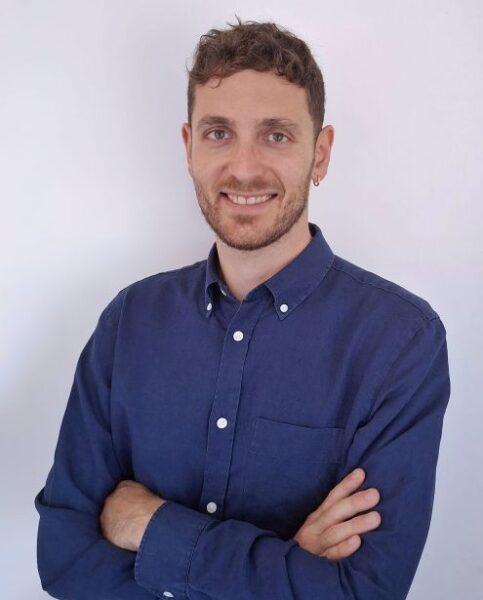
Dr. Leonardo Duranti, Tenure Track Researcher (RTT), Department of Chemical Science and Technologies, University of Rome Tor Vergata, Italy
Leonardo Duranti is Tenure Track Researcher (RTT) at the Department of Chemical Science and Technologies, University of Rome Tor Vergata since November 2024. He received is PhD in Materials for Health, Environment and Energy in 2021 with a thesis titled: “Smart composite electrode for Solid Oxide Cells (SOCs)”. He has been Postdoctoral fellow in 2021-2022, Researcher and Assistant Professor (RTDa) in 2022-2024 at the Department of Chemical Science and Technologies, University of Rome Tor Vergata.
The research activity of Dr. Leonardo Duranti is aimed at the development of metal oxides for applications in heterogeneous catalysis and energy storage/conversion devices. It mainly covers three research topics, focusing on the design, development and characterization of: 1) electrode materials for Intermediate Temperature Solid Oxide Fuel Cells (IT-SOFCs), Solid Oxide Electrolyzer Cells (SOEC) for CO2 electrolysis and H2O/CO2 co-electrolysis, and Reversible Solid Oxide Cells (RSOCs). The focus is on the correlation between the electrode materials chemical-physical properties and their electrocatalytic activity in complete cell tests; 2) smart catalysts for Dry Methane Reforming (DRM), Steam Methane Reforming (SMR), and Sorption-Enhanced Steam Methane Reforming (SE-SMR); 3) complex-oxides based Oxygen Evolution Reaction (OER) electrocatalysts for anodic applications in Alkaline Water Electrolyzers (AWE) and Anion-Exchange Membrane Water Electrolyzers (AEMWE).
He is author of over 40 scientific publications in Web-of-Science indexed peer-reviewed journals; he is involved in the PRIN-2022 project “Advanced materials for reversible solid oxide cells (AMARILLO)” issued by the Italian MUR Ministry of University and research; he has been guest editor and produced several contributions in national and international conferences, with five invited oral presentations. Dr. Duranti’s research received several recognitions: in 2018 he was awarded the best poster prize at the 1st ENERCHEM School – Chemistry for The Energy Transition, held by the Italian Chemical Society (SCI); in 2021 he was awarded the best oral presentation prize at the Italian Virtual Workshop on Fuel Cells 2021 (IVWFC 2021) held by the Italian Chemical Society (SCI); In 2024 he was awarded the “Gualtiero Gusmano” award for the best oral presentation at the XIV INSTM Congress, held by the National Interuniversity Consortium of Materials Science and Technology (INSTM). His work has been carried out in collaboration with national and international groups, led by Prof. Ana C. Tavares (Institut National de la Recherche Scientifique, Montréal, Canada), Prof. Nan Yang (ShanghaiTech University, China), Prof. Isabella Natali Sora (Università degli Studi di Bergamo, Italy), Prof. Marta Boaro (Università di Udine, Italy) and Dr Marialuisa Grilli (ENEA Casaccia Research Center, Italy).
Dr. Duranti teaching activity concerns Materials Technology, Applied Chemistry and Electrochemistry for the degree courses in Civil and Environmental Engineering and Applied Chemistry at University of Rome Tor Vergata. He also holds a course on applied characterization techniques for solid state materials within the PhD course in Materials for Sustainable Development (MaS).
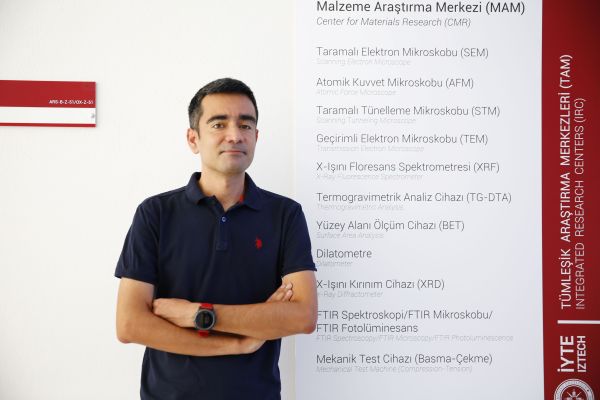
Assoc. Prof. Dr. Umut Adem, Associate Professor of Materials Science and Engineering, Izmir Institute of Technology (IZTECH), Türkiye
Umut Adem is an Associate Professor of Materials Science and Engineering at the Izmir Institute of Technology (IZTECH). He received his undergraduate and master’s degrees in Metallurgical and Materials Engineering from Middle East Technical University before earning his PhD at the University of Groningen, where he conducted research on multiferroic materials under the supervision of Thom Palstra. Following postdoctoral appointments at IFW Dresden, the University of Liverpool, and Ankara University, he joined IZTECH as an Assistant Professor in 2015. He currently leads the Electroceramic Materials Laboratory, with research interests including the electrocaloric effect, capacitive energy storage, and piezoelectric properties of ferroelectric ceramics and polymer composites.
If you have any questions, please contact Vicki Evans.
This webinar is brought to you by the ACerS International Italy Chapter and ACerS International Türkiye Chapter.
To view past ACerS webinars click here.