Webinar Description
Hosted by: ACerS International Italy Chapter and ACerS International Türkiye Chapter
Monday, January 12, 2026; 8:00a.m. – 9:00a.m. Eastern US time
Sponsored by the ACerS International Italy Chapter and ACerS International Türkiye Chapter, the January webinar will feature two speakers: Innovative sustainable chemical tempering processes for silicate glass and Shaping Light with Glass: Spectrum-Tunable Materials for Opto-Electronic and Energy Applications
DESCRIPTION
Innovative sustainable chemical tempering processes for silicate glass
Chemical tempering is a fundamental process to reinforce silicate glass for many modern applications. Nevertheless, at the industrial scale, it suffers from some issue related to the environmental and economical sustainability. During the lecture, innovative approaches are described which can allow shorter duration of the process, reduced temperature and reduced amount of salt. In particular, the advantages (and disadvantages) of electric-field assisted ion exchange and bath-less ion exchange will be described. In addition, some guidelines for glasses proper to be reenforced by chemical tempering will be discussed.
Shaping Light with Glass: Spectrum-Tunable Materials for Opto-Electronic and Energy Applications
Recent progress in glass science has enabled the development of spectrum-tunable photonic materials for advanced opto-electronic and energy applications. This webinar will focus on luminescent glass and glass-ceramic materials, particularly lanthanide- and quantum dot–doped glasses and glass nanocomposites developed as wavelength converters. After a brief introduction to photoluminescence concepts relevant to glass science, the talk will highlight how glass composition, structure, and processing can be used to tailor optical response.
Different synthesis routes for luminescent glasses and glass nanocomposites will be discussed, together with a critical comparison of glass-based systems and their colloidal or polymer-derived counterparts in terms of optical performance, stability, and integration potential. Selected case studies will then be presented, including solid-state lighting (WLEDs and plant growth LEDs), volumetric displays, luminescent solar concentrators for building-integrated photovoltaics, and agrivoltaic systems. The lecture will conclude by demonstrating how glass can be deliberately engineered to shape light across the spectrum, enabling robust and scalable solutions for emerging opto-electronic and energy-related applications.
BIOGRAPHIES
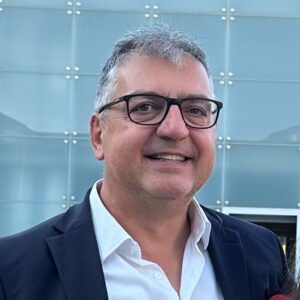
Prof. Vincenzo M. Sglavo, Full Professor, Materials Science and Technology Department of Industrial Engineering, University of Trento, Italy
Vincenzo M. Sglavo is a full professor in the Materials Science and Technology Department of Industrial Engineering at the University of Trento, Italy. His fundamental research interests include processing of glasses and glass-ceramics, chemical strengthening of glass by ion-exchange, innovative sintering processes for ceramics, and Materials for Solid Oxides Fuel Cells (SOFC) and Electrolytic cells (SOE). Sglavo is the author of more than 300 scientific papers and 14 patents. He serves as the Associate Editor for the Journal of the American Ceramic Society and the International Journal of Ceramic Engineering and Science (IJCES). Sglavo is a member of The American Ceramic Society, Ceramics International, and is a Fellow of the European Ceramic Society.
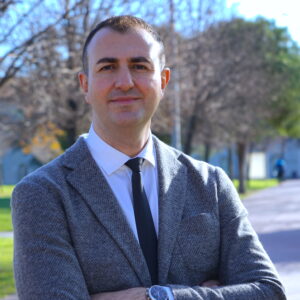
Prof. Dr. Ali Erçin Ersundu, Faculty Member, Yıldız Technical University, Türkiye
Ali Erçin Ersundu is a faculty member in the Department of Metallurgical and Materials Engineering at Yıldız Technical University. He received his B.Sc., M.Sc., and Ph.D. degrees from Istanbul Technical University, completing his Ph.D. in 2013. His doctoral thesis, recognized with the Thesis of the Year Award by Istanbul Technical University, focused on the glass formation behavior and phase stability of heavy metal oxide glass-forming systems. He conducted part of his doctoral research at the University of Illinois at Urbana–Champaign under the supervision of Prof. Waltraud M. Kriven, investigating phase stability in oxide ceramic systems through polymeric steric entrapment–based synthesis of oxide powders. His research spans both fundamental and applied studies of glass and glass-ceramic materials. His core expertise lies in luminescent glass-based materials for spectrum-tunable opto-electronics, including lanthanide- and quantum dot–doped glasses and glass nanocomposites for color conversion. These materials enable applications in solid-state lighting, optical sensing, anti-counterfeiting, agrivoltaics, luminescent solar concentrators, building-integrated photovoltaics, and emerging display technologies. Dr. Ersundu has authored over 60 scientific publications, filed four international patent applications, and has an h-index of 28 with more than 2,750 citations. He has led numerous national and international research projects, including Horizon Europe, the Clean Energy Transition Partnership, and The Scientific and Technological Research Council of Türkiye (TÜBİTAK). His honors include the Turkish Academy of Sciences Outstanding Young Researcher Award (2021) and the METU Parlar Foundation Research Incentive Award (2022).
If you have any questions, please contact Vicki Evans.
This webinar is brought to you by the ACerS International Italy Chapter and ACerS International Türkiye Chapter.
To view past ACerS webinars click here.