
Course Description
Advance your understanding of thermal measurement techniques and instrumentation
Are you involved in materials research, engineering, product development, or quality control? Do you work with thermal conductivity, diffusivity, heat capacity, or thermal expansion data—and want a clearer understanding of how these properties are measured, interpreted, and applied?
Join The Edward Orton Jr. Ceramic Foundation and Hot Disk AB for a one-day Thermal Measurement Workshop designed to provide a practical and accessible overview of modern thermophysical property measurement techniques.
This workshop is intended for both academic researchers and industry professionals seeking to strengthen their understanding of thermal measurement methods across a broad range of materials and applications.
Please note: This workshop will be held in conjunction with the International Thermal Conductivity Conference (ITCC) & International Thermal Expansion Symposium (ITES) 2026 in Westerville, OH.
Workshop Overview
The workshop will feature a series of expert-led lectures covering the fundamentals of thermal properties and the measurement techniques commonly used to characterize them. The emphasis will be on helping participants understand:
- What the physical meaning of different thermal properties is
- How major measurement techniques work
- The strengths and limitations of each method
- How sample size, geometry, and material type affect method selection
- Practical considerations in data quality, interpretation, and application
Topics covered will include:
Thermal Conductivity and Diffusivity
Understand the physical meaning of thermal transport properties and explore how they are measured using a range of methods, including:
- Steady-state approaches
- Transient methods such as Hot Disk and Hot Wire
- Laser flash analysis
- Brief introduction to advanced laser-based methods such as TDTR / FDTR / 3ω
Heat Capacity
Learn how heat capacity is measured and why it matters in thermal modeling, materials development, and application-specific performance. The workshop will include discussion of:
- DSC-based Cp measurements
- Laser flash Cp approaches
- Hot Disk-based specific heat methods
Thermal Expansion
Explore the measurement of dimensional change with temperature, with primary focus on:
- Push-rod dilatometry
- Brief introduction to interferometric dilatometry and where higher-resolution methods may be useful
Practical Measurement Considerations
The workshop will also highlight real-world issues that strongly influence data quality, including:
- Sample geometry and minimum size requirements
- Probing depth and measurement time
- Contact resistance
- Anisotropy
- Common sources of error and technique limitations
Course Format
In-person | Columbus, OH | Renaissance Columbus Westerville-Polaris Hotel
This year’s workshop will be offered as a one-day, lecture-based course held on the first day of ITCC/ITES 2026.
The day will include:
- Introductory overview of thermophysical properties
- Technical lectures on major measurement methods
- Discussion of practical measurement issues and method selection
- Multiple Q&A opportunities throughout the day
- Lunch and coffee breaks built into the schedule
Measurement Techniques Addressed
The workshop is expected to include discussion of:
- Hot Disk / transient plane source
- Hot Wire
- Laser Flash Analysis
- Guarded heat flow / steady-state methods (brief overview)
- DSC-based heat capacity
- Push-rod dilatometry
- Interferometric dilatometry( brief overview)
- TDTR / FDTR / 3ω methods (brief overview)
Applied, Cross-Method Perspective
Rather than focusing on a single instrument platform, this workshop is intended to serve as a decision-making guide for thermal measurements, helping participants understand which techniques are most appropriate for different sample types, applications, and research goals.
Who Will Benefit?
This workshop is well suited for:
- Academic researchers, faculty, postdocs, and graduate students working in materials science, physics, chemistry, and engineering
- Industry professionals involved in R&D, process development, product testing, and quality control
- Scientists and engineers working with:
- Metals
- Ceramics
- Polymers
- Composites
- Electronics materials
- Thermal interface materials
- Energy-storage and battery materials
- Anyone seeking a broader understanding of thermal measurement techniques, their proper use, and their limitations
Ideal For Participants Who Want To
- Compare different thermal measurement methods side by side
- Better understand how sample geometry affects measurements
- Improve confidence in selecting the right technique
- Strengthen interpretation of thermal property data
- Gain exposure to both established and emerging measurement approaches
Registration Pricing
- Early Bird (before August 29): $600
- Regular: $700
*Employees of ACerS Corporate Partners receive the discounted Individual Member rate. Sapphire Corporate Partners receive an additional 20% discount; Diamond Corporate Partners receive an additional 30% discount. Please contact Customer Service or 614-890-4700 to register employees at the discounted Corporate Partner rates.
Joseph Homeny, Ph.D.
Joseph Homeny is technical director of the Edward Orton Jr. Ceramic Foundation, Westerville, Ohio. He holds a Ph.D. in ceramic engineering from Pennsylvania State University and M.S. and B.S. degrees from Rutgers University. He has industrial refractories experience in the research laboratories of the J.E. Baker Company and North American Refractories Company, and industrial glass experience at Owens Corning. Prior to joining Orton in 1992, he was a professor in the ceramic engineering department of University of Illinois. Homeny is active in the refractories and advanced ceramic committees of ASTM.
Check out more courses by Homeny: Advanced Thermal Properties of Refractories, Characterization of Refractory Microstructure, Drying and Firing of Refractories, Introduction to Glass Properties, Introduction to Properties of Refractories, Introduction to Refractories, Introduction to Refractory Compositions, Properties of Refractories, Refractory Fundamentals, and Refractory Manufacturing.
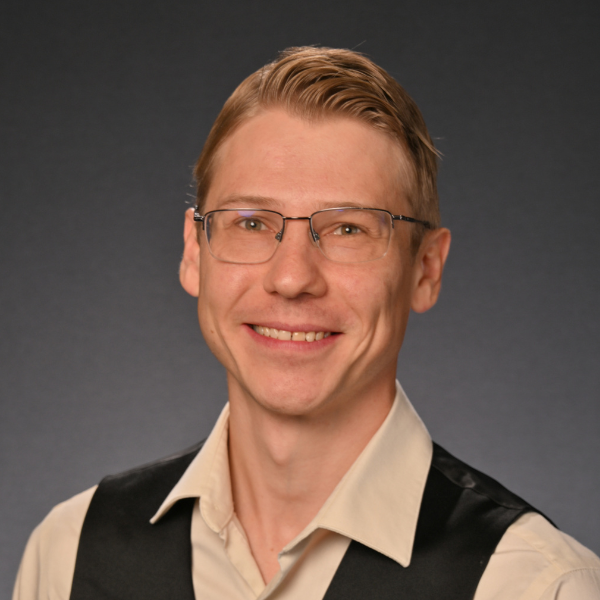
Artem Trofimov, Ph.D.
Artem Trofimov is from Odintsovo, Moscow region, Russia. He graduated from the Russian State University of Aviation Technology in 2012 with a B.S./M.S. in physics. The same year he joined Clemson University, where he received his M.S. degree in 2014 and Ph.D. in 2018, both in materials science and engineering. His Ph.D. research was focused on ceramic scintillators. After completing his Ph.D., Artem joined Oak Ridge National Laboratory in 2018 as a Postdoctoral Fellow working in thermophysics and thermal characterization of materials. After finishing his fellowship at ORNL in summer 2021, Artem secured a position at Orton Ceramic Foundation continuing his work in the field of thermophysics and materials characterization.
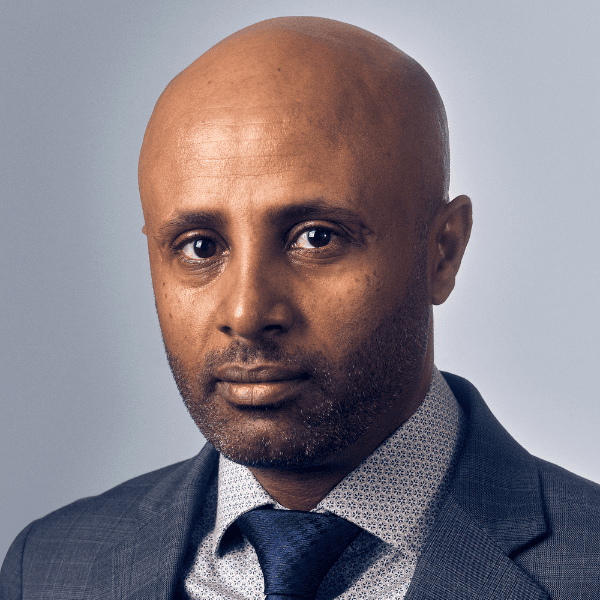
Besira Mekonnen Mihiretie, Ph.D.
Dr. Besira Mekonnen Mihiretie is a physicist and materials scientist with expertise in thermal characterization, heat transfer, materials science, and applied engineering. He received his Ph.D. in physics from the University of Bordeaux, France, and has held research positions at the University of Gothenburg, Chalmers University of Technology, and Hot Disk AB, Sweden. His work spans experimental and computational methods for thermal property measurement, advanced materials, batteries, and energy systems, resulting in nearly 30 peer-reviewed publications. In addition to his research activities, he has extensive international experience in teaching, scientific training, and industrial workshops across Europe, Africa, and Asia.
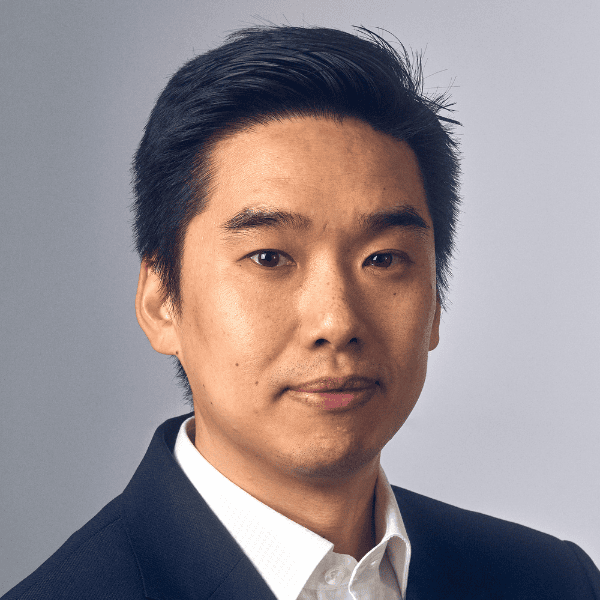
Anton Ma, Ph.D.
Anton Ma, Ph.D. earned his Ph.D. in materials science from Chalmers University of Technology (Sweden), specializing in thermoelectric materials, materials chemistry, and material property characterization. Since 2013, he has been working with Hot Disk AB, supporting global thermal conductivity measurement solutions based on the Transient Plane Source (TPS) technique.
Currently, he serves as coordinator at Hot Disk and as technical & product manager at Kagaku Analys AB, with extensive experience in thermal analysis, materials characterization, scientific instrumentation, business development, and international customer support.