Tutorials
Sunday, April 12
Cascade Tower, 3rd floor – Auditorium
6:30 – 7:30 PM
Introduction to Neutron Scattering in Materials Science Tutorial
Please note that you do not need to pre-register for this tutorial and that snacks, soft drinks, and bottled water will be provided.
Many researchers are familiar with X-ray scattering due to its easy accessibility with lab-based instruments at a university campus. However, neutron scattering provides highly compatible data to X-rays, often providing a more complete picture of the structure or dynamics of a system, when used together. Plus, there are some problems that only neutron scattering can solve. For example, neutrons are sensitive to light atoms and can also provide information about magnetic structure and phonons. This tutorial will discuss the fundamentals of neutron scattering, provide examples of how it is used in materials science, and how to access neutron scattering instrumentation at National Labs.
Instructor Bio: Michelle Dolgos is the User Outreach Lead for Neutron Sciences at Oak Ridge National Laboratory. She has a PhD in Chemistry from The Ohio State University and did postdoctoral research at the University of Liverpool before leading her own research group at Oregon State University then University of Calgary. After 12 years as a professor, she decided she needed a career change and moved to Oak Ridge National Laboratory to lead the outreach efforts for the Neutron Scattering User Program. She has over 20 years of experience in X-ray and neutron scattering, studying a wide range of materials with a focus on ferroelectric and piezoelectric systems.
Monday, April 13
Cascade Tower, 3rd floor – Auditorium
Noon – 1:30 PM
Basic Science Division Tutorial & Lunch: Agentic AI Systems for Autonomous Experimentation in Materials Science
Please note that you do not need to pre-register for this tutorial, but a lunch of pizza and sodas will be served to guests on a first come, first served basis.
Experimentation in materials synthesis and characterization is a central pillar of materials research and development, yet it remains highly resource-intensive with the need for sustained human supervision and decision-making. Recent advances in agentic artificial intelligence (AI) have demonstrated that large language models (LLMs) equipped with reasoning capabilities and structured tool use can execute complex, multi-step tasks, offering promising pathways to autonomous experimentation in materials research.
We will introduce the basic concepts underlying LLM-based agentic AI systems, with an emphasis on how AI agents with reasoning and tool-use enable closed-loop experimental control. We will then review recent progress in agentic AI-driven autonomous experimentation. Finally, the tutorial will include a hands-on session that walks through the core components required to construct a minimal autonomous laboratory framework, illustrating how AI agents, experimental tools, and feedback loops can be integrated in practice.
Presenter Bio: Zhantao Chen is an Assistant Professor in the Walker Department of Mechanical Engineering at The University of Texas at Austin, where he leads the Group for AI in Materials Modeling and Analytics (GAMMA). Prior to joining UT Austin in 2025, Dr. Chen was a Research Associate at SLAC National Accelerator Laboratory (2022–2025). He received his Ph.D. in Mechanical Engineering from the Massachusetts Institute of Technology in 2022. Dr. Chen’s research develops artificial intelligence and machine learning methods for materials modeling, characterization, and discovery, with the vision of enabling AI-driven autonomous research platforms. His long-term goal is to integrate design, synthesis, and characterization into closed-loop, intelligent workflows that accelerate materials discovery and advance fundamental materials science.
Monday, April 13
Cascade Tower, 3rd floor – Auditorium
6-7 PM
The Manufacturing Capabilities of Blasch Precision Ceramics
Please note that you do not need to pre-register for this tutorial. Pizza and soft drinks will be provided to attendees on a first come, first-served basis.
Blasch Precision Ceramics is an industrial ceramic manufacturer that has the capability to cast ceramic in complex geometries. Blasch has over 100 different materials that are used in various applications that range from desulfurization, hydrogen reforming, to molten metal containment and atomization. Molten metal containment, specifically, has advanced from the traditional molten metals (e.g., cast iron, and steel) to include far more advanced alloys (e.g., lithium alloys), which are highly corrosive to traditionally used ceramics due to the alkalinity. Therefore, in order to meet market demands, Blasch Precision Ceramics has developed a novel alkaline resistant material, that can be cast into complex geometries. Compared to the traditionally used alkaline resistant bricks, this novel material provides added value by being engineered to each application to meet demands, improve performance, and reduce costs.
This tutorial will include a power point presentation that will compare what is currently used in the market for molten metal applications (brick refractories) and compare them to the complex engineered solutions that Blasch Precision Ceramics can provide. There will be material samples that will demonstrate the complexity of geometries as well as a corrosion cup brick comparison of the newly developed alkali resistant material to what is currently used in industry.
Student and Young Professional Events
Sunday, April 12
Cascade Tower, 3rd floor – Larch
1:30 – 3:30 PM
IGNITE MSE
IGNITE MSE (International Gathering and Networking for Individuals to Explore Materials Science and Engineering) is a professional development program held in conjunction with the 2026 ACerS Spring Meeting.
The program is presented by the Ceramic and Glass Industry Foundation (CGIF) in partnership with the President’s Council of Student Affairs of The American Ceramic Society (PCSA/ACerS) and is designed to support students pursuing careers in materials science and engineering. IGNITE MSE offers participants opportunities to engage with industry professionals and academic peers while exploring career pathways within the field.
IGNITE MSE is open to undergraduate and graduate students registered for the 2026 ACerS Spring Meeting. It is free to attend, but requires advanced registration as an add-on through ACerS Spring Meeting registration.
Sunday, April 12
Cascade Tower, 2nd floor – Cedar A
3:45 – 5 PM
*Glass Strengthening Competition
The Glass Strengthening Competition is a hands-on challenge where students and early-career researchers test ideas for improving the strength of glass. Teams receive identical glass samples, apply their own strengthening methods, and bring their treated samples to the ACerS Spring Meeting for live ball-drop impact testing. The sample that survives the highest drop wins, giving participants a chance to experiment, showcase their work, and connect with others in the materials science community.
Tuesday, April 14
Olympic Tower, 1st floor – Evergreen Ballroom EFGHI
5:30 – 7 PM
Poster Session
Get up close and personal with the latest research at the Spring Meeting Poster Session! With more than 50 presenters representing all six Divisions in one room, this is your chance to explore cutting-edge work, ask the questions you really want answered, and connect directly with the researchers behind the discoveries. Grab a drink and enjoy light snacks courtesy of ACerS while you mingle with colleagues in a relaxed, social atmosphere. It is the perfect way to wrap up your afternoon before heading into the dinner hour.
For our student presenters, there will be several poster prizes given out by Glass and Optical Materials Division and the Electronics Division.
In addition, this will be the first year for the Edwin Fuller Student Poster Award competition. This competition celebrates outstanding student research in ceramic and glass science and engineering while honoring the remarkable career and contributions of Edwin H. Fuller, an ACerS Distinguished Life Member and respected industry leader. Monetary prizes will be awarded to the top three Undergraduate and Graduate Student posters ($500/$300/$200 USD). All poster award winners will be announced at the Pre-Banquet Award Celebration and all students presenting posters at ACerS Spring Meeting are eligible for this competition.
Tuesday, April 14
Olympic Tower, 1st floor – Evergreen Ballroom EFGHI
5:30 – 7 PM
Poster Bingo
Tuesday, April 14
Cascade Tower, 2nd floor – Regency Ballroom A
7- 9 PM
Networking by Design: A BSD-hosted Social
Join the Basic Science Division for an interactive networking social where you’ll grow your professional skills and make meaningful professional connections in a welcoming, low-pressure environment. Snacks and drinks provided in addition to great company, conversation, and community-building.
Pre-registration is required for this event through conference registration.
Wednesday, April 15
Cascade Tower, 3rd floor – Auditorium
12- 1:30 PM
Young Professionals Panel Luncheon: Our Past and Future with Glass and Ceramics
This luncheon event is for young professionals. The event will begin with a group activity with lunch and a discussion with invited panelists to follow.
The event will be first come, first served with pre-registration requested. If you have already registered for Spring Meeting, please contact Yolanda Natividad to request addition to the luncheon.
Networking and Special Events
Sunday, April 12
Olympic Tower, 2nd floor – Grand Ballroom Foyer
5 – 6:30 PM
Welcome Reception
Kick off the inaugural ACerS Spring Meeting in style! Pick up your badge, grab a drink and special Spring Meeting merch, and mingle with fellow attendees over light appetizers. Whether you’re reconnecting with old colleagues or making new connections, this is the perfect way to start an exciting week ahead. We can’t wait to see you there!
Monday, April 13
Meet in the Hotel Lobby
7 – 8:30 AM
Fun Run and Walk Hosted by GOMD
Start your morning on the right foot! Lace up your sneakers and join your fellow attendees for a fun, casual run or walk to kick off the conference. No registration required, just show up ready to move at your own pace. Light snacks will be waiting for you at the finish line. It is a great way to get energized, enjoy some fresh air, and connect with colleagues before the day gets started. See you out there!
Tuesday, April 14
Cascade Tower, 2nd floor – Regency Ballroom B
11 AM – Noon
Roundtable Discussion: The Resilience of U.S Research
Join our distinguished panel of speakers who will lead an open, community wide conversation on the proposed cuts to federal research funding and what they could mean for the future of universities, innovation, and the broader scientific enterprise in the United States.
Wednesday, April 15
Olympic Tower, 2nd floor – Grand Ballroom EFGHIJK
5:30 – 6:30 PM
Pre-Banquet Award Celebration
Get ready to celebrate the best and brightest in the ceramics and glass community! The Pre-Banquet Award Celebration is your chance to witness the presentation of some of our most prestigious honors, including lifetime achievement awards, poster awards, and more. It is a dedicated moment to recognize the outstanding individuals who make this community so remarkable. No RSVP required, just show up, cheer on your colleagues, and then stick around for the party that follows.
Wednesday, April 15
Olympic Tower, 1st floor – Evergreen Ballroom EFGHIJK
6:30 – 8:30 PM
We Are All Connected Spring Meeting Reception
The awards have been presented and the announcements have been made, so now it is time to celebrate! Join your fellow attendees for the We Are All Connected Spring Meeting Reception, included with your conference registration at no additional cost. Toast to the inaugural ACerS Spring Meeting surrounded by old friends and new ones, with food stations, drinks, and live entertainment in a fun and relaxed atmosphere. You have earned it. See you there!
Friday, April 17
Cascade Tower, 3rd floor – Auditorium
3:30 – 5 PM
Failure: The Greatest Teacher
Science does not always go as planned, and that is where some of the best lessons are learned! Join us for one of the most refreshingly honest sessions of the conference, where recognized leaders in the field pull back the curtain on failure, missteps, and the spectacular learning experiences that have shaped their careers. This is your chance to hear candid, unfiltered conversations in a relaxed and welcoming atmosphere where egos are left at the door and real talk takes center stage. A beloved highlight of the former EMA Conference, this fan favorite has found its home at the ACerS Spring Meeting and we think you are going to love it. Drinks will be provided.
Award Lectures
Monday, April 13
Cascade Tower, 2nd floor – Regency Ballroom E
11 am – Noon
Robert B. Sosman Award Lecture
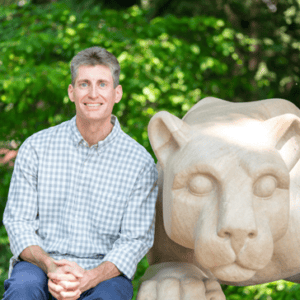
The Robert B. Sosman Award is the highest recognition of scientific accomplishment given by the Basic Science Division and is given in recognition of outstanding achievement in basic science of an area that results in a significant impact to the field of ceramics.
This year’s awardee is Jon-Paul Maria, a Professor of Materials Science and Engineering at The Pennsylvania State University. Prior to joining Penn State, Maria was a faculty member at North Carolina State University where he spent 15 years serving in the Materials Science and Engineering department. Maria received his BS., MS, and Ph.D. degrees from Penn State in Ceramic Science.
Maria’s research group pursues new materials discovery, property engineering, advances in synthesis science, and new integration strategies to merge diverse materials. Laboratory activities of interest include physical vapor deposition, ceramic synthesis by powder processing, structural characterization by diffraction, and microstructure measurement using scanning probe and scanning electron microscopy. The Maria Group members currently pursue research in the areas of ferroelectric thin films, high permittivity materials, novel semiconductor contacts, oxide epitaxy, infrared plasmonic materials and entropy engineered/stabilized crystals. With assistance from many collaborators, The Maria group published over 250 manuscripts dealing with structure-property-processing relationships in electronic materials. In 2016 Maria co-founded Third Floor Materials, a startup company that endeavors to develop novel IR sensor materials and technologies.
Maria’s talk is entitled “Ferroelectrics everywhere.”
Tuesday, April 14
Cascade Tower, 3rd floor – Auditorium
11am – Noon
George W. Morey Award – TBD
Tuesday, April 14
Noon – 1:30 PM
Norbert J. Kreidl Award and Luncheon Sponsored by AGC
Pre-registration is required and will be capped at 50 people on a first-come, first-served basis. Attendees beyond the first 50 can attend, but lunches cannot be confirmed for those who do not pre-register.
The Norbert J. Kreidl Award for Young Scholars, recognizing research excellence in glass science, is open to all degree-seeking graduate students (MSc or PhD) or those who have graduated within a twelve-month period of ACerS Spring Meeting.
This year’s awardee is Cosmin-Constantin Popescu, who will be presenting the talk entitled “Phase-change meta surfaces with 2D pixel-level addressability.”
Thursday, April 16
Cascade Tower, 3rd floor – Auditorium
9 – 10 AM
Darshana and Arun Varshneya Frontiers of Glass Lectures
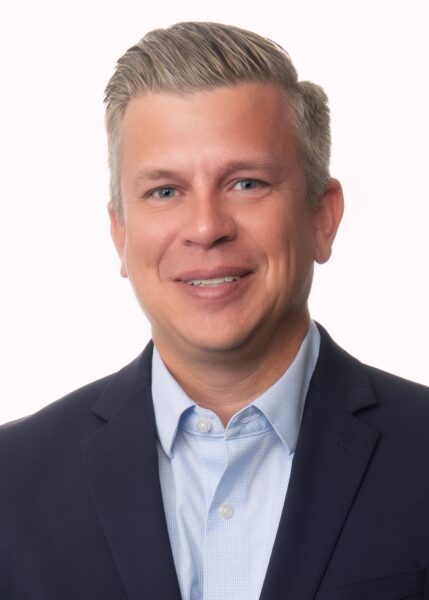
The Frontiers of Glass Science and the Frontiers of Glass Technology lectures are designed to encourage scientific and technical dialogue in glass topics of significance that define new horizons, highlight new research concepts, or demonstrate the potential to develop products and processes for the benefit of humankind.
While the Frontiers of Glass Science lecture focuses on advances in the basic science of glass, the Frontiers of Glass Technology lecture concentrates on new breakthroughs in glass technology or new glass products or applications.
This year’s Varshneya Frontiers of Glass Technology Award and Lecture award winner is Timothy Gross from Corning Incorporated. His talk is entitled “Design of damage-resistant glasses.”
Sponsored By