
Alexander Michaelis
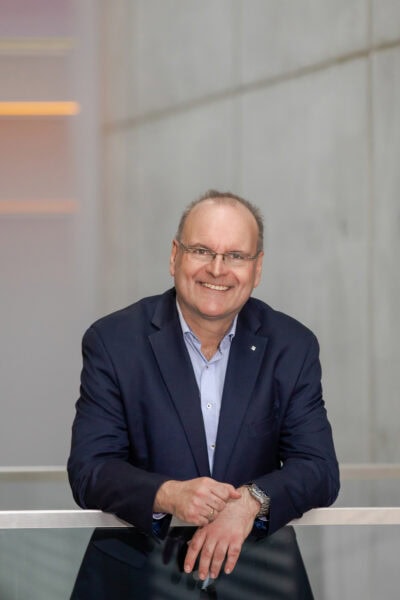
Prof. Alexander Michaelis studied physics at the University of Düsseldorf where he earned his Ph-D and state doctorate (habil) in materials science. In 1995 he became faculty member at the University of North Carolina at Chapel Hill, USA. In 1996 he switched to Siemens AG working as senior process integration engineer in the field of microelectronics in East Fishkill, New York. In 2000, he started to work for the corporate research department of Bayer AG in Leverkusen and the Bayer subsidiary H.C. Starck GmbH heading the New Business Development department. Since 2004, Prof. Michaelis is president of Fraunhofer IKTS with more than 800 employees and a yearly budget of over 76 Mio €. Additionally, he is full professor for Ceramics at TU Dresden. He filed 42 patent families and published more than 400 papers in peer reviewed journals and books. He received numerous awards. In 2009 he was elected as academician of “World Academy of Ceramics WAC”. In 2012 he received the ACerS Bridge Building Award for his contribution in the field of energy and environmental technology. In 2014 he received the Fraunhofer Medal for outstanding achievements in the field of applied materials research. In 2015 he got the LEE HSUN Award on Materials Science of the Chinese Academy of Science. In 2016 he became Fellow of the American Ceramic Society (ACerS) due to his long commitment and outstanding contributions to applied research and development of advanced ceramics. In 2017 he was appointed Fellow of the European Ceramic Society (ECerS) and received the “Medal of Leadership” of ACERS for his outstanding contribution for the Advancement of Ceramics Technology. In 2019, he was elected as President of the German Ceramic Society (DKG e.V.) and the FDKG (Research organization of DKG).
Advanced Ceramics for stationary storage and CCU (carbon capture and utilization) Technology
Advanced ceramic materials offer enormous potential for innovations in the fields of energy conversion and storage as well as decarbonization. To cope with the fluctuation of renewable power (PV and wind) batteries (short term storage for arbitrage) and electrolysis (long term “seasonal storage) for green hydrogen production is needed. We present NaNiCl solid state batteries as a Li-free and safe technology for short term storage and latest results on SOE (solid oxide electrolysis) for green hydrogen production.
Furthermore, SOE can be employed as a powerful technology for highly efficient CCU applications. For this, SOE is used in the co-electrolysis mode for the simultaneous production of H2 and CO, so called syngas. In the co-electrolysis mode, CO2 is actively removed from the environment and fed into the SOE system. By the Fischer Tropsch processes this syngas can be transferred to e-fuels (such as SAF: sustainable aviation fuel), higher alcohols, and even waxes. We present a fully integrated co-electrolysis Fischer Tropsch System combined with ceramic gas separation membranes for the extraction of CO2 from different sources such as exhaust gas from lime industry or biogas. We also present examples using SOE for combined CCU and CDA (carbon direct avoidance) applications in green steel production. Applying this technology, even allows to produce CO2 “negative” steel.