
Anna Schneller
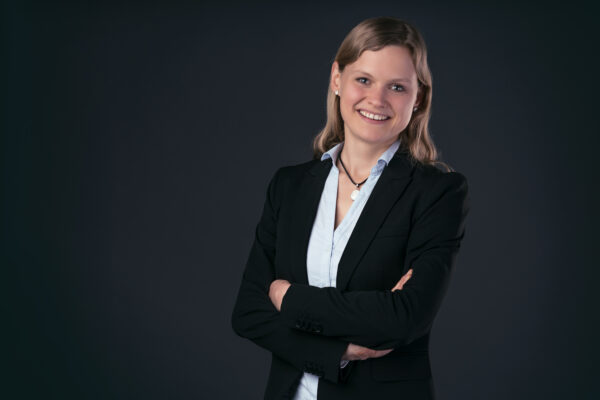
Dr. Anna Schneller is a research assistant and Group Leader of the Sustainable CMC research group at the Chair of Materials Engineering, Institute of Materials Resource Management, University of Augsburg, Germany. She received her B.Sc. and M.Sc. degrees in Materials Science from the University of Augsburg and completed her PhD in Materials Science in 2017 under the supervision of Prof. Dr. Siegfried Horn and Prof. Dr. Armin Reller. Her doctoral research focused on the recycling of carbon fibers from composite materials, with particular emphasis on inductive heating and sub- and supercritical solvolysis for fiber–matrix separation.
Since 2019, Dr. Schneller has been working in the field of ceramic matrix composites (CMCs) with a focus on sustainability and resource efficiency. Building on her research on carbon fiber recycling and resource-efficient fiber–matrix separation, her work has expanded to include the assessment of environmental and economic aspects of CMC materials and manufacturing processes. Her current research focuses on life cycle assessment (LCA), life cycle costing (LCCA), resource efficiency, and circular economy approaches for CMCs. She combines experimental materials research with sustainability assessment to evaluate and improve CMC manufacturing and recycling processes.
Her scientific work covers carbon fiber recycling, resource-efficient processing, and life cycle assessment of ceramic matrix composites. She coordinates interdisciplinary research projects with academic and industrial partners and supervises doctoral, master’s, and bachelor’s students in the fields of CMCs, materials engineering, and sustainability.
In addition to her research activities, Dr. Schneller is involved in teaching materials engineering, sustainability, and bioinspired composites.
Abstract: Relationship of process parameters, energy demand and material properties in sustainable manufacturing of C/SiC
This presentation addresses the challenge of improving the environmental and resource efficiency of industrial manufacturing processes for ceramic matrix composites (CMCs). The focus is on understanding individual process steps of Liquid Silicon Infiltration (LSI) to produce C/SiC, identifying the main energy drivers, and understanding how changes in process parameters affect process energy demand and material properties.
Within the CERAHEAT4.0 project, “Unlocking resource and energy efficiency potentials for fiber-reinforced ceramic high-temperature lightweight systems through the digital transformation of existing manufacturing structures,” industrial process and energy data were combined with targeted laboratory investigations and process modelling to investigate the LSI process. The influence of process parameters, particularly heating rates, holding times and temperatures, was studied regarding process duration and energy demand. A Design of Experiments approach was used to systematically investigate relevant parameters and their interactions, complemented by Bayesian optimization to identify efficient process conditions.
The results demonstrate the potential for substantial energy savings through targeted process optimization and indicate that the targeted energy reduction of 40% can be approached. The findings provide insights into the main energy drivers and show how process conditions can be optimized to reduce energy demand. They highlight the importance of considering material performance and resource efficiency when assessing process modifications, demonstrating the potential for a more sustainable LSI manufacturing process.