
Bijan Adl Zarrabi
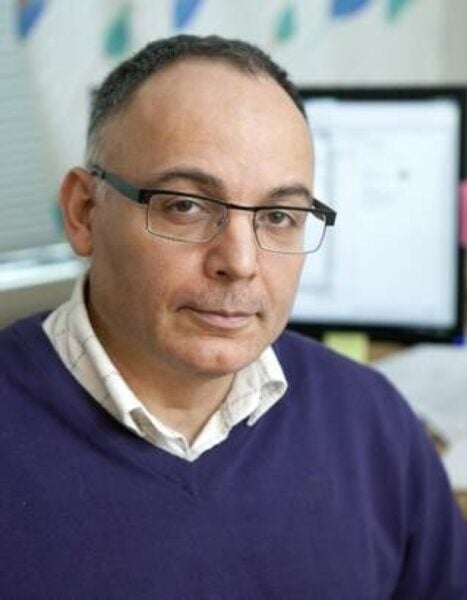
Bijan is research group leader at the Division of Building Technology, research group Infrastructure Physics, at Chalmers. He initiated a new field, Infrastructure Physics, at the division. His research area deals with heat and moisture transfer in buildings and infrastructures. Furthermore, he has long experience related to characterization of thermal properties of materials and components. Bijan is scientific coordinator of projects connectedto ferry free costal highway, E39.
Abstract presented by: Dr. Johan Gustafsson on Bijan Adl Zarrabi’s behalf
The rapid development of advanced and sustainable materials is redefining the role of thermal conductivity measurements and metrology. Thermal properties are the critical property governing heat transfer in materials used for energy-efficient and sustainable applications. As the demand for advanced materials—such as bio-based composites, recycled products, aerogels, and multifunctional systems—increases, so does the need for accurate and reliable metrology. However, conventional measurement methods are often challenged by the intrinsic complexity of these materials, which may exhibit heterogeneity, anisotropy, moisture sensitivity, and temperature-dependent behavior. Furthermore, evaluation of material’s thermal behavior in operating conditions is essential for maintenance of components and systems.
This keynote will address the fundamental challenges in thermal conductivity metrology, including scale effects, transient versus steady-state discrepancies and interfacial phenomena. At the same time, the presentation will highlight emerging opportunities driven by advances in experimental techniques, such as refined transient methods, in situ measurements, and improved sensor technologies.
The talk will conclude by emphasizing the need for harmonized methodologies and interdisciplinary collaboration to support the accurate characterization of next-generation materials. Addressing these challenges and opportunities is essential for enabling reliable material data and accelerating the transition toward sustainable, energy-efficient and climate-resilient technologies.