
Ji Yeon Park
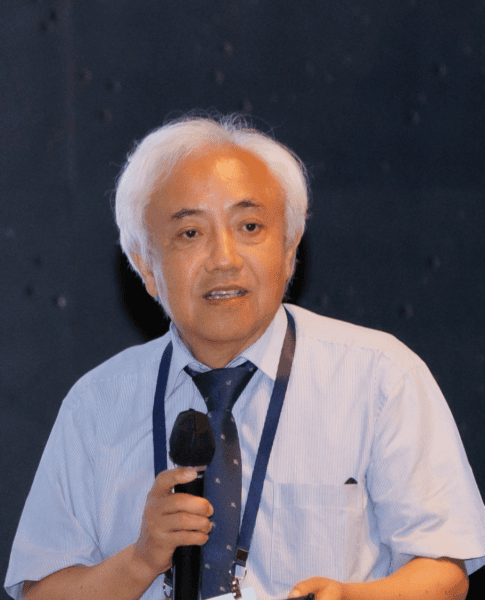
Dr. Ji Yeon Park is a materials scientist with over 35 years of experience in high-temperature structural ceramics and ceramic matrix composites (CMCs) for nuclear and advanced energy systems. He is currently a Technical Advisor at Sewon Hardfacing Co., Ltd. (since January 2025). He served as a Senior and Principal Researcher at the Korea Atomic Energy Research Institute (KAERI) from 1988 to 2024, contributing to and leading national and international R&D programs on advanced materials for Generation IV Very High Temperature Reactors (VHTR). His work focused on fabrication, characterization, and performance evaluation of SiC-based materials under extreme environments. Dr. Park has international research experience as a STA Fellow at the National Institute for Materials Science (Japan) and as a Guest Researcher at the Paul Scherrer Institut (Switzerland), collaborating on nuclear-grade SiC ceramics and composites. His expertise includes SiC-based ceramics and SiCf/SiC composites, with emphasis on CVD, CVI, and Hot Pressing, and on mechanical, thermal, and environmental performance evaluation for nuclear and gas turbine applications. He has held key international advisory roles, including Korean Representative to the GEN-IV VHTR Materials PMB (2007–2016); Expert Group Member, OECD/NEA (2009–2021); and Expert Member, ISO TC206/WG4 (2014–present). He was Conference Chair of HT-CMC 11 (2023).
Abstract Title: Progress in the Development of SiC CMC Composites for Extreme Environments in Korea
SiC ceramics possess excellent high-temperature strength, chemical stability, and radiation resistance. Therefore, they have emerged as a candidate material for a variety of applications in extreme environments characterized by high temperatures and high radiation. In particular, SiC fibers reinforced composites are expanding their application as structural materials as they can compensate for the catastrophic failure, a shortcoming of monolithic ceramics. SiC fiber composites are composed of fibers, interfaces, matrix, and coating layers, and therefore, various manufacturing processes can be attempted to obtain appropriate properties, which greatly influences the range of applications of the composite. In Korea, the development of SiC composites for use in high-temperature gas turbine engines and nuclear reactor core components has been ongoing for over 20 years, focusing on manufacturing process development. Composite matrix development, including chemical vapor infiltration (CVI), liquid metal infiltration (LM(S)I), polymer impregnation and pyrolysis (PIP), hot press (HP), and hybrid processes, has progressed to the point where it can be applied to actual shapes. The resulting environmental barrier coating (EBC) and thermal barrier coating (TBC) technologies, focusing on material development and coating processes, have also reached the stage of being applied to actual parts. It is expected that third-generation SiC fibers will reach pilot plant-scale production in the near future.
This presentation will summarize the technological progress over the past 20 years in the development of SiC fiber composites for use in extreme environments in Korea, and briefly explains the current technological status, research infrastructure, and future prospects.