
Jing Liu
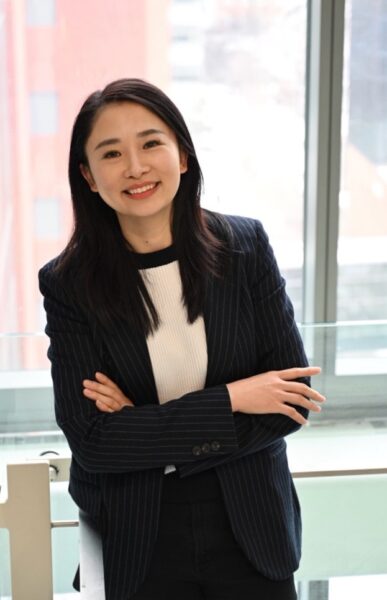
Dr. Jing Liu is an Associate Professor and Engineering Research Chair in the Department of Chemical and Materials Engineering at the University of Alberta. Prior to joining the University of Alberta in 2019, she worked as a Principal Metallurgist at Kemetco Research. She received her Ph.D. in Materials Engineering from the University of British Columbia, where she also completed her postdoctoral research.
Dr. Liu’s research focuses on corrosion and materials degradation, high-temperature and high-pressure electrochemistry, and sustainable materials engineering, with particular emphasis on materials for extreme energy environments. She has published more than 70 peer-reviewed papers in leading journals, including Materials Today, Acta Materialia, and Chemical Engineering Journal. Her contributions have been recognized by several awards, including the 2022 Petro-Canada Young Investigator Award and the 2024 MetSoc Brimacombe Award. She also serves as an Associate Editor of Canadian Metallurgical Quarterly and a Subject Editor of Process Safety and Environmental Protection.
Abstract Title: Turning Oxidation into Protection: Thermally Grown Complex Oxides from Complex Concentrated Alloys
High-temperature alloys rely on thermally grown oxides (TGOs) for protection, yet these scales often become the weakest link when exposed to aggressive environments, where cracking, spallation, elemental transport, and hot corrosion can accelerate degradation. This work explores a different materials-design strategy: rather than simply suppressing oxidation, complex concentrated alloys (CCAs) are designed to grow functional, protective oxide architectures in situ.
Starting from systematic studies of oxidation activity, elemental diffusion, phase stability, and oxide-scale failure in transition-metal CCAs, we developed an AlCrTiVNi5 alloy capable of forming a multilayer complex concentrated oxide (CCO) during thermal treatment. The resulting scale contains compositionally distinct oxide layers with rock-salt and corundum structures and exhibits low mass gain and strong resistance to high-temperature hot corrosion. Experimental characterization and atomistic calculations further show that oxide stability, lattice distortion, and surface interactions with aggressive species such as sulfur and chlorine contribute to the protective behavior. These findings demonstrate how alloy chemistry can be used to engineer the composition, structure, and function of thermally grown ceramic layers, offering a pathway from oxidation-resistant alloy design toward self-generated protective coatings for extreme-temperature environments.