
Rishi Raj
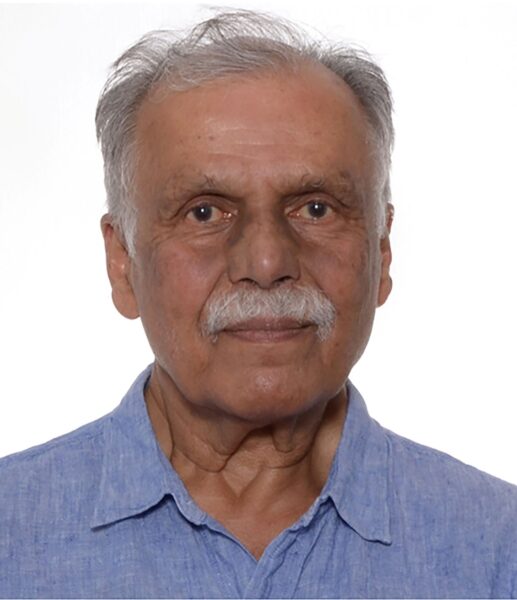
Rishi Raj received the Ph.D. in Engineering and Applied Science from Harvard University, MA in 1970. He was at Cornell University from 1975 to 1996, when he returned to the University of Colorado Boulder. His work has centered on materials science of chemical physics of defects and their movement in crystals and grain boundaries, with application in various high temperature phenomena. His approach combines simple experiments and closed-from models. The “flash phenomenon” was discovered in his laboratory in 2010 in the context of sintering. It is now recognized as being highly general with application to both ceramics and metals. It has expanded to chemical reactions and holds promise of a new era in surface science.
Abstract Title: FlashSintering+: Generation of Colossal Concentration of Defects and Consequences
Recent scientific experiments are providing insights into the mechanism of flash sintering. Broadly speaking they assert that very high concentrations of defects, several orders of magnitude higher than estimated from thermal equilibrium, are generated. These high concentrations produce a corresponding enhancement in diffusion resulting not only in rapid sintering, but also greatly enhanced kinetics of chemical reactions. Aggregates of these defects cause a transition from ionic to electronic conductivity. In one instance have been shown to form a crystalline phase of their own that is congruent with the mother crystal, but with an 8% smaller lattice parameter (basic research in flash are better explored on pre-sintered and single crystals specimens). This talk covers three topics: (i) Defects, that have formation energies equal to several eV, form with energy inputs of a fraction of an eV. This dichotomy is explained by non-linear growth lattice vibrations that form standing waves at the Debye Temperature. (ii) The defects alter the electronic structure of surfaces, lowering their work-function for electron emission; these electrons form a plasma with implications in CVD and coatings. (iii) The future: new manufacturing designs, discovery of far-from-equilibrium materials, and new directions for basic research in interdisciplinary materials science.