
Posts by Lisa McDonald
Jonathon’s journal gems—Jonathon’s top 5 favorite Ceramic Tech Today posts from 2019
Water purification techniques, sodium-ion batteries, and expanding your impact make Jonathon’s list of top five favorite CTT posts from 2019.
Read MoreQuantifying potential—researchers close in on hafnia-based nonvolatile memory

Hafnium oxide-based ferroelectrics are promising materials for nonvolatile memory devices, as they are compatible with modern semiconductor technologies. Researchers led by the Moscow Institute of Physics and Technology came up with a unique method to better characterize these materials.
Read MoreCeramic and glass business news of the week

Second rare earth exchange opens in China, US-Israel fund to invest $6M in joint clean energy projects, and more ceramic and glass business news of the week for January 3, 2020.
Read MoreOther materials stories that may be of interest
Tomato skin and graphene to generate electricity, how tungsten erodes in tokamaks, and other materials stories that may be of interest for January 1, 2020.
Read MoreIt’s beginning to look a lot like year’s end: Lisa’s top 5 favorite Ceramic Tech Today posts from 2019

Weyl semimetals, flexible glasses in bulk form, and multilayer ceramic capacitor shortage make Lisa’s list of top five favorite CTT posts from 2019.
Read MoreNanospinning performance fabrics—the next generation of gear is weaving materials science into outerwear

By incorporating electrospun nanofibers, The North Face’s new Futurelight gear is designed to be more breathable and lightweight than any other performance material currently on the market.
Read MoreA hundred years of ferroelectricity, plus more inside January/February 2020 ACerS Bulletin

The January/February 2020 issue of the ACerS Bulletin—featuring the history and industry impact of ferroelectric materials—is now available online. Plus—NSF CAREER Ceramics Program decadal overview.
Read MoreCracking the case of ceramic ‘softening’: Size-induced grain boundary energy affects hardness of ceramics
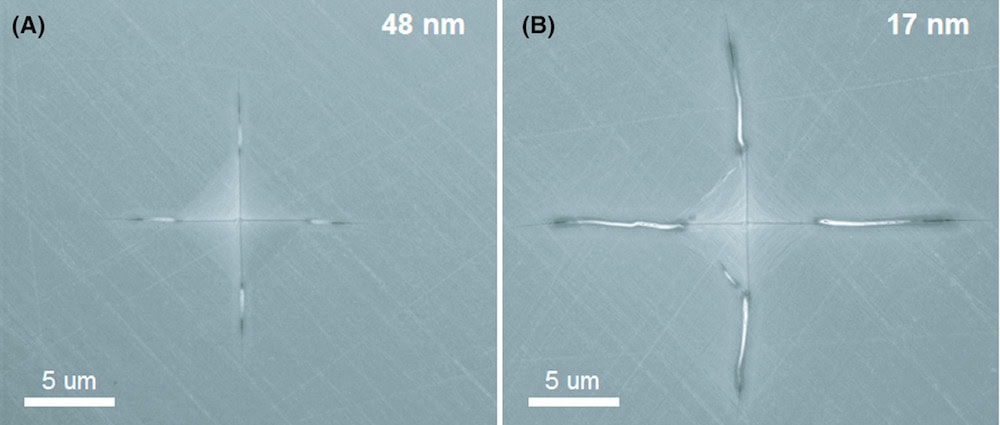
When grain sizes in ceramics become critically small, ceramics can appear to soften. Researchers led by the University of California, Davis, show this false impression is due to an extensive network of nanocracks caused by increased grain boundary energy.
Read MoreCeramic and glass business news of the week
ACI to host Concrete Convention, nuclear tech company to locate research center in New Mexico, and more ceramic and glass business news of the week for December 20, 2019.
Read MoreVideo: Effectively pour concrete in cold weather
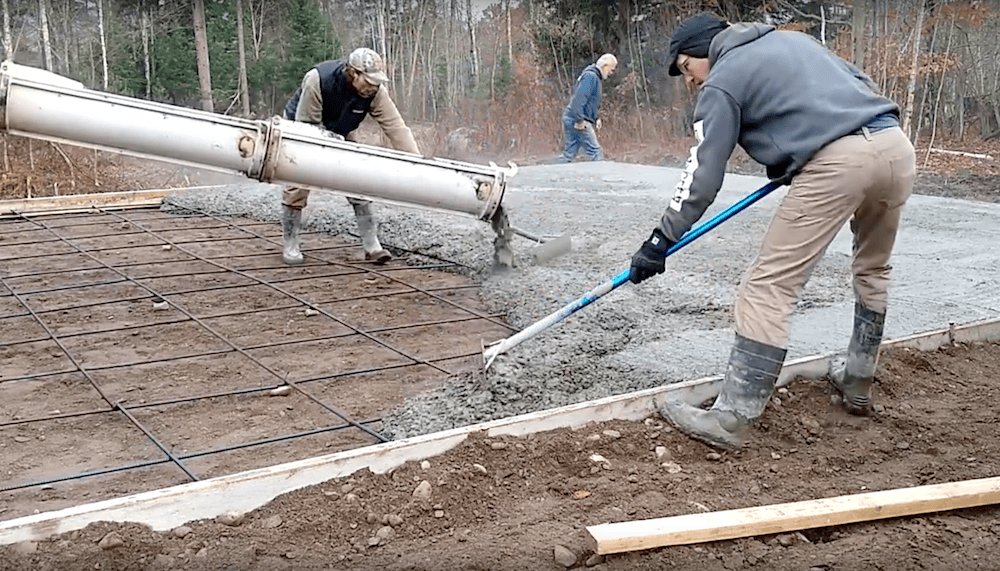
Though construction season is mainly ended for the year, sometimes critical construction projects cannot wait until spring. Learn how to effectively pour concrete in cold weather.
Read More