
The Frontiers of Glass Science and the Frontiers of Glass Technology lectures are designed to encourage scientific and technical dialogue in glass topics of significance that define new horizons, highlight new research concepts, or demonstrate the potential to develop products and processes for the benefit of humankind.
While the Frontiers of Glass Science lecture focuses on advances in the basic science of glass, the Frontiers of Glass Technology lecture concentrates on new breakthroughs in glass technology or new glass products or applications. The lectures are presented at the annual Glass and Optical Materials Division meeting in conjunction with ACerS Spring Meeting. The Varshneya Awards Committee will select the lecturers, although nominations from membership are invited.
Up to two awards can be given annually. The awardee(s) receive a certificate, glass commemorative piece, travel stipend up to a maximum of $2,500, and complimentary meeting registration.
Nomination Process
- The nominator completes the online form on the ACerS website. Any additional information, such as a CV or list of high-impact publications, is also encouraged as part of the nomination.
- The nominees chosen should provide the Society with a learned lecture at its Glass & Optical Materials division meeting in conjunction with ACerS Spring Meeting. The lecture should be in glass topics of significance that meet one or more of the following criteria:
1. define new horizons
2. highlight new research concepts
3. demonstrate the potential to develop products or processes for the benefit of humankind - The awardee(s) should be an accomplished speaker and communicate well to the mixed audience (members and visitors).
- The choice of awardee(s) may be from within or outside of the society.
Darshana and Arun Varshneya Frontiers of Glass Lectures Award Nomination Form
Award Winners

Technology Lecture
Timothy M. Gross
Dr. Gross is a Research Fellow and the Director of Inorganic Materials at Corning Incorporated, Corning, NY. Tim has a Ph.D. in Materials Engineering from Rensselaer Polytechnic Institute, an M.S. in Materials Science and Engineering from Rochester Institute of Technology, and a B.S. in Ceramic Engineering from Alfred University. Tim is recognized as an expert in both fracture mechanics and glass formulation. Tim’s work on mechanics of ion-exchangeable glass has resulted in the invention of six versions of Corning® Gorilla® Glass for mobile device cover windows. His work on bendable glass resulted in the first demonstration of cover glass plates capable of unlimited bending to radii less than 5 mm. Tim invented Fusion5®, an automobile windshield glass specifically designed to be break-proof against rock strikes. Tim also invented Guardiant® antimicrobial glass-ceramic that kills ≥ 99.9% of bacteria and viruses while maintaining long term efficacy. Tim holds 172 granted United States patents and has 35 peer-reviewed publications. He has received numerous internal awards, including the Corning Stookey Award for outstanding exploratory research and was twice awarded the annual outstanding external publication award. Tim was recently awarded the 2025 American Ceramic Society Stookey Discovery Award for innovative research in new materials.
Awarded for:
Dr. Timothy Gross has been a researcher at Corning Incorporated, contributing numerous patented inventions including Corning Gorilla Glass, antimicrobial glass ceramic, and bendable glass. His latest innovations include Fusion5 glass, the first damage resistant glass designed specifically for automotive exterior applications, and steam-strengthenable glass. His innovations, used in smartphones and automotive applications, have demonstrated market viability and potential for industry transformation. His antimicrobial glass ceramic has been used as an additive in paints to provide long-lasting antimicrobial efficacy. His work on steam-strengthenable glass could inspire environmentally friendly advancements in glass strengthening techniques.
Science Lecture (deferred to 2027)
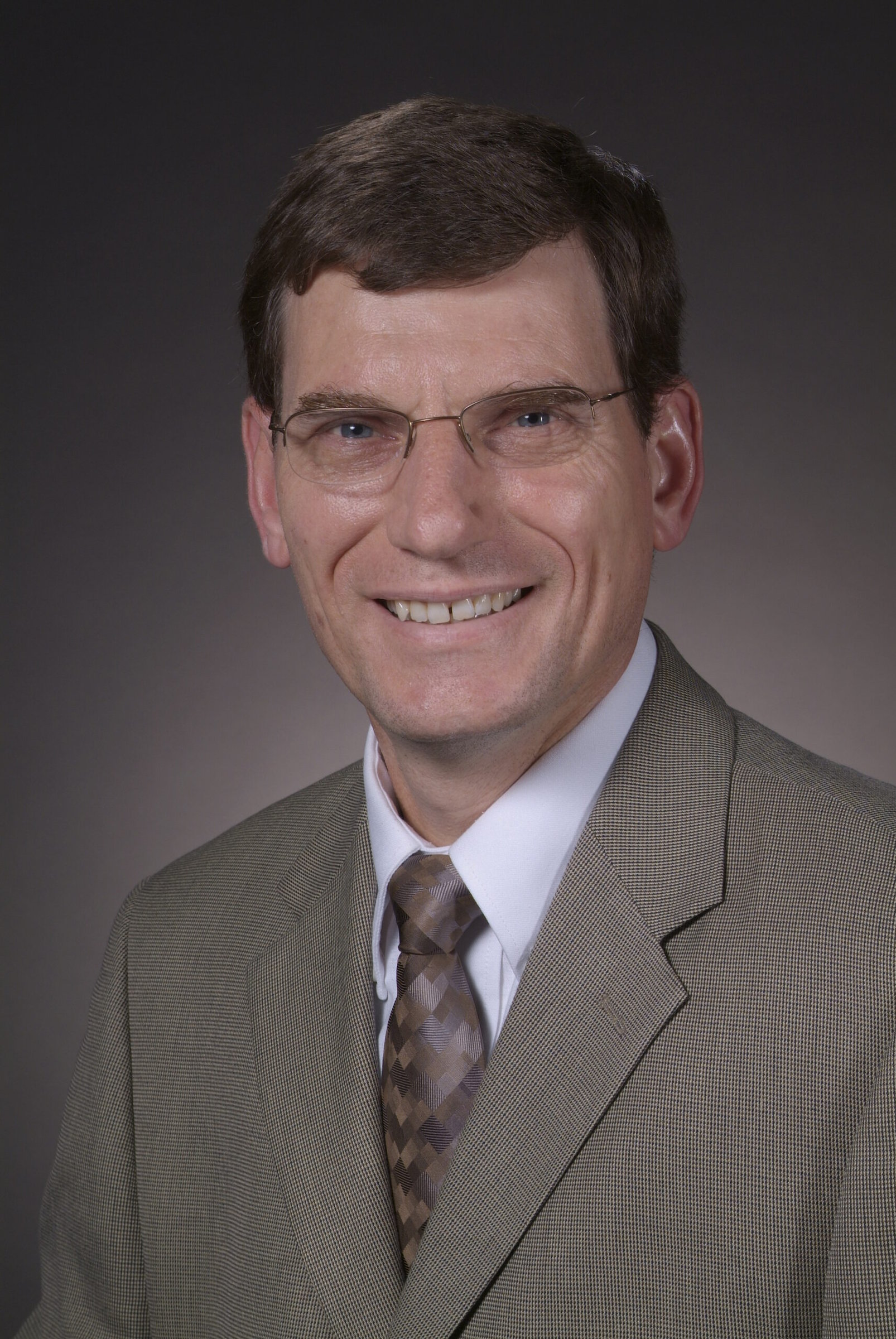
Steve Martin
Steve W. Martin is the Anson Marston Distinguished Professor in Engineering in the Department of Material Science and Engineering at Iowa State University. He earned his B.S. in Chemistry from Capital University in 1980, and his Ph.D. in Physical Chemistry from Purdue University in 1986. He then directly joined the faculty in MSE at ISU. In 1991 he was awarded ISU’s highest honor to junior faculty for Early Achievement in Research and was promoted to the rank of Associate Professor with tenure. In 1995, Martin was awarded a R&D 100 award for his development of a new class of Ultra-Low Expansion Optical Glass Fibers for Laser Surgery. In 1996, he was promoted to the rank of Full Professor at ISU.
In 2002, Martin was elevated to the rank of Fellow of ACerS. In 2003, he was awarded the ISU MSE Department Excellence in Service Award which was followed in 2005 by the MSE Excellence in Research Award and in 2009 by the MSE Excellence in Teaching Award. He is the only faculty member to have won all three such awards in the history of the MSE Department at ISU. In 2005, Professor Martin was awarded the only Chalmers University (Göteborg, Sweden) 175th Anniversary Jubilee Professorship for glass research in the Department of Applied Physics. At ISU, he was promoted to the rank of University Professor in 2006. Martin was promoted to his current rank of Anson Marston Distinguished Professor in Engineering in 2009 for his international leadership and recognition in research on glass. He is one of only two professors in the 160+ year history of ISU to be awarded both of these highest distinctions.
Awarded for:
Professor Martin is the leading researcher in sulfide and oxy-sulfide glassy solid electrolytes (GSEs). He has pushed this field from obscurity, onlya few hundred publications in the early 1980s, to the forefront where many hundreds of thousands have been published. His research is thefoundational science of new GSEs. These GSEs hold the best promise to solve the world-wide problem of fire and explosions of current Lithium ionbatteries. Among his many contributions to this field, He has shown that sulfide GSEs have the highest reported conductivity, that mixed oxy-sulfide glasses can have a 10-fold increase in the conductivity, a 10-fold increase in mechanical strength and a nearly 100-fold increase in thechemical durability of the glass, and that mixed glass former mixed oxy-sulfide-nitride glasses have dramatic improvements in theirelectrochemical stabilities and are so resistant to crystallization that they can be drawn into battery-enabling 20-micron-thick films.