
The L. David Pye Glass Hall of Fame Award is presented annually by the Glass & Optical Materials Division to a deserving individual(s) in recognition of lifetime dedication, vision, and accomplishments in advancing the fields of glass science, glass engineering, and glass art. ACerS membership is not required.
This Award is named after Dr. L. David Pye in recognition of decades-long leadership and passion to advance glass science, engineering and art across the globe. While honored, humbled, and grateful for this recognition, from the very beginning he and others regarded it as an opportunity for the Glass and Optical Materials Division(GOMD) to honor many others for their respective lifetime achievements.
Hence, its subsequent endowment and name: The GOMD L.David Pye Glass Hall of Fame Award.
This Award is presented at the GOMD’s annual meeting banquet and consists of a certificate, and a glass piece. The awardee also receives complimentary registration to the GOMD meeting. A lecture is not required.
Nomination Process
Nomination profile should include:
- Sponsor’s executive summary
- Nominee’s latest CV
- Two supporting letters
There is no specific nomination form for this award.
For more details on all GOMD awards you may qualify for, see the attached GOMD Awards Table.
Contact
Nominations should be sent electronically to:
Collin Wilkinson
2026–2027 Chair, Glass & Optical Materials Division
and ACerS Staff Member Vicki Evans
Award Winners
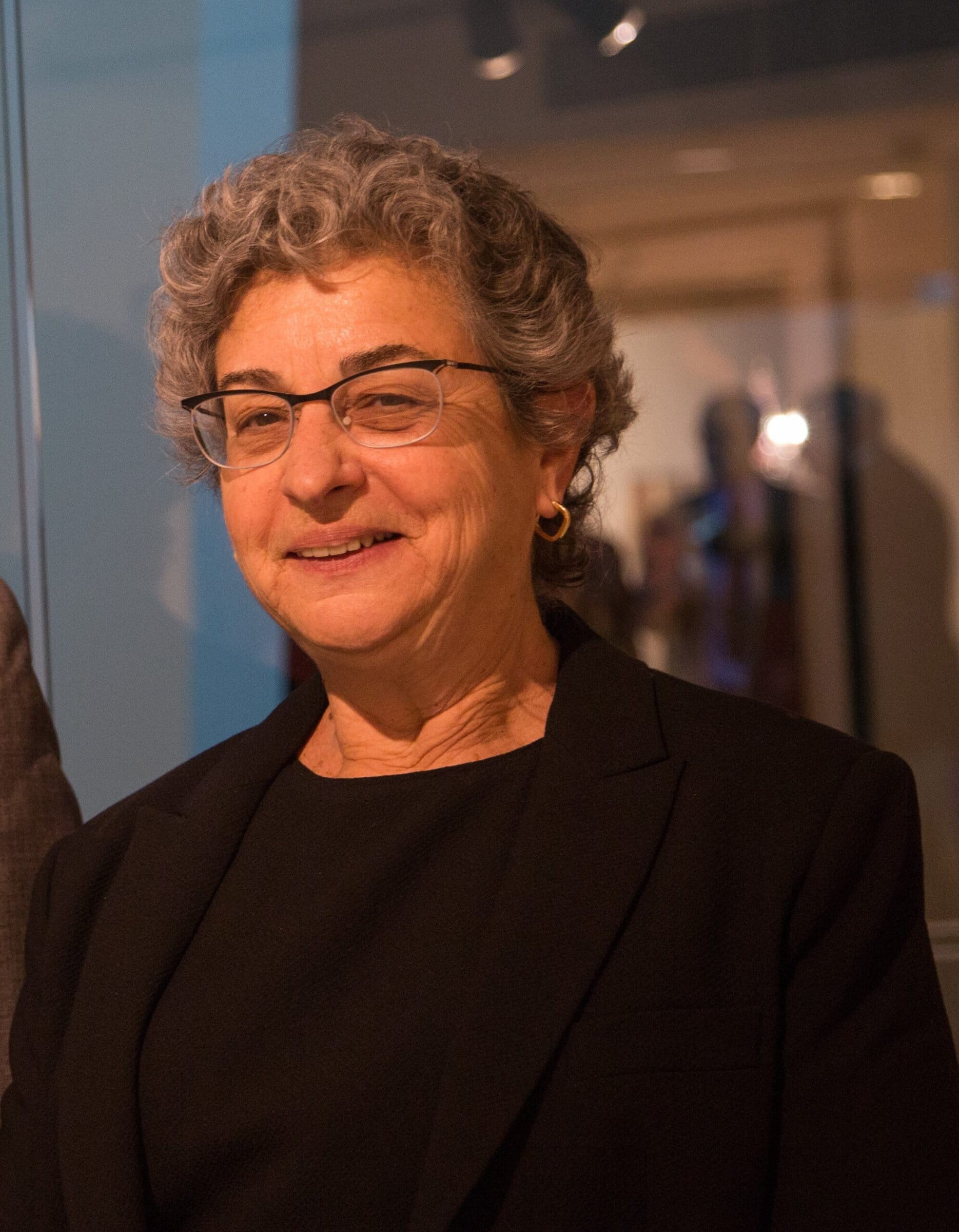
Lisa C. Klein
Dr. Lisa C. Klein is Chair of the Materials Science & Engineering Department, Rutgers University. She received a BS in Metallurgy in 1973 and a PhD in Ceramics in 1977 from the Material Science & Engineering Department at the Massachusetts Institute of Technology. With Rutgers since 1977, she became a full Professor in 1987. In 1998, she received the Achievement Award of the Society of Women Engineers for “breakthrough contributions in sol-gel science and engineering, particularly sol-gel applications in electrolytes, electrochromics, membranes and nanocomposites”. Her areas of expertise are sol-gel processing of glasses, ceramics and organic-inorganic hybrids. Her use of the sol-gel process finds applications in planar waveguides, ceramic membranes, solid electrolytes and components for fuel cells. In 2017, she received the Life Achievement Award from the International Sol-Gel Society at the 19th International Sol-Gel Conference, September 7, 2017, Liege, Belgium. In 2024, she was designated Honorary Life Member of the American Ceramic Society.

James E. Shelby
James E. Shelby is a Professor Emeritus of Ceramic Engineering at the New York State College of Ceramics at Alfred University in Alfred, NY. He retired from Alfred University in 2011 and currently resides near Flemington, New Jersey. James earned his B.S. (1965), M.S. (1967), and Ph.D. (1968) in Ceramic Engineering at the Missouri School of Mines and Metallurgy, which is now the Missouri University of Science and Technology (MS&T).
In 1968, James joined the technical staff of Sandia National Laboratory, Livermore, CA, where he carried out extensive research on the permeation, diffusion, and solubility of helium, neon, and hydrogen in glasses and glass-ceramics, including the effects of high pressure, radiation, and phase separation, He also studied radiation induced hydroxyl formation, chemical annealing of radiation-induced defects in vitreous silica, phase separation and the properties of glasses, and the application of glasses in solar energy projects.
In 1982, James joined the faculty of the NYSCC at Alfred University as an Associate Professor, was promoted to Professor in 1985, and served as the McMahon Professor of Ceramic Engineering from 1997 to 2008. He received the George W. Morey Award in 1975, was named a Fellow of the American Ceramic Society in 1984 and was selected by his peers to Chair the 1995 Gordon Conference on Glass. In 2005, he received the SUNY Award for Exemplary Contributions to Research and Scholarship. James also received the honorary professional degree of Ceramic Engineer from MS&T, the McMahon Award for excellence in teaching, and presented the 2010 McMahon Lecture.
During his tenure at AU, he advised 15 PhD students, 52 M.S. students, and over 100 B.S. thesis projects dealing with glass science. He is the author or co-author of over 275 journal and proceeding papers and 11 book chapters, He is the author of the Handbook of Gas Diffusion in Solids and Melts (1996), Germanate Glasses and Melts (2005), and Borate and Borosilicate Glasses and Melts (in press) and the editor of Rare Elements in Glasses (1994). In 1995, he published a widely used textbook on glass titled Introduction to Glass Science and Technology, which is now in its 3rd Edition.
During his tenure at AU, James and his students published numerous papers on the properties of glasses containing Al2O3 and Ga2O3, the formation and properties of glasses containing mixed alkalis, rare earths oxides, Ag2O, WO3, Sc2O3, Y2O3, and other elements rarely studied in glasses, and the effects of phase separation and crystallization on the properties of glasses and glass-ceramics. His group also published many papers on gas/glass interactions, including helium, neon, and argon solubility, water solubility and diffusion, formation of hydroxyl, and hydrogen reactions with glasses to reduce the oxidation number of transition metal ions and to form colloids of germanium, arsenic, antimony, copper, silver, nickel, cobalt, lead, and indium. His group discovered the photo-induced diffusion of hydrogen in hollow glass microspheres. James proposed a model for the borate anomaly in the thermal expansion coefficient of alkali borate glasses which is widely accepted to this day. James and his co-workers are responsible for much of the data reported since 1968 for the thermal expansion coefficients, transformation range viscosity, and refractive index of oxide glasses.