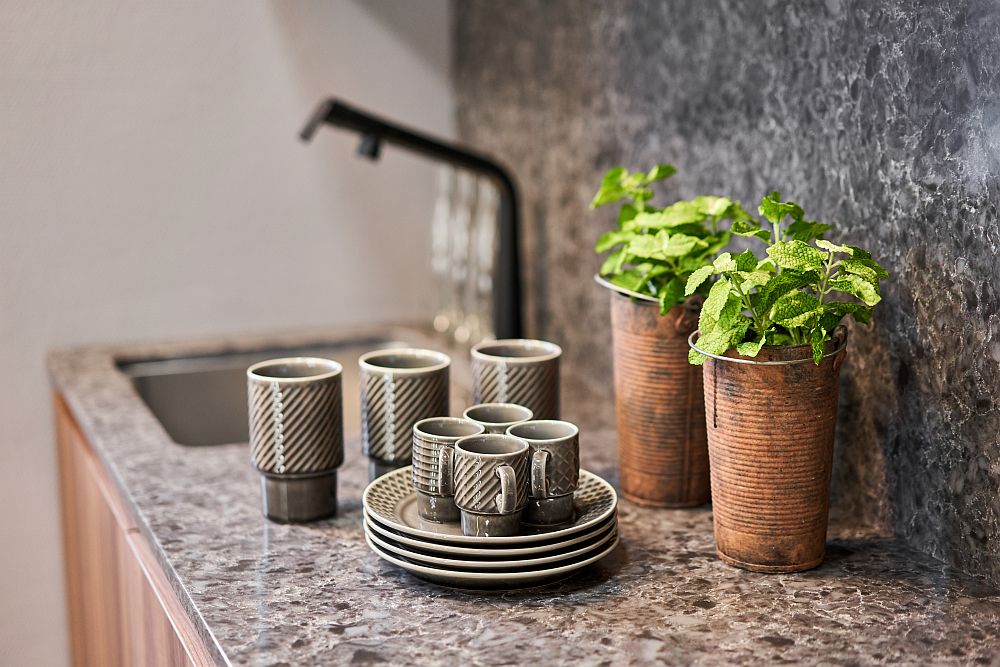
[Image above] Credit: Fusionstudio / Shutterstock
When we hear the term “engineered materials,” we typically think of developments that are pushing the boundaries in cutting-edge fields, such as artificial intelligence, noninvasive medical treatments, and aerospace thermal protection systems.
But engineers also aim to upgrade materials and technologies much closer to home, and shining a light on these innovative everyday applications can be a good way to show young students how they can “transform their future” during this year’s National Engineers Week in the United States.
Your literal home is the perfect place to find examples of engineered materials, as residential buildings are increasingly making use of advanced materials to improve energy efficiency, better withstand environmental exposure and extreme weather events, and reduce the construction industry’s environmental impact.
The evolution of plumbing systems and toilet fixtures are two examples of home innovations that we covered in detail last year on CTT. Today, we will look at the evolution of yet another home essential that can sometimes go unappreciated—kitchen countertops.
From freestanding furniture to a fixed work surface
Even before discussing countertops, the concept of a dedicated indoor kitchen area is itself a somewhat novel idea. Prior to the medieval era, cooking would take place in either
- The main (sometimes only) room in the house, so the central hearth could serve as the primary source of both warmth and light. (Common setup for the poor working class)
- In a small room hidden in the back or an outdoor courtyard, to keep the smoke from bothering the residents. (Common setup for the upper class)
Dedicated indoor kitchens began appearing during the 12th century, and a first step in this evolution involved replacing the central hearth with fireplaces set into the walls to better control the flow of smoke. Yet even as we saw advancements in the type of fuel used for the oven and later stoves, and the cookware used to prepare large feasts, the food was still largely prepared on either the stone hearth next to the fireplace or freestanding pieces of wooden furniture.
The idea of constructing fixed countertops designed specifically for food preparation emerged in the early 20th century. Industrial development during the previous two centuries created a new class of well-off individuals who were increasingly aware of the need for sanitary workspaces. Kitchens started to be viewed as a status symbol for sanitation, and smooth countertops made from linoleum, ceramic tiles, or steel became popular hygienic choices compared to traditional porous wooden surfaces, which were susceptible to harboring bacteria, mold, and fungus.
Natural stone countertops, notably granite and marble, gained significant popularity in the 1980s and 1990s due to their durability, unique aesthetic, and ability to increase home resale value. By the 2000s, mass production made these materials more affordable, solidifying their status as popular, durable, and stylish choices for homeowners.
Since the turn of the century, several new engineered materials have become popular alternatives to natural stone and quartz countertops. These synthetic options can offer improved functional properties while still mimicking the unique beauty of the natural choices.
Engineered countertops for the modern kitchen
Quartz countertops were one of the first engineered options to become a popular alternative to natural stone in the early 2000s. They offer increased durability and lower maintenance requirements compared to natural stone, which requires regular sealing to prevent staining and damage.
Quartz countertops are composed of about 90–95 wt.% crushed natural quartz mineral mixed with resins, polymers, and pigments to create a nonporous surface. With such a high percentage of quartz in the mixture, a lot of silica dust is released into the air when cutting the material into slabs.
Inhaling silica dust comes with a severe risk of silicosis, an irreversible and potentially fatal lung disease. Reports of countertop workers coming down with this disease due to insufficient workplace safety regulations are causing some consumers to shift to other engineered countertop options.
Sintered stone countertops emerged as a premium, durable, and low-maintenance alternative to quartz and natural stone in the 2010s. Unlike quartz countertops, which contain binders or adhesives to hold them together, sintered stone countertops are produced by mimicking natural stone formation processes.
A mixture of natural minerals—such as quartz, feldspar, and silica—is poured into a mold and subjected to immense pressure to eliminate any air pockets. The pressed material is then fired in a kiln at temperatures exceeding 1,200°C (2,192°F), resulting in an ultracompact and nonporous product held together without any artificial binding agents.
Because sintered stone countertops do not contain any resins or adhesives, it is easier to recycle them at the end of their service life. However, the high-pressure and high-temperature manufacturing process makes these countertops more expensive than quartz countertops.
Although sintered stone is less expensive than high-end natural stone options, if the countertop cracks, it can only be repaired through special restoration methods due to its extreme hardness and density. In contrast, natural stone countertops can typically be fixed using traditional, generic stone fillers.
Recycled glass countertops are considered an ecofriendly countertop option because they present a unique reuse pathway for waste glass. However, they typically are prone to chipping or cracking if hit with heavy objects, which makes their choice as a kitchen countertop less than ideal.
In October 2023, Swedish-founded retailer IKEA launched a new line of recycled glass countertops called Lockebo. By using a pressurized curing process, IKEA engineers were able to make the Lockebo countertops as impact resistant as their quartz countertops—thus mitigating the main drawback of recycled glass countertops.
Notably, the Lockebo countertops comprise a minimum of 80% recycled glass. Typically when cullet is recycled into new glass products, you can only add about 50% recycled material without significantly affecting the mechanical properties.
With so many options for kitchen countertops, homeowners looking to renovate must balance cost, maintenance requirements, and aesthetics to select the best option for them. And if none of the options feel quite right, have no fear—today’s aspiring young engineers will surely grow up to invent even better options to fulfill your home needs.