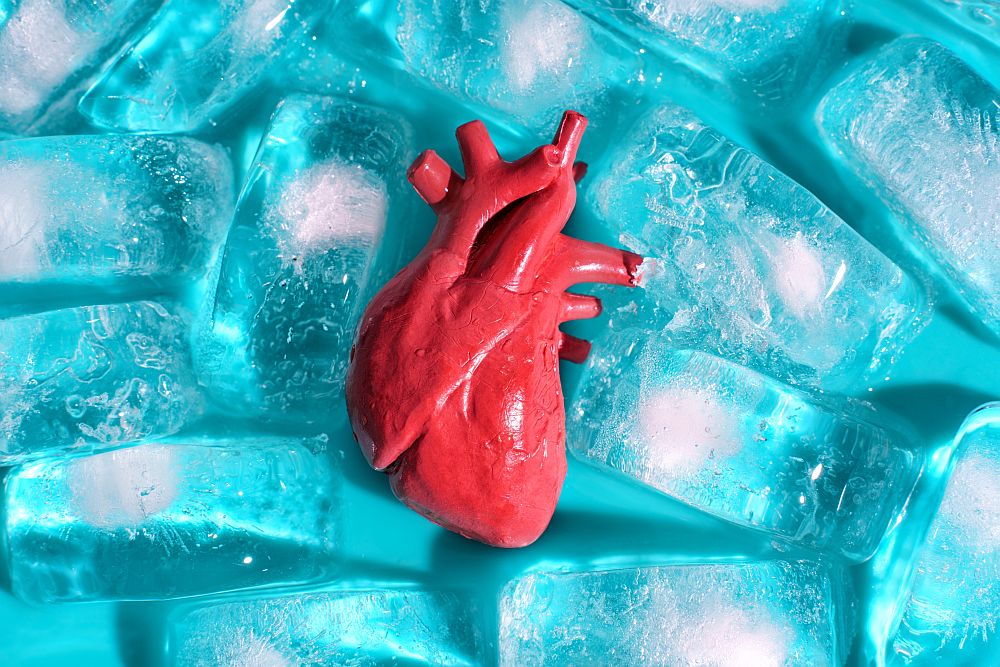

[Image above] The balance between porosity and structural integrity in biomaterials is a constant challenge for ceramic and glass scientists. Credit: Monster Ztudio / Shutterstock
The past 60 years have witnessed great advancements in the field of biomaterials, with ceramic and glass materials leading the charge in many cases. But these discoveries barely scratch the surface of what scientists believe is possible with these materials, if we can overcome some long-standing challenges.
Porosity is one of the challenges that scientists working with biomaterials face. Most natural tissues are characterized by interconnected porous–permeable structures, which facilitate essential physiological functions such as the diffusion of oxygen, nutrients, and metabolic waste. Replicating this complex network with biomaterials can help optimize integration with the body, but scientists working with ceramic and glass materials must be careful to balance porosity with structural integrity to avoid brittleness and low strength.
Numerous methods are being explored to fabricate mechanically sufficient porous bioceramics, including freeze casting, electrospinning, and additive manufacturing. Regardless of the specific forming method used, in many cases, a sintering step is required to densify the material and achieve the final strength profile.
There are many parameters to consider when setting up the sintering step, including the thermal properties of the material being processed. Within this past month, two different groups took a close look at the sintering parameters required to balance porosity and strength in fluorapatite and alumina, respectively, and their results are reported in International Journal of Applied Ceramic Technology.
Porosity and strength in gyroid-structured fluorapatite
In the first open-access paper, four researchers from the University of Utah fabricated fluorapatite scaffolds with gyroid architectures using a gel casting process and combustible templates.
They start by explaining that for critical-sized defect applications, scaffolds typically require more than 50% porosity and pore sizes greater than 100 µm to support bone ingrowth and vascularization. However, for materials in the apatite family, “achieving such high porosity often compromises the mechanical strength,” the researchers write.
Although high-temperature thermal treatments can improve the mechanical properties of apatites, apatites thermally decompose into different tricalcium phosphate phases at higher temperatures. So, this behavior dictates the upper temperature threshold for thermal treatments to preserve the apatite structure.
The researchers note that various studies (such as here and here) found that fluorapatite, a fluoride-substituted version of hydroxyapatite, can withstand higher-temperature processing than other apatites, “enabling the fabrication of stronger and more reliable scaffolds for load-bearing applications.” So, they chose fluorapatite for their study.
The researchers also decided on a gyroid pore architecture for the fluorapatite because it provides “high interconnectivity and greater surface curvature than traditional rectilinear topologies and also exhibits superior mechanical performance,” according to previous literature (examples here and here).
The researchers used three different combustible templates to achieve gyroid designs with porosities of 50%, 60%, and 70%. They then sintered the gel-cast scaffolds by heating at 5°C/min to 1,050°C, 1,150°C, or 1,250°C, each with a 2-hour isothermal hold, followed by cooling at 5°C/min.
After analyzing the sintered scaffolds, the researchers made several observations:
- Porosity percentage: Porosity was within 2% of the design target at 1,050°C but decreased in scaffolds sintered at 1,150°C and 1,250°C.
- Compressive strength: On average, mean compressive strength ranged from 5–13 MPa, which fell within the set target range of 5–30 MPa. The only scaffolds that did not meet this criterion were the 70% porous scaffolds sintered at 1,050°C and 1,150°C.
- Weibull moduli: This dimensionless parameter, used to measure the variability of material strength, ranged from 2.2 to 4.8—indicating a large variability and unpredictable failure.
Based on these results, the researchers concluded that this fabrication approach for fluorapatite bioceramics shows promise, but future studies should focus on optimizing processing methods to reduce variability in the failure behavior.
The open-access paper, published in International Journal of Applied Ceramic Technology, is “Sintering improves the mechanical properties of fluorapatite scaffolds with open porous gyroid architecture” (DOI: 10.1111/ijac.70180).
Porosity and strength in alumina processed via UHS
In the second paper, four researchers led by the University of Seville in Spain fabricated porous alumina using the novel ultrafast high-temperature sintering (UHS) technique as an intermediate thermal process.
UHS was developed by Professor Liangbing Hu’s team at the University of Maryland in 2020. It involves sandwiching a pressed green pellet of precursor powders between two strips of carbon and then quickly heating the pellet through radiation and conduction. The method can reach sintering temperatures of up to 3,000°C and requires less than 10 seconds of total processing time.
In the new study, which builds on the group’s previous work on spark plasma sintering, they used a carbonaceous sacrificial template to generate the porous structure. The subsequent UHS process involved a two-step preheating stage—400°C for 15 seconds, followed by 800°C for another 15 seconds—before reaching a maximum temperature of 1,500°C with dwell times of either 30 or 45 seconds.
After sintering, which took less than the 90 seconds in total, the samples were calcined at 900°C for 5 hours in air to remove the template. An additional thermal treatment at 1,600°C was then carried out for consolidation, and it was performed using one of two methods: either UHS processing for 60 seconds or in a conventional tubular furnace for 2 hours.
Analysis of the samples revealed that “the sintering and consolidation procedures fully based on UHS are not sufficient to achieve a fully dense alumina skeleton in which the pore space is only that created by the removal of the carbon,” the researchers write.
This result is somewhat surprising because a previous study using UHS achieved fully densified samples at 1,500°C after a preheating stage of 90 seconds at 780°C. The researchers attribute this difference to the use of high-pressure cold isostatic pressing to prepare the pellets in the previous study, in contrast to only uniaxial pressing in the current study.
Even though the samples did not achieve full densification, the researchers write that the UHS process did allow for tailored porosity and mechanical properties in a much more energy-efficient manner than conventional sintering techniques.
So, although some of the sample preparation methods will need to be optimized, “These initial results by ultrafast and reproducible method are an encouraging outcome and provides a new line of methodology aimed for the synthesis of porous ceramics,” the researchers write.
The paper, published in International Journal of Applied Ceramic Technology, is “Synthesis of porous alumina using carbon sacrificial template via UHS: Process, structure, and mechanical properties” (DOI: 10.1111/ijac.70190).