
Course Description
Expand your Knowledge on CMCs and UHTCMCs
Day 1: Nov. 3, 2026
CMCs and UHTCMCs are key materials for aerospace and hypersonic applications, where components face extreme temperatures, thermal shocks, oxidation, and high mechanical stresses. This panel-style course provides a comprehensive overview of their processing, properties, characterization, and scale-up strategies. The first part covers CMC fundamentals, applications, and fabrication methods—including ceramic routes, polymer infiltration, chemical vapour infiltration, reactive melt infiltration, and hybrid approaches—along with structural, mechanical, and thermophysical characterization techniques.
The second part focuses on UHTCMCs, particularly carbon fibre reinforced systems based on transition metal carbides and borides. Processing–microstructure–property relationships, high-temperature mechanical behavior, thermal shock resistance, and oxidation performance will be discussed.
The final session addresses scale-up challenges, industrial processing routes, machining of complex shapes, advanced mechanical testing, and performance validation in relevant hypersonic environments, providing a perspective on the state-of-the-art and future directions for extreme environment applications.
Learn the fundamentals, current state of the art, and future developments in joining technologies for hypersonic aerospace applications
Day 2: Nov. 4, 2026
This course provides a comprehensive overview of joining solutions for ultra-high-temperature materials used in hypersonic vehicles and thermal protection systems. Participants will gain an understanding of the challenges associated with joining ceramic matrix composites (CMCs), monolithic ceramics, ultra-high temperature ceramics, and metallic materials operating under extreme thermal and mechanical environments.
The course will introduce the requirements for structural and thermal integrity in hypersonic systems and reviews the main joining approaches under development, including mechanical fastening, diffusion bonding, transient liquid phase bonding, brazing, and emerging ceramic-based interlayer technologies. Particular attention will be given to joining dissimilar materials for extreme-temperature service.
Participants will also learn about environmental durability, oxidation resistance, thermal shock, mechanical performance, non-destructive evaluation, and qualification approaches for joined components. Case studies from aerospace and hypersonic systems will illustrate current challenges and future opportunities in the field.
Designed for engineers, researchers, and technical professionals, this course provides practical knowledge of joint design, manufacturing, testing, and reliability assessment for extreme aerospace environments.
Instructors & Topics
Day 1 (CMCs and UHTCs): Nov. 3, 2026
- Gerard Louis Vignoles: Introduction to CMCs, hypersonic applications, fabrication methods, characterization and performance (2 hours)
- Antonio Vinci: Introduction to UHTCs and UHTC-based CMCs; processing strategies, microstructure and thermo-mechanical characterization, oxidation resistance assessment (1 hour)
- Diletta Sciti: Scale-up challenges, industrial process routes, complex shape machining; Advanced mechanical testing; Characterization methods for UHTCMCs in relevant environments; Hypersonic arc jet testing (1 hour)
Day 2 (Joining of dissimilar materials): Nov. 4, 2026
- Monica Ferraris: Introduction of joining materials and technologies for high temperature applications
- Ravi Kumar: Thermo-mechanical characterization, measurement of thermal properties, understanding thermal shock, high enthalpy (shock) testing of hypersonic materials
- Peter Tatarko: HEA as joining materials; HT mechanical tests for joined components
- Takaaki Koyanagi: NDE of joints, with focus on CT techniques
Course Format
4 hours of instruction per day | 8 hours of instruction total | Virtually from 10 a.m.–2 p.m. ET each day
Registration Pricing
- One day: $199
- Both days: $299
Apply for a course registration waiver
This hypersonic registration waiver includes:
- Course registration waiver ($299; two-day registration)
Applications will be reviewed on a rolling basis until Oct. 23, 2026.
Apply for the CMC and Joining of Dissimilar Materials grant(opens in new tab)

Diletta Sciti, Ph.D.
Diletta Sciti is director of research at the National Research Council – Institute of Science, Technology, and Sustainability for Ceramics (CNR-ISSMC) in Faenza, Italy. Her research focuses on the fundamental correlations between processes, microstructures, and properties of structural and ultra-high temperature ceramics and composites for severe environments. She has coordinated major international projects, including an €8M EU Horizon 2020 program for aerospace materials.
Active in academia and scientific societies, she has authored around 270 publications and 10 patents and was named Fellow of the European Ceramic Society in 2023 and recipient of the 2025 JECS TRUST Award.

Gerard Louis Vignoles, Ph.D.
Gerard Louis Vignoles, professor of University of Bordeaux, is head of the ThermoStructural Composites Lab (LCTS, a joint unit with CNRS, CEA and the Safran Group) and of the CNRS National Research Group GDR “Ceramic-Matrix Composites: Characterization, Modeling, Conception (CMC)2”.
Graduated from Ecole Normale Supérieure (Paris), he joined LCTS for his Ph.D. During 30+ years, he has developed and maintained there an activity covering image-based physicochemical modelling of the fabrication and behavior in use of thermo-structural composite materials. He currently focuses on broadening the scope of CMC applications and the variety of modeling methods needed to develop these materials.
Antonio Vinci, Ph.D.
Antonio Vinci received his B.Sc. with honors in industrial chemistry at the University of Catania in 2013, and his M.Sc in industrial chemistry at the University of Bologna in 2015. He obtained his Ph.D. in materials science and technology at the University of Parma in 2019 and he is currently a researcher at the Institute of Science, Technology, and Sustainability for Ceramics in Faenza, Italy. He authored/co-authored over 40 scientific papers published in peer-reviewed journals and holds one patent on the fabrication of refractory composites.
His research focuses on the processing and characterization of ultra-high-temperature ceramic matrix composites, particularly on processing techniques such as slurry infiltration, hot pressing, spark plasma sintering, reactive melt infiltration, and polymer infiltration and pyrolysis. Throughout his academic career, he won several JECS Trust awards and conducted research at various international laboratories, leading to several joint publications. He co-supervised one Ph.D. student and holds lectures on general and inorganic chemistry at the University of Bologna.

Monica Ferraris
Monica Ferraris earned a master’s degree in solid state chemistry at the University of Torino, Italy, in 1985. She started her career with the Italian Telecom Research Laboratory in October 1985, then joined Fiat Research Centre (1991) and Politecnico di Torino (1992) where she is Full Professor of Science and Technology of Materials since 2005.
Monica has over 300 hundred peer-reviewed journal publications and 14 patents on ceramics and composites. She is Academician of the World Academy of Ceramics since 2014, member of the Italian Ceramic Society, the German Ceramic Society and the European Ceramic Society.
Monica has been an ACerS member since 1995 and affiliated with the Engineering Ceramics Division, she served as associate editor and co-editor in Chief of ACerS’s International Journal of Applied Ceramic Technology, member of the Board of Directors of the American Ceramic Society (2019–22). She is co-chair of the Italy Chapter of The American Ceramic Society, 2017.
She has been awarded with the Global Star Award, from The American Ceramic Society (2011) and the ECD Bridge Building Award (2020) and she is Global Ambassador of The American Ceramic Society (since 2016). Monica has been an ACerS Fellow since October 2018 and served as ACerS President (2024–25).
Her current main area of activity is on joining, coating and mechanical testing of ceramics and CMC for several applications, including nuclear power plants. She is a lecturer of advanced materials for energy and of advanced materials for nuclear applications for master students in energy and nuclear engineering at Politecnico di Torino since 2019.
Ravi Kumar, Ph.D.
Ravi Kumar obtained his doctorate in natural sciences from the Max Planck Institute for Metals Research (currently known as Max Planck Institute for Intelligent Systems), Stuttgart, Germany in 2004 with a “Sehr gut” grade (very good) with a fellowship from the Max Planck Institute. Subsequently, he continued in the same institute as a postdoctoral researcher and guest scientist.
He worked on the high temperature deformation behavior of polymer precursor derived ceramics during his stay. After six years of stay at the Max Planck Institute, he moved to the Institute for Shock Physics in Pullman, Washington, USA, and worked on the dynamic response of bulk metallic glasses for a brief period.
He returned back to India in 2007 and joined the Department of Metallurgical and Materials Engineering at IIT Madras as an assistant professor. Since 2012, he has also led the Central XRD Laboratory. Since 2018, he is working as a professor of ceramics in the same department at IIT Madras. He has published more than 140 peer-reviewed international papers and delivered several prestigious invited lectures in India, Europe and the U.S. He has been awarded ACerS Global Ambassador Award and ACerS Global Star Award. He is a fellow of the European Ceramic Society and academician of the world academy of ceramics.
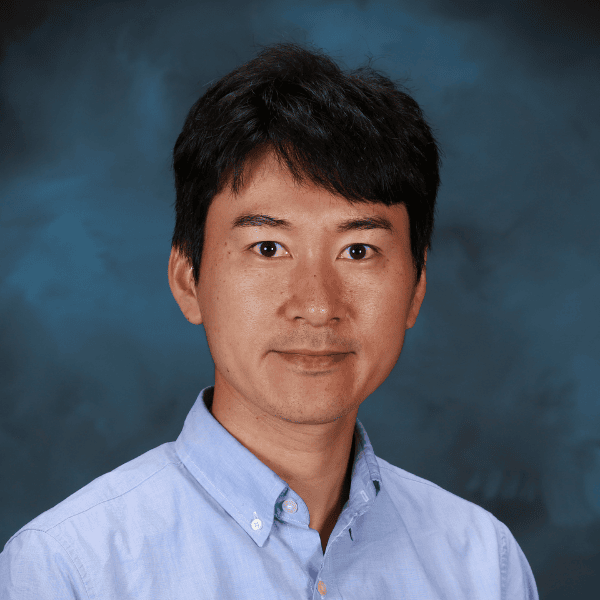
Takaaki Koyanagi, Ph.D.
Takaaki Koyanagi is currently a senior R&D staff member in the Radiation Effects and Microstructural Analysis Group within the Materials Science and Technology Division at Oak Ridge National Laboratory. He received his B.S. in engineering science in 2008, his M.S. in energy science in 2010, and his Ph.D. in energy science in 2013, all from Kyoto University, Japan.
Koyanagi has published more than 130 papers; his work has been cited >4,000 times, resulting in an h-index of 40, and he has consistently delivered invited, plenary, and keynote talks at international conferences and symposia. He has received several awards, including The Minerals, Metals & Materials Society Frontiers of Materials Award (2024); the Masaji Yoshikawa Memorial Prize for Fusion Energy, Fusion Energy Forum of Japan (2022); Journal of Nuclear Materials “Rising Star Award” finalist (2022); and the Global Star Award, Engineering Ceramics Division, American Ceramic Society (ACerS) (2020). He has served as a lead organizer of the “Advanced Ceramics and Composites for Nuclear Fission and Fusion Energy Systems” symposium at the International Conference & Exposition on Advanced Ceramics and Composites for ACerS since 2019.

Peter Tatarko, Ph.D.
Peter Tatarko is director of the Institute of Inorganic Chemistry at the Slovak Academy of Sciences in Bratislava, Slovakia. He received his Ph.D. in materials science from the Institute of Materials Research, Slovak Academy of Sciences, and subsequently held research positions at the Institute of Physics of Materials of the Czech Academy of Sciences and Queen Mary University of London.
His research focuses on advanced ceramics for extreme environments, including ultra-high-temperature ceramics (UHTCs), high-entropy ceramics, and ceramic matrix composites for aerospace and energy applications. For more than 10 years, he has been actively involved in the development of joining technologies for advanced ceramics and ceramic composites, including active brazing, solid-state diffusion bonding, and electric-field-assisted joining methods. He pioneered flash joining of SiC-based ceramic composites and has extensive experience in the mechanical and thermomechanical characterization of joined ceramic structures operating under extreme conditions.
Tatarko serves as associate editor of the International Journal of Applied Ceramic Technology and currently leads a €3 million European Union-funded research initiative focused on high-entropy perovskite oxides for next-generation thermoelectric energy technologies.