

Webinar Description
Hosted by: ACerS Manufacturing Division and ACerS Engineering Ceramics Division
Wednesday, December 2, 2026; 9:00–10:00 a.m. Eastern US time
Sponsored by the Manufacturing Division and Engineering Ceramics Division, the December webinar will feature one speaker: Particle Size and Morphology Control for High-Performance Ceramics in Digital Light Processing
Description
Particle Size and Morphology Control for High-Performance Ceramics in Digital Light Processing
Digital Light Processing (DLP) offers a high-precision additive manufacturing route for structural ceramics, where feedstock powder characteristics fundamentally dictate photocurable slurry rheology, curing behavior, and final component performance. This study investigates the critical influence of particle size distribution, morphology, and material density on DLP ceramic processing. A fundamental trade-off exists in powder morphology: spherical particles improve flowability and reduce slurry viscosity, whereas irregular particles enhance photocuring reactivity by increasing light scattering and photon path length. An optimal median particle size balances flowability, cure depth, and reaction efficiency, mitigating agglomeration and light-shielding effects associated with finer powders. Furthermore, higher material density reduces slurry viscosity at fixed weight loadings by decreasing the solid volume fraction. Synchrotron microtomography (μ-CT) reveals that large, elongated debinding pores drive primary structural failure, whereas small, spherical pores represent standard sintering artifacts. Applying this framework to DLP-fabricated mullite ceramics yields exceptional mechanical reliability, with a Weibull modulus of 13.05 and a characteristic strength of 94.96 MPa, establishing robust feedstock design guidelines for advanced ceramic additive manufacturing.
Biography
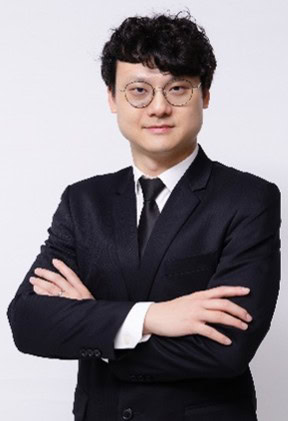
Jung-Ting Tsai, PhD, Assistant Professor, Department of Mechanical Engineering, National Taiwan University of Science and Technology
Dr. Jung-Ting Tsai is an Assistant Professor of Mechanical Engineering at National Taiwan University of Science and Technology (NTUST). He earned his Ph.D. in Materials Engineering from Purdue University (2021) and was a postdoctoral researcher at Argonne National Laboratory until 2023. His research expertise covers additive manufacturing of structural ceramics, cold spray coatings, and structural health monitoring. A leading contributor to his field, Dr. Tsai has authored several first-author papers in high-impact journals such as Nano Energy, Materials & Design, and Ceramics International. He is a Fellow of the ATW Technology, Inc. Solid-State Hydrogen Energy R&D Center and an Outstanding Young Scholar award recipient in the Taiwan Ceramics Society and the Taiwan Society for Metal Heat Treatment.
Registration
ACerS member: no cost
ACerS GADS and Material Advantage student member: no cost
Non-member: $30
Non-member student: $15
If you have any questions, please contact Vicki Evans.
This webinar is brought to you by the ACerS Manufacturing Division and ACerS Engineering Ceramics Division.
To view past ACerS webinars, click here.