
Course Description
Learn the history, state of the art, and future of design, testing, and development of ceramics for spaceflight thermal protection systems
This ITAR-restricted course will include a background on the use of ceramics in spacecraft thermal protection systems (TPS), an overview of currently used materials and manufacturing methods, and approaches to characterize and test materials. Specific case studies will also be presented, including the use of ceramic matrix composites (CMCs), TPS flight certification, Shuttle TPS lessons learned, and developing HEEET from the lab-scale to a Technology Readiness Level (TRL) of 6.
High enthalpy and thermos-structural testing will also be covered to provide examples of high temperature testing relevant to the problem of atmospheric re-entry. The course is designed for technical people who would like to learn more about how ceramics are used to protect spacecraft from the extreme heat of atmospheric re-entry. Attendees will understand the need for ceramic TPS for spaceflight, learn the fundamentals underpinning material design, manufacturing, and testing, and discover future challenges in the field.
The full list of topics is included below:
- Introduction to Ceramics for TPS
- Materials for Reusable TPS
- Manufacturing Reusable TPS: Tiles & Blankets
- Ceramic Matrix Composites
- Materials Characterization for Reusable TPS
- TPS Flight Certification & the NASA TPS Standard
- Shuttle TPS Lessons Learned
- Developing Material to TRL 6: HEEET
- High Enthalpy Testing
- Thermo-Structural Testing
- Future Challenges in Ceramics for TPS
Course Format
In-person | 2 days of instruction | Gilruth Center; 18600 Space Center Blvd, Houston, TX 77058
Please note: This course is ITAR-restricted. Registration for this event is limited to 45 participants.
Facilities Tour
This course will also include tours of Mission Control Center, Space Vehicle Mockup Facility, Radiant Heat Test Facility.
Discover Space Coast Texas
Explore dining, lodging, and more in this local visitor’s guide
Registration Pricing
- Early-bird registration (before July 5, 2026): $349
- Regular registration: $449
Registration Deadline
- July 10, 2026
- Note: Registrants after July 10 will not be guaranteed a spot in the tour portion of the event
Logding
- Suggested lodging: Home2 Suites Houston-Webster, 600 W Texas Ave, Webster, TX 77598 (11 minute drive to Gilruth Center)
Hypersonic Travel Grant
This travel grant includes:
- Course registration waiver ($349)
- Up to $500 of supplemental funding
Applications will be reviewed on a rolling basis until July 6, 2026.
Apply for the Thermal Protections Hypersonic Travel Grant
Course Instructors
- Andrew Ankeny, Amentum (Thermal Protection System Facility)
- Stan Bouslog, NASA JSC
- Don Ellerby, NASA ARC
- Jay Feldman, NASA ARC
- David Glass, NASA LaRC
- Nate Olson, NASA JSC
- Vishnu Oruganti, Amentum (NASA JSC)
- Alvaro Rodriguez
- Adam Sidor, NASA JSC
- Craig Stephens, NASA AFRC
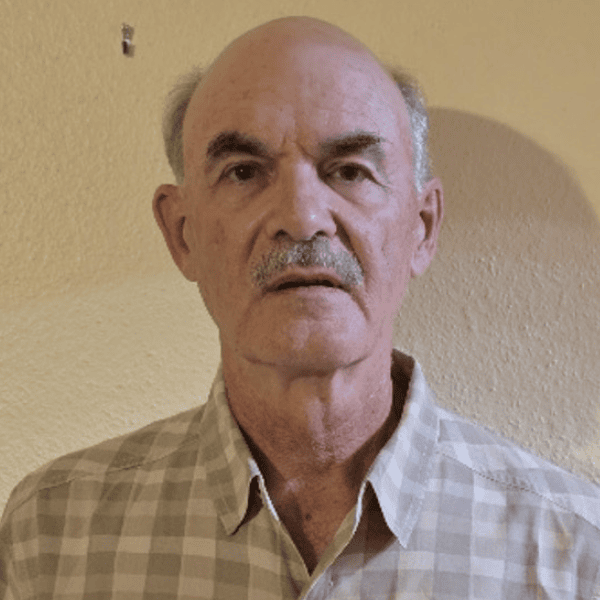
Stanley A. Bouslog
Stanley A. Bouslog received B.S. and M.S. degrees in aerospace engineering from The University of Texas at Austin. After college, Bouslog served as the lead aerodynamics/flight mechanics engineer at Tracor Aerospace (now BAE Systems) developing airborne countermeasure devices for military aircraft and conducted flight tests on F-100 and F-4C aircraft.
In 1988, Bouslog joined Lockheed Houston and provided aerothermodynamics support to the Aerosciences Branch at NASA Johnson Space Center (JSC) for the Space Shuttle and the International Space Station (ISS) Programs including investigations into the cause of early boundary-layer transition on the Orbiter, developing models for Orbiter reaction-control-system plume impingement on ISS components and conducting arc-jet tests on Orbiter thermal protection system (TPS) materials.
In 1996, Bouslog joined Rohr Inc. (later Goodrich Aerospace) and served as the aerothermal manager for the X-33 thermal protection system (TPS) development. After cancellation of X-33, Bouslog returned to Houston and conducted hypersonic wind tunnel tests for X-38.
In 2003, Bouslog supported the Columbia Accident Investigation and later that year became a civil servant at NASA JSC in the Thermal Design Branch. He has served as the orbiter TPS NASA system engineer, the orion heat shield subsystem manager and the Entry, Descent and Landing (EDL)-TPS senior discipline expert at NASA JSC. Bouslog retired from NASA in January 2026.
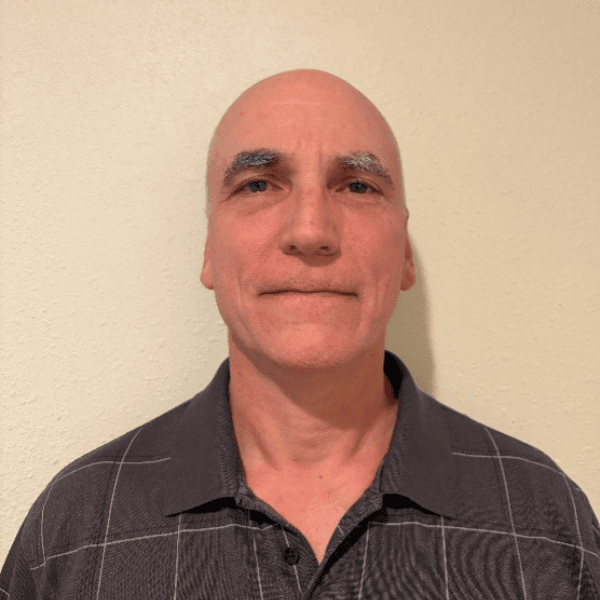
Don Ellerby, Ph.D.
Don Ellerby received a Ph.D. in materials science and engineering from the University of Washington in 1999. He has been with NASA Ames Research Center for ~25 years with a focus on a range of thermal protection systems and materials including ultrahigh temperature ceramics and ablative materials. He has served as the thermal protection system cognizant engineer for the Mars Sample Return Earth Entry System (MSR EES) with a focus on the development the 3 Dimensional Woven Mid Density Carbon Phenolic (3MDCP) TPS for the forebody.
Prior to that he was the project manager for the Heatshield for Extreme Entry Environment Technology (HEEET) project, an SMD/STMD funded project developing a mass efficient 3D Woven Thermal Protection System targeting missions with extreme entry environments such as to Venus, Saturn, and the Ice Giants. He has also served as a branch chief in the Entry Systems and Vehicle Development Branch within the Entry Systems Division at NASA Ames Research Center and served as the Orion Multi-Purpose Crew Vehicle (MPCV) Thermal Protection System (TPS) Deputy System Manager.
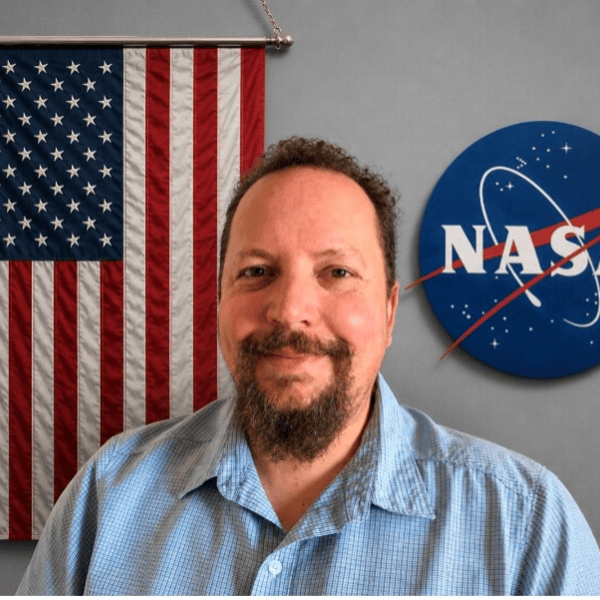
Jay Feldman
Jay Feldman is a senior research scientist & materials engineer in the Thermal Protection Materials branch at NASA Ames Research Center. At NASA, Feldman has worked on the research and development of a wide range of thermal protection materials for a variety of applications. Some of these include ablatives such as PICA for Mars missions or 3D-MAT, which Feldman co-invented as an enabling technology for Orion and which won the 2023 NASA Invention of the Year Award.
Feldman currently supports the development of the TPS for NASA’s DAVINCI mission to Venus. He also leads the High Temperature Reusable Materials project that includes partnerships with several private companies that seek to utilize Ames-invented reusable TPS and seeks to further improve this class of materials and coatings.

David Glass, Ph.D.
David E. Glass has an undergraduate degree from Wake Forest University and a masters and Ph.D. in mechanical engineering from North Carolina State University. He is a senior technologist at NASA Langley Research Center and is focused on high-temperature structures and materials with an emphasis on hot structures for hypersonic vehicles.
He is internationally recognized for his research on hot structures for hypersonic vehicles, and has been an invited lecturer on the topic both domestically and internationally. He is a recipient of NASA’s Distinguished Service Medal. In addition, Glass has taught science lessons in over 60 Old Order Amish schools in Lancaster Co., Penn.
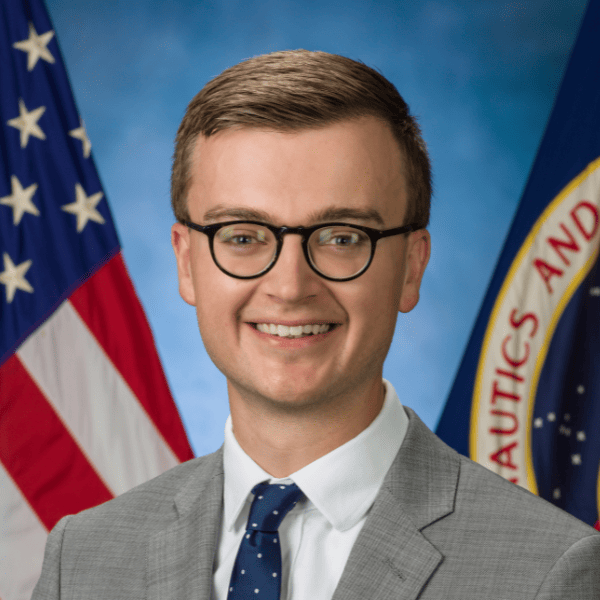
Nate Olson, Ph.D.
Nate Olson is an aerospace engineer in the Thermal Design Branch at NASA Johnson Space Center with a focus on materials for thermal protection systems (TPS). He received his B.S. in chemical engineering from The Ohio State University and his Ph.D. in materials science and engineering at the University of Illinois Urbana-Champaign.
Olson currently serves as principal investigator and project manager for PROTECT: Production and Reuse Of Thermally Efficient Ceramic TPS, a NASA Early Career Initiative project. His interests lie in the design, manufacturing, and testing of ceramic materials capable of surviving the extreme environments of atmospheric entry.

Sreevishnu Oruganti, Ph.D.
Sreevishnu Oruganti (Vishnu) is a thermal protection systems (TPS) engineer at Amentum Technology, Inc. based at NASA Johnson Space Center, where he works on reusable and ablative TPS materials for human spaceflight missions. He recently earned his Ph.D. from the University of Illinois Urbana-Champaign, advised by Profs. Francesco Panerai and Nagi Mansour. His Ph.D. was supported by the NASA NSTGRO fellowship and focused on the behavior of room-temperature vulcanizing silicone (RTV) under atmospheric entry conditions through micro- and macro-scale experiments, Plasmatron X inductively coupled plasma testing, and computational model development. He was also awarded the DOE SCGSR fellowship enabling him to conduct in situ micro-computed tomography research at the Advanced Light Source at Lawrence Berkeley National Laboratory and contributed to the Artemis I char loss investigation.
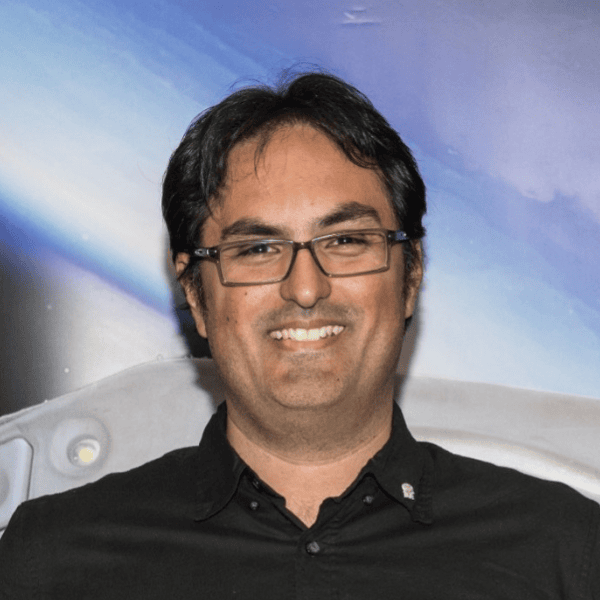
Alvaro Rodriguez
Alvaro Rodriguez obtained his B.S. in mechanical engineering at MIT and master’s in mechanical engineering from Rice University. He worked at NASA Johnson Space Center in the Thermal Design Branch working on Thermal Protection Systems (TPS) for 25 years. He has performed thermal/ablation analyses and arc jet thermal testing in support of many programs including X-38, Space Shuttle, and Orion. He worked on the Space Shuttle Orbiter Leading Edge Structural Subsystem for over 10 years and served as the LESS/RCC NASA Subsystem Engineer.
During that time, he developed extensive knowledge of reinforced carbon-carbon and other hot structures with respect to thermal performance, mission life, arc jet testing, inspection, repair, and damage tolerance. After the shuttle program, he served as the Orion heatshield subsystem manager leading the heatshield redesign and certification effort. He also provided technical leadership during the heatshield char loss investigation after the Artemis I test flight culminating in the successful Artemis II mission.

Craig Stephens
Craig Stephens has worked at NASA Armstrong Flight Research Center for the past 31 years in the Aerostructures Branch where he led the design, analysis, and testing of several airborne and ground test experiments. His experience has spanned thermal/structural testing from cryogenic to high-temperature re-entry conditions. Flight test experience has included the Russian TU-144, X-33, X-37, AeroVironment Global Observer, and as chief engineer for the Adaptive Compliant Trailing Edge (ACTE) technology demonstration article.
Over the past 15 years, Stephens’ focus has been the ground testing and instrumentation development for several NASA and Department of War high-temperature structures.