Archive for MesoCoat

You are browsing the archives of MesoCoat.

Ceramics and glass business news of the week

Ceramics and glass business news of the week

The new OSRAM Ostar Stage LEDs for bright spotlighting with color mixing.

Here is what we are hearing:

MesoCoat hits milestone - cladding inside diameter of pipe

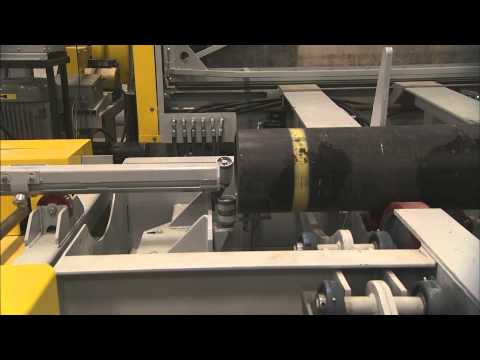
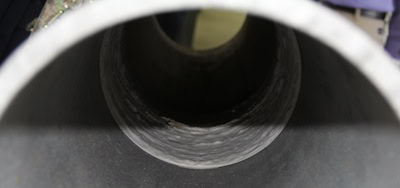
Abakan Inc. is pleased to announce that its subsidiary, MesoCoat Inc., has successfully completed a major milestone by cladding the inside diameter of steel pipe with corrosion and wear resistant alloys and expects to complete qualification with several oil majors within the next six months. Metal cladding for wear and corrosion protection is a $3.8 billion global market of which approximately 50% is for coating steel pipes which are used in the oil and gas, oil sands, mining and processing industries. The cladding of steel pipe is expected to double over the next four years because almost all of the new oil and gas fields being developed today are highly corrosive.

Brookfield now has available online: full recording of the live teleseminar with autocoats expert Lori Boggs

If you were not able to listen to Brookfield’s live teleseminar with Lori Boggs last month, you can catch up on everything that you missed by visiting the ViscosityJournal.com now. The interview is available, in its entirety, for your listening pleasure. During the interview, Boggs reviews “Autocoats: Which Viscosity Test Method Should Be Used.” Testing the viscosity of coatings in the automotive world requires a range of devices and instruments, ranging from Zahn Cups to Stormer Viscometers and Cone/Plate Rheometers. Boggs explains which one should you use and why. She also answers whether or not you can get by with a single instrument to do it all. Boggs is an experienced veteran in the autocoats business at BASF.

3M licenses dental ceramic coloring technology to Zirkonzahn GmbH

3M announced that Zirkonzahn GmbH has become the latest dental company to license 3M’s patented technology that enables the coloring of zirconia-based dental restorations. This technology improves esthetics for patients by enabling the color matching of dental restorations to the natural color of the patients’ teeth. Since 3M’s development and launch of this game-changing technology, much of the industry colors dental zirconia using this process.

Morgan Thermal Ceramic’s Superwool high temperature felt and millboard for industrial appliances

Morgan Thermal Ceramics has available Superwool HT Felt and Superwool HT Millboard, ideal for fabricating gaskets and heat shields for industrial appliances, including ovens, fryers and cooking equipment. The lightweight, multipurpose products are available in a full range of sizes, thicknesses and densities and offer equivalent performance to traditional refractory ceramic fiber insulation in many applications. Superwool fiber was developed to provide the improved high temperature characteristics required to be an alternative to RCF. Superwool fiber products feature low bio-persistence and felt and millboard made from Superwool fiber are fully exonerated from any carcinogenic classification under nota Q of directive 97/69 EC issued by the European Union. They are not restricted by European REACH regulations.

New high-purity metals and materials catalog available

Alfa Aesar, a Johnson Matthey Company, has published a new High-purity Metals and Materials Catalog that highlights Alfa Aesar’s entire range of metals and alloys from aluminum to zirconium, featuring purities up to 99.9999%. Products are offered in a broad variety of forms, including wires, foils, slugs, targets, powders, thermocouple wires and many more. In addition to the pure metals and elements section, the new 340-page catalog includes sections on metal gauzes, carbon/graphite, ceramics, evaporation materials, nanomaterials, brazing products, fuel cell catalysts, optics and crystals, labware and equipment and more. To request a free copy of the catalog, contact Alfa Aesar at 800-343-0660 or email.

Small power packs for a big impression: New OSRAM Ostar Stage LEDs with a flat glass window

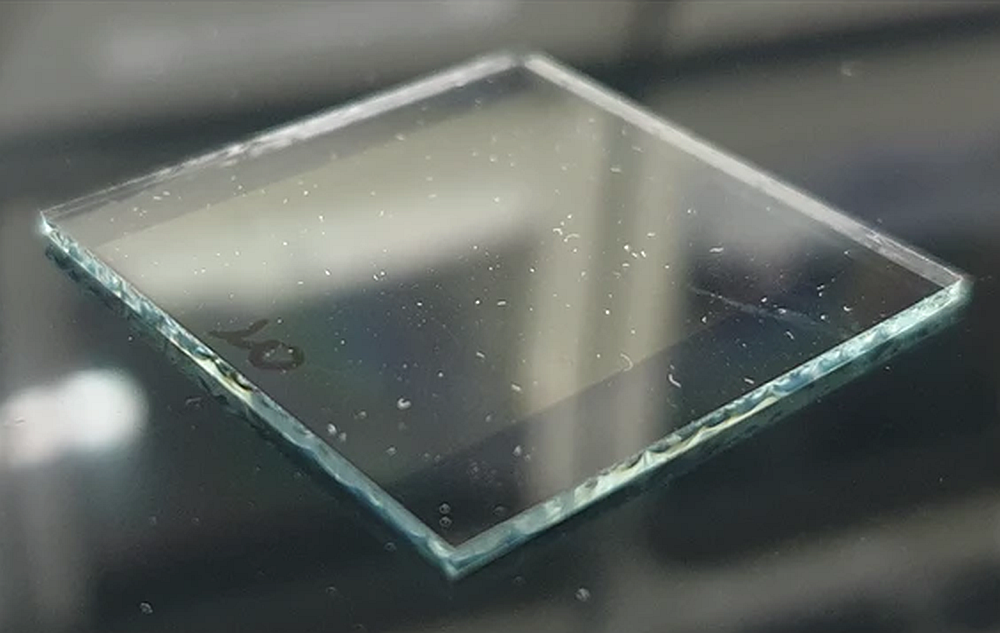
With their much flatter profile, the new OSRAM Ostar Stage LEDs provide the basis for compact spotlights with an extremely narrow beam and high luminance. These LEDs are ideal for moveable stage lights, known as moving heads, which provide powerful light beams for rock concerts and other impressive lighting arrangements. Instead of the usual lens, OSRAM Ostar Stage LEDs have a flat glass cover with an anti-reflective coating, giving the LED a much flatter profile. It is now only 1.23-mm high — one quarter of the usual height. Spotlights can therefore be made much more compact.
The glass cover on the new LEDs has been optimized for injecting the light into lens systems. Its etendue (the emission angle/area ratio of the emitting light surface to the projected light surface) in conjunction with customer optics enables a very narrow beam of light (+/- 9°) to be produced. This beam is smaller (by a factor of 2) than spotlights based on plastic-encapsulated LEDs. This optimum bundling of the light increases the luminance of the spotlight also by a factor of 2.

LM Wind Power’s 73.5 meter blades flying on the largest offshore wind turbine in the world

LM Wind Power’s 73.5-meter blades became the first 70+-meter blades to be installed when Alstom inaugurated the largest offshore wind turbine in the world on Mar. 19, 2012, at Carnet in the Loire-Atlantique region of France. The composite structures have been developed specifically for Alstom’s Haliade 150-6 MW wind turbine in a close collaboration between the two companies to boost energy capture while keeping loads down. The innovative blade design has already been through several rounds of testing before being installed on the turbine in France. LM Wind Power’s technology enables it to design and manufacture relatively lighter glass fiber and polyester blades for the length, but above all, LM Wind Power has proven ability to handle the industrialization of these blades, which is not easy. Alstom’s turbine has been EDF-EN/Dong Energy’s choice developed in response to a call for tenders launched by the French government that aims to install 3 GW of wind turbine power off French shores by 2015. Depending on the results of the tenders to be announced in April, Alstom and LM Wind Power plan to establish a blade manufacturing facility in Cherbourg with the capacity to produce up to 100 sets of 73.5-meter blades a year. Production is planned to start in 2016.

Lippert offers new type of modularized plaster-mold dryer

With deference to the ceramic industry’s need to conserve energy, drying specialist Lippert has designed an high performance, energy-efficient economical plaster-mold dryer. Thanks to the dryer’s high airflow velocities and relatively low process temperatures, the resultant modest differential between the plaster-mold temperature and the process temperature rewards the user with a very good thermal profile and accordingly gentle, stress-free drying. At the same time, the new approach sensationally shortens the accustomed drying times and lowers energy consumption to match. The modular, fully preassembled dryer can be installed by the customer’s own personnel. Even the electrical installation is easy, because the system is fully hard-wired to plug-in status. All the customer needs Lippert’s help for is the dryer’s commissioning.

Ceramics and glass business news of the week

Here’s what we are hearing:

Duo’s chemistry makes it possible: natural gas produced from biomass

H.C. Starck and Clausthaler Umwelttechnik-Institut (Germany) have joined forces to successfully develop a completely new generation of catalyzers and process technology for the production of substitute natural gas from biomass as a renewable energy source. The two groups have engineered a range of catalyzers with an oxide base containing cobalt, molybdenum, and aluminum, which have been successfully tested under laboratory and pilot plant conditions. The catalyzers proved to be robust and reclaimable, even under the most unfavorable conditions, having achieved high yields with which the synthesis of substitute natural gas is possible.

Indiana lands turbine blade company

A wind turbine blade manufacturer plans to open two facilities in southern Indiana with intentions of creating up to 400 jobs by 2014. Gov. Mitch Daniels has announced a two-phased project involving GBT USA Inc., a unit of Netherlands-based Global Blade Technology. The company is leasing space at the former Whirlpool plant in Evansville for an engineering design and production facility, which the city says will have nearly 40 employees by next year. The Indiana Economic Development Corp. says GBT also plans to build an additional southern Indiana facility in 2013 to produce composite rotor blades for wind turbine generators.

Company’s ceramic bearings offer flexibility to automation and advanced manufacturing industries

Boca Bearing Company is introducing a new line of full ceramic bearings, ceramic hybrid bearings and lubricants catered towards the automation and advanced manufacturing industries. Its ceramic bearings can be used in varieties of manufacturing environments ranging from extreme temperatures, high speeds to heavy loads. Ceramic hybrid ball bearings use steel races and ceramic balls. Ceramic balls weigh up to 40% less than steel balls. This reduces centrifugal loading and skidding, so hybrid ceramic bearings can operate up to 50% faster than conventional bearings. This means that the outer race groove exerts less force inward against the ball as the bearing spins. This reduction in force reduces the friction and rolling resistance. The lighter ball allows the bearing to spin faster, and uses less energy to maintain its speed. Ceramic hybrid ball bearings have ceramic balls in place of steel balls. They are constructed with steel inner and outer rings, ceramic balls and are known as hybrids.

MesoCoat Inc. opens new metal cladding and coating facility with one of the most powerful arc lamps

MesoCoat Inc. currently occupies two facilities in Ohio with a third 11,000 sq. ft. facility under-construction (expected production start date, Jan. 2012). This new Eastlake facility will be their fourth facility in Ohio within a 5 mile radius. It will primarily be used for cladding plates and components for the oil and gas, mining, and shipbuilding industries. The facility is designed to accommodate two metal fusion cladding lines for CermaClad and thermal spray coating cells for PComP, including a metallurgical and analytical lab. At this facility, MesoCoat will be installing a 600 kW fusion cladding arc lamp system, one of the most powerful arc lamps ever manufactured. MesoCoat acquired this 600 kW arc lamp under a joint development agreement with a multinational heavy equipment manufacturer; where MesoCoat will work towards developing wear and corrosion-resistant cladding using the arc lamp for equipment and components manufactured by them.

Toyota center announces new projects and partnerships with leading US academic and research institutions

Toyota’s Collaborative Safety Research Center today announced 10 new research initiatives and new research agreements with six leading North American universities and research institutions to enhance the development, testing and implementation of new automotive safety innovations across North America. The institutions include MIT’s AgeLab, the Transportation Active Safety Institute, Indiana University/Purdue University Indianapolis, Virginia Polytechnic Institute and State University,
Wake Forest School of Medicine, Washtenaw Area Transportation Study and Wayne State University School of Medicine.

CoorsTek acquires advanced ceramics business from BAE Systems

CoorsTek, the world’s largest technical ceramics manufacturer, today officially announced the purchase of BAE Systems’ Vista, California advanced ceramics facilities. These three facilities total 106,000 square feet - adding to the more than three million square feet of manufacturing floor space already in place worldwide. These facilities develop and fabricate lightweight ceramic armor systems, semiconductor components and assemblies and industrial components. Specifically, they manufacture hot-pressed boron carbides, silicon carbides, aluminum nitrides and other advanced ceramic materials.

R&D 100 Awards recognize materials innovations

R&D 100 Awards recognize materials innovations

SRNL microsphere filled with palladium where the top of the microballoon has been removed to view the inside. Source: The Bulletin, Vol. 87, No. 6, p. 26

The R&D 100 awards for 2011 have been released, and the list of winners includes a strong representation from the field of materials science. There were more entries this year than there have been in recent years. In the press release, Rita Peters, editorial director of R&D Magazine observed “During the recent economic downturn, industry, academia, and government labs continued to innovate. The editors were impressed with the strong field of candidates for this year’s R&D 100 Awards.”

The purpose of the awards is to identify the “100 most technologically significant products introduced into the marketplace over the last year.” Awardees are chosen by an independent panel of judges and the editors of R&D Magazine. In the press release, it was noted that some previous R&D 100 winners have been so successful that they are now household names: ATMs, fax machines, Nicoderm anti-smoking patches, HDTV and more.

The American Ceramic Society extends its congratulations to all awardees, especially those connected to ceramic materials engineering. Highlighted below are awardees that occupy or connect with the ceramics universe. Some of the winners listed below are familiar names; other may not be….yet.

Solid job growth expected for engineers

Solid job growth expected for engineers


Relative job growth trends for engineers from Indeed.com. The Indeed.com search engine searches openings at thousands of job sites. Credit: Indeed.com

The Society for Automotive Engineers just released a survey-based study on anticipated employment trends for engineers in the 2011-2016 timeframe. The study focused on the so-called mobility industries: automotives, aerospace and commercial vehicles (e.g., construction equipment, trucks, tanks, armored personnel carriers, etc.). The report is free to SAE members.

According to the executive summary, the employment picture for SAE’s constituency is looking rosy for the next five years. The study compiles information collected through surveys, personal interviews with high-level HR managers and government statistics. All respondents indicated that they expect to hire engineers in the next five years and most of it in 2011. The automotive and aerospace sectors plan to add positions in the next 1-2 years; the commercial vehicle sector will lag a little bit, adding positions in the next 1-3 years. Most of the hiring activity will be with OEMs in the automotive industry, and they are expecting to hire an average of 500-1000 engineers each.

The SAE report identifies mechanical engineers as the most in-demand group, followed by industrial, electrical and manufacturing engineers. Materials engineers are expected to represent about 2% of the new hires in the automotive sector, and 1% and 4% respectively in the aerospace and commercial vehicle sectors.

The good news for materials engineers appears to be substantiated by information available from the Bureau of Labor Statistics’ Occupational Outlook Handbook, 2010-2011 Edition. According to the OOH, the employment outlook for engineers overall is expected to be good and to grow at about 7-13 % in the next ten years. The expected job growth for materials engineers is projected to be right in the middle of that range at about 9%, increasing from about 24,400 jobs in 2008 to 26,600 projected in 2018. Within the motor vehicle manufacturing (NAICS 33610) category, BLS is forecasting an overall reduction in the engineering work force by 2018 compared to 2008, however, materials engineers are expected to be affected only slightly.

Salary-wise, OOH reports a median salary of about $82k for materials engineers. The OOH just happens to mention that among engineers employed by the federal government, our brethren ceramic engineers pull top honors with mean annual salaries of just under $127k.


Relative job growth trends for ceramic engineers from Indeed.com. The Indeed.com search engine searches openings at thousands of job sites. Credit: Indeed.com

However, it’s important to remain realistic. Joy about the outlook for engineering job growth should be tempered by other economic indicators that offer more gloomy scenarios. Recently, CNN reported that the recovery is losing momentum with hiring slower than expected in May and slightly worse unemployment.

There are glimmers of hope. The National Association of Colleges and Employers’ Job Outlook 2011 Spring Update reports that employers expect to hire 19% more new graduates out of the just-graduated class of 2011 - and that is across all majors and industry sectors - than they did last year.

Anecdotally, the press releases in our inboxes are telling a story of confidence and investment. Here is a sampling.

Morgan Technical Ceramics - Expanding Latrobe, Pa., facility for manufacturing of alumina and steatite micro-size products.

Momentive Performance Materials - Expanding ceramic powders production manufacturing facility in Strongsville, Ohio with a $5.8 million, 6,000 square foot project.

Nanocerox - Expanding it Ann Arbor, Mich. based manufacturing and R&D facilities by 20% to meet market demand for ceramic nanopowders and optical ceramics.

MesoCoat Inc. - Building a new manufacturing plant in Euclid, Ohio to produce ceramic wear-resistant coatings and clads for steel tube, pipe, and plate.

MesoCoat to break ground on cermet cladding and coating manufacturing plant

MesoCoat to break ground on cermet cladding and coating manufacturing plant

Schematic of MecoCoat’s high energy density fusion cladding process for a pipe. Credit: MesoCoat.

If Andrew Sherman, CEO of MesoCoat Inc. were channeling Mark Twain, he might offer his own interpretation of the humorist’s famous quip with “Reports of the death of U.S. manufacturing are greatly exaggerated.” However, Sherman hasn’t got time to riff on Twain. On Thursday, April 7, 2011, he and MesoCoat officials will be hosting a groundbreaking ceremony for a new manufacturing plant in Euclid, Ohio.

In a press release, the company announces that the new plant will feature a single production line with the capacity to clad steel tube, pipe and plate with corrosion and wear resistant coatings using the company’s patented CermaClad cermet technology. It will be outfitted with state-of-the-art equipment for surface preparation, cladding application and quality testing.

According to the company’s website, the high energy density fusion cladding process fuses metallic or polymer composite coatings to steel substrates. Claddings are applied in wider swaths than laser or weld clad processes allow, which means quicker application rates and less post-clad surface finishing.

Another benefit is that the ceramic fillers MesoCoat uses are inexpensive relative to the matrix alloys. The company estimates a cost savings up to 20% over weld laser cladding processes. Initial applications are targeted for the aerospace, defense, oil and gas, infrastructure and marine industries for OEMs and maintenance and repair operations.

The facility also will include a turn-key thermal spray system for applying the company’s PComP line of powders. A company brochure (pdf) describes the powders as cermets based on nanocomposite particles in a titanium or cobalt matrix. While the website is not specific about ceramic formulations, it does say that the coatings are based on MesoCoat’s “ability to synthesize and assemble non-oxide ceramic matrix component nanoparticles into coating solutions.” The coatings can replace chrome, tungsten carbide-cobalt or aluminum coatings, and are targeted for energy, aerospace and marine markets.

PComP system. Credit: MesoCoat.

MesoCoat is a spin-off from PowderMet Inc., also located in Euclid (and also established by Sherman) and much of its research and development work was funded through several SBIR and STTR contracts sponsored by DOD, DOE and NIST. MesoCoat also received seed monies through JumpStart, a nonprofit organization that aids start-up tech companies in Northeast Ohio.

In 2010, Abakan Inc. acquired a majority interest in MesoCoat. Abakan is a privately-held investment company led by Robert Miller, who, according to a BusinessWeek profile, has been associated with a number of materials and technology investment projects.

Construction of the 11,000 sq. ft. facility is expected to be complete by September 2011 with full-scale production beginning in early 2012. Plans to double the new plant’s size are already in the works for 2012.

It may only be a single production line right now, but as far as MesoCoat is concerned, manufacturing lives!