Archive for May 2010
You are browsing the archives of 2010 May.

Illustration of microfluidic pump. Credit: Alan Hunt
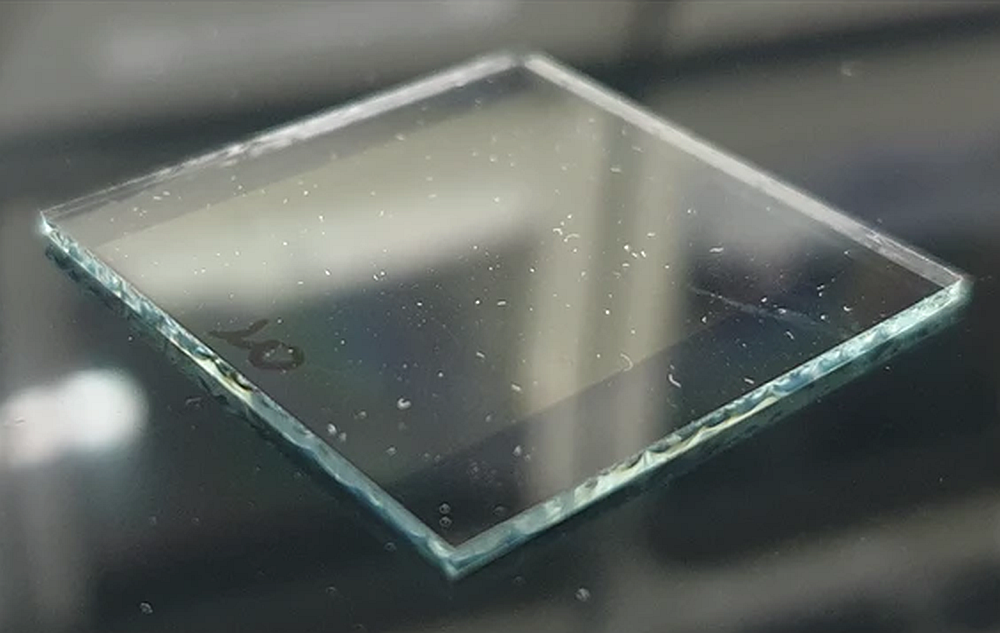
A team University of Michigan researchers say they have figured out a way to nondestructively use glass as an electrode in certain microfluidic devices. Alan Hunt, a biomedical engineering associate professor at the university, and his research team accidentally discovered a way to get an electric current to pass nondestructively through a thin section of glass that they thought would be nonconductive dielectric.
They had been working on developing microfluidic devices, such as labs-on-a-chip, microrectors, etc., and trying to improve the circuitry in the chips. They team has been experimenting (PDF) with circuits that use ionic fluids instead of wire connections. Their method involves etching channels with a femtosecond pulsed laser in a transparent glass substrate through which ionic fluid can transmit electricity. They were designing these channels to end at certain glass termination points that served as a dielectric barrier. The use of glass is desirable because it can withstand high temperatures and organic solvents, is relatively inert and has low adsorption properties.
In one experiment, two channels in a device didn’t line up properly, Hunt says, but the researchers found that electricity did pass through the thin glass dead-end without harming the device in the process. They learned they could couple the presence of a high electric field (to provide a dielectric breakdown) and a heat-dissapation method, they could repeatedly turn the conductivity of the glass off and on.
“We were surprised by this, as it runs counter to accepted thinking about the behavior of nonconductive materials,” Hunt explains. “This is a new, truly nanoscale physical phenomenon. At larger scales, it doesn’t work. You get extreme heating and damage.
“What matters is how steep the voltage drop is across the distance of the dielectric,” he continues. “When you get down to the nanoscale and you make your dielectric exceedingly thin, you can achieve the breakdown with modest voltages that batteries can provide. You don’t get the damage because you’re at such a small scale that heat dissipates extraordinarily quickly.”
Hunt thinks his “liquid glass electrodes” will open up new opportunities in integrated circuits. “If you could utilize reversible dielectric breakdown to work for you instead of against you, that might significantly change things,” Hunt says.
He says these glass electrodes are ideal for use in lab-on-a-chip devices. “The design of microfluidic devices is constrained because of the power problem,” Hunt explains. “But we can machine electrodes right into the device.
They report that they have already build a nano-injector incorporating liquid glass electrodes. The injector acts as an electrokinetic pump capable of producing well-controlled flow rates below 1 femtoliter per second. They say the electrode can be integrated easily into other nanodevices and fluidic systems, including actuators and sensors.
A paper on the research, “Liquid glass electrodes for nanofluidics” is now published online in Nature Nanotechnology.

Imagine a lightweight durable floating sponge for use at an ocean oil spill that attracts only oil, expands to hold nearly 200 times its weight and 800 times the volume of the stuff, moves automatically towards higher concentrations of the oil and can be squeezed clean and reused dozens of times.
The stuff of high-tech dreams, right? Well, it exists right now, at least in the labs of Chinese researchers, and I would think certain oil drilling companies and government agencies would be extremely anxious to be testing out this stuff ASAP.
This sponge – composed of randomly oriented carbon nanotubes – was discovered by a team from the Key Laboratory for Advanced Materials Processing Technology (Department of Mechanical Engineering) at Tsinghua University and the Department of Advanced Materials and Nanotechnology at Peking University. A paper on their work was published in February in Advanced Materials (note: the editors have waived the fee and are generously providing this research paper at no cost).
The gist of their research is that, unlike most CNT projects where alignment of the nanotubes is desired (and usually difficult to achieve), these sponges actually work precisely because the nanotubes are not aligned. The “sponginess” apparently results from the random orientation that allows the tubes to move but not slide along a single direction:
Shape and structural recovery of the sponges stems from the random distribution of CNTs that prevents the formation of strong van der Waals interactions even at densified state, therefore liquid re-absorption into the pores could push CNTs away and back to their original configuration.
So, the Chinese group create a porous, sponge-like bulk material of self-assembled CNTs. So porous, in fact, that the CNT sponge has a density (or lack thereof) that rivals aerogels.
But, whereas some aerogels are brittle, the CNT sponge is flexible. In its original state, it also has the property of being very wettable to organic chemicals:
The sponges in densified state swell instantaneously upon contact with organic solvents. They absorb a wide range of solvents and oils with excellent selectivity, recyclability and absorption capacities up to 180 times their own weight, two orders of magnitude higher than activated carbon. A small densified pellet floating on water surface can quickly remove a spreading oil film with an area up to 800 times that of the sponge, suggesting potential environmental applications such as water remediation and large-area spill cleanup. In comparison, the application of one of the lightest porous materials, silica aerogel, has been impeded by their structural fragility, environmental sensitivity and high production cost.
One nice thing about these sponges, apparently, is that they are rugged and can be reused repeatedly:
The sponges can sustain large-strain deformations, recover most of the material volume elastically, and resist structural fatigue under cyclic stress conditions, in both air and liquids.
[ . . . ]
The sponges show no strength degradation after compression at a set strain of 60% for 1000 cycles.
How do these CNT sponges’ absorption capacity compare to other materials?
We tested many porous materials with different pore sizes and densities including natural fibrous products (e.g., cotton towel, loofah), polymeric sponges (e.g., polyurethane- or polyester-based) and pellets of activated carbon with a density of 2000 mg cm-3. In case of diesel oil, the absorption capacity of CNT sponges (Q<143) is several times that of polymeric sponges (Q<40), 35 times that of cotton and loofah (Q<4) and two orders of magnitude higher than activated carbon (Q<1).
Besides continuously floating on top of water, the performance of the CNT sponges is also excellent in other ways that almost seem to be too good to be true:
In addition, a piece of pristine sponge can continuously attract and suck most part of an oil film when it was placed to contact the edge of the film. Significantly, a small particle of densified CNT sponge (with a diameter of 6 mm and a volume of 0.1 cm3) can remove a spreading diesel oil film with an area of 227 cm2 in several minutes. We observed that the sponge was floating on water surface and moving freely throughout the oil area. Wherever it arrived, the sponge instantaneously sucked the part of oil film in contact, resulting in a local white-color region around and behind where fresh water exposed. The sponge tends to drift to the remaining oil film area due to its water-repelling and oil-wetting properties, leading to this unique “floating-and-cleaning” capability that is particularly useful for spill cleanup. . . The oil area that has been completely cleaned is about 800 times larger than the size of the initial densified sponge.
Adrian Miller at the Materials View blog has some great additional information about how these Chinese researchers made their discovery and other applications they have in mind. Miller’s post also contains a brief video that illustrates the ability of such a CNT sponge to return to its original shape after repeated compression cycles.

Credit: Energetx
Michigan Governor Jennifer Granholm announced that the state formed a partnership with the government of Navarra, Spain, a European center of the renewable-energy sector, to work collaboratively with leading industry experts to develop green technology. The project includes the Michigan-based wind turbine manufacturer Energetx Composites.
Granholm inked the agreement yesterday in Dallas where the American Wind Energy Association was wrapping up its mega Windpower Expo.
“This partnership will further our efforts to make Michigan the North American hub of clean energy innovation,” Granholm says. “We are taking bold and decisive steps to ensure we are the state that develops the technologies, manufactures the products and creates the green jobs that will help reduce our nation’s dependence on foreign oil.”
Granholm’s efforts to bring the state to the forefront of renewable energy haven’t gone unnoticed by me. The Michigan Economic Development Corp. has partnered with Dow Chemical numerous times to bring green energy technology innovation and jobs to the state. Partnerships between the state. Dow is headquartered in Midland, Mich., but operates 214 manufacturing sites in 37 countries. Dow already makes several energy-related products, such as Styrofoam insulation and sheathing for buildings, expanding foam insulation, Powerhouse photovoltaic roof shingles and a line of fiberglass-free insulation.
Dow and national labs have secured millions in government funding and the promise of thousands of jobs. And, not unlike other governors, Granholm hopes that green-energy technology could become Michigan’s lifeline.
The agreement between Michigan and Spain consists of joint activities - including policy sharing, technology transfer, value-chain mapping and trade missions - in the targeted sectors of wind technology, biomass, solar energy, smart-grid technology and bioclimactic research.
Dow and ORNL will deliver materials and technical expertise to Energetx. The University of Michigan and Kettering University will contribute workforce training. The project will receive $3.5 million in matching funds from the DOE. CENER, Spain’s renewable energy center located in the Navarra region, will work with Energetx to test wind turbine blades.
“Navarra shares a similar industrial background with Michigan, as it was a center of manufacturing focused on transportation and heavy engines. Early last decade, Navarra identified the need to diversify and chose to focus on clean energy. CENER has played a significant role in the development of renewable energy, both in Navarra and Spain,” says Navarra’s Director of Enterprise Begoña Urien.
Granholm’s office reports that Navarra currently produces approximately 65 percent of its electricity from renewable energy sources.

The “Jaguar” - the most powerful computer in the world - will be used to design the next generation of nuclear reactors, according to an Oak Ridge National Lab press release.
The goal is to integrate existing nuclear energy and nuclear national security modeling and simulation capabilities with high-performance computing to simulate radiation in order to support the design and safety of nuclear facilities, improve reactor core designs and nuclear fuel performance and ensure the safety of nuclear materials, such as spent nuclear fuel.
John Wagner, technical integration manager for nuclear modeling at ORNL says, “We’re now simulating entire nuclear facilities, such as a nuclear power reactor facility with its auxiliary buildings and the ITER fusion reactor, with much greater accuracy than any other organization that we’re aware of.”
“Software for modeling radiation transport has been around for a long time,” he adds, “but it hadn’t been adapted to build on developments that have revolutionized computational science. There’s no special transformational technology in this software; but it’s designed specifically to take advantage of the massive computational and memory capabilities of the world’s fastest computers.”
The project has been awarded eight million processor hours on Jaguar for the purpose of developing a “uniquely detailed simulation of the power distribution inside a nuclear reactor core.” This is expected to cut years off the process of designing new and better reactors.
Richard Brow will tell you he likes everything about glass science, art and processing. Brow, an ACerS Fellow and Curator’s Professor of Ceramic Engineering at Missouri University of Science & Technology in Rolla, Mo., discusses his fascination with glass and delves into two specific areas: tapping into the theoretical strength of glass, and the special field of phosphate glasses.
Brow recently coauthored “The Strength of Silicate Glasses: What Do We Know, What Do We Need to Know?” in the new ACerS publication, the International Journal of Applied Glass Science. He explains that scientists and engineers know that glass can be made much stronger and that a great deal of research is being done in this field. He notes that even small improvements would translate into significant benefits in architecture and construction, glass fibers for wind turbines, packaging, electronics and bioactive glass implants.
He also discusses his research into phosphate glass materials and applications. Most glass-related research and applications focus on silicate glasses, but phosphate glasses can make wider use of special doping materials such as Rare Earths oxides that can impart special optical and thermal properties to glass. Phosphate glasses can be processed at lower temperatures than silicate glasses.