Archive for November 2010

You are browsing the archives of 2010 November.

Visions of beauty at the nanoscale: 2010 Ceramographic winners

Each year, the ACerS Basic Science Division sponsors a ceramographic competition at the Society’s Annual Meeting. The competition’s top award is the Roland B. Snow Award, presented to the Best of Show winner of the competition. All of this year’s entries went on display at the recent MS&T’10 conference in Houston where they wowed the participants. The best of the entries will appear on the back covers of the Journal of the American Ceramic Society throughout the year.

The ceramographs are stunning displays of art in science at the nanoscale. Besides a cool way to display some of the art intrinsic to nature, the competition helps promote the use of microscopy and microanalysis as tools in the scientific investigation of ceramic materials.

This year’s first place winners, and many of the second place winners, in each six categories are shown below. Click on the images to enlarge.

“Tracking Li-ion Motion on the Nanoscale” N. Balke, S. Jesse, Y. Kim, L. Adamczyk, N. Dudney, and S. Kalinin Oak Ridge National Lab.

“Tracking Li-ion Motion on the Nanoscale” N. Balke, S. Jesse, Y. Kim, L. Adamczyk, N. Dudney, and S. Kalinin Oak Ridge National Lab. First place: Scanning Probe Microscopy

“Anodic Alumina Architecture” M.R. Lukatskaya and Y. Gogotsi Drexel University.

“Anodic Alumina Architecture” M.R. Lukatskaya and Y. Gogotsi Drexel University. First place: Scanning Electron Microscopy

MoO3 Nano Ribbons” T. Longenbach and Y. Gogotsi, Drexel University; M. Kurtoglu, Art Craft Glassware, Kutahya, Turkey.

"MoO3 Nano Ribbons” T. Longenbach and Y. Gogotsi, Drexel University; M. Kurtoglu, Art Craft Glassware, Kutahya, Turkey. First place: Undergraduate.

“DNA-Like Grain Boundary Segregation” Sukai Cheng, Kaveh Meshinchi Asl, M.P. Harmer, Lehigh University; J. Luo, Clemson University

“DNA-Like Grain Boundary Segregation” Huikai Cheng, Kaveh Meshinchi Asl, M.P. Harmer, Lehigh University; J. Luo, Clemson University. First place: Transmission Electron Microscopy.

“Strain-Dependent Conduction in SnO2 Nanowires” H.J. Chang, S.V. Kalinin, A. Borisevich, Oak Ridge National Lab. First place: Combined Techniques and Microanalysis.

“Strain-Dependent Conduction in SnO2 Nanowires” H.J. Chang, S.V. Kalinin, A. Borisevich, Oak Ridge National Lab. First place: Combined Techniques and Microanalysis.

“Fire and Ice” John Nychka University of Alberta, Canada. First place: Optical Microscopy.

“Fire and Ice” John Nychka University of Alberta, Canada. First place: Optical Microscopy.

“A Novel Approach for Oxide Scale Growth Characterization: Combining Etching with AFM” V. Presser and K.G. Nickel, Drexel University; A. Loges, Eberhard-Karlsruhe-University of Tubingen, Germany. Second place: Scanning Probe Microscopy.

“A Novel Approach for Oxide Scale Growth Characterization: Combining Etching with AFM” V. Presser and K.G. Nickel, Drexel University; A. Loges, Eberhard-Karlsruhe-University of Tubingen, Germany. Second place: Scanning Probe Microscopy.

asdasd

“Cracking in an MgF2 Anti-Reflective Coating” David Shahin, Sandia National Lab. Second place: Undergraduate.

“A Walk Along the Grain Boundary in CuO-TiO2” Shualei Ma, C. Keily, and M.P. Harmer, Lehigh University. Second place: Transmission Electron Microscopy.

“A Walk Along the Grain Boundary in CuO-TiO2” Shualei Ma, C. Keily, and M.P. Harmer, Lehigh University. Second place: Transmission Electron Microscopy.

:  “Partially Devitrified Bioactive Glass” John Nychka University of Alberta, Canada. Second place: Optical Microscopy.

“Partially Devitrified Bioactive Glass” Satadru Kashyap and John Nychka University of Alberta, Canada. Second place: Optical Microscopy.

Duke, NETL study CO2 storage impact: Leakage must be reckoned with

Duke University, in collaboration with the DOE, just completed a study on carbon storage and the impacts of CO2 injection into different geologic formations. The findings were published in the Oct. 26, 2010 edition of Environmental Science & Technology.

The report, “Potential Impacts of Leakage from Deep CO2 Geosequestration on Overlying Freshwater Aquifers,” also presented information that can be used for advanced detection of CO2 in the case of a leak.

According to a National Energy Technology Lab press release:

The researchers incubated core samples from a variety of freshwater aquifers with CO2 for more than 300 days, and found increased acidity and metals concentrations in water surrounding the samples. They concluded that “the relative severity of the impact of leaks on overlying drinking water aquifers should be considered in the selection of CO2 sequestration sites.” This confirms earlier research conducted by NETL, several other DOE national laboratories, the U.S. Geological Survey, and others indicating that CCS sites must be carefully selected and monitored.

The Duke researchers also identified three elements-manganese, iron, and calcium-which they suggest should be monitored, along with pH, as geochemical markers of CO2 leaks.

Carbon capture and storage uses several technologies to separate, compress, transport and store CO2. The biggest obstacle that must be overcome is storage of CO2 without contaminating ground water supplies.

According to a Duke press release, “The fear of drinking water contamination from CO2 leaks is one of several sticking points about CCS and has contributed to local opposition to it,” says Robert Jackson, professor of biology at Duke and director of its Center on Global Change. “We examined the idea that if CO2 leaked out slowly from deep formations, where might it negatively impact freshwater aquifers near the surface, and why.”

Researchers also conclude that contamination to drinking water supplies can be avoided by finding ideal sites with impervious caprock, using proper construction materials and maintaining proper operating conditions.

“Based on incubations of core samples from four drinking water aquifers, we found the potential for contamination is real, but there are ways to avoid or reduce the risk,” says Jackson.


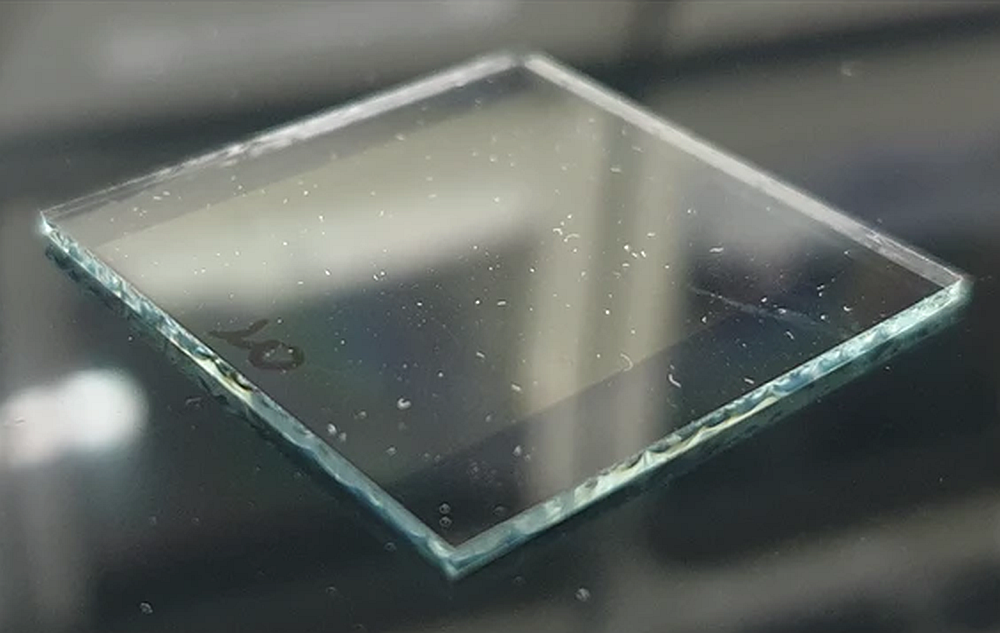
Glass optics enhance concentrating solar performance

An all-glass optical lens may be the key component to achieving higher efficiency and higher energy production concentrating solar power systems.

Silicon Valley-based Solergy, who recently announced plans  to install a 100kW all-glass optical lens CSP system in Sicily, Italy, believes glass is the only way to guarantee the durability, reliability and performance of concentrating optics over time.

“One of our initial and fundamental design principles from day one was that if this technology is ever to work reliably, we must have optics in glass. Otherwise it will not be a viable solution over the long term,” Solergy’s CEO and co-founder Yoav Banin said in an interview with Optics.org.

Solar lenses currently used are predominantly acrylic and silicone-on-glass materials. These materials are often prone to hazing, yellowing and cracking.

Solergy also claims that glass lenses are no more expensive that its polymer counterparts. “We have achieved an all-glass, large dimension, highly precise lens, that is fabricated via a proprietary low cost process,” said the company.

The company also boasts 32.9 percent efficiency, and an independent efficiency survey conducted by the National Renewable Energy Lab ranked Solergy’s glass lens efficiency at 29 percent. The lens is designed to optimize optical efficiency and deliver uniform radiation distribution.

Solergy’s CSP system was on display at the EnerSolar exhibition in Milan, Italy earlier this month.


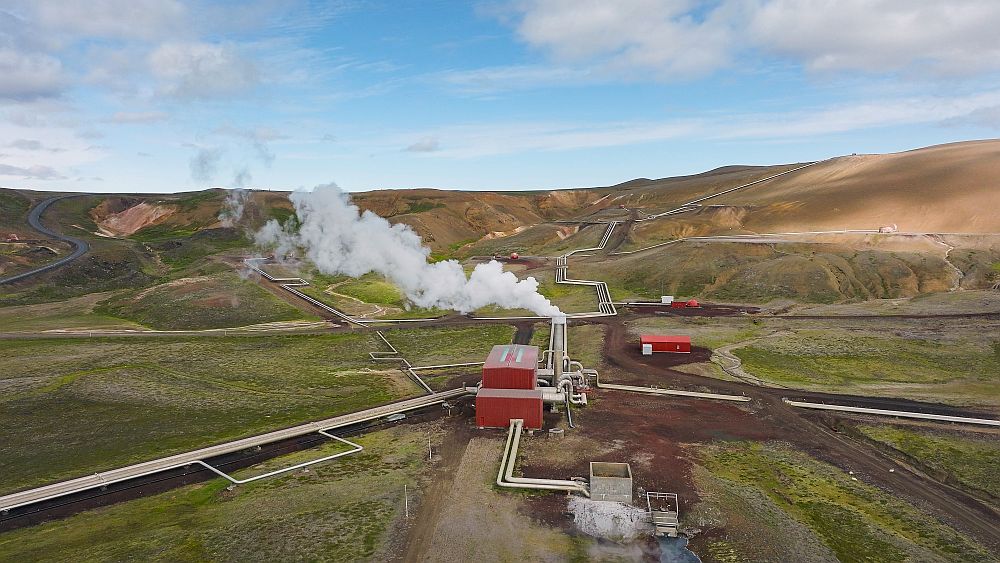
Missouri S&T geothermal energy system to replace power plant

Missouri University of Science and Technology plans to install a new geothermal energy system. The project is expected to reduce energy costs, as well as cut the campus’s carbon dioxide emissions.

According to and Missouri S&T press release, construction of the geothermal system will take approximately five years to complete. The system is expected to save $2.8 million in energy and operational costs annually.

The project also is expected to reduce Missouri S&T’s carbon dioxide emissions by more than 25,000 tons per year. The power plant being replaced is a 1945 system that relies on coal and wood chips to provide steam-generated heat to buildings on campus.


Avalon plans to produce separated rare earths by 2016

In an interview with Rueters, Avalon Rare Metals CEO Don Bubar stated that the Toronto-based mining company plans to produce separated rare earths by 2016. With demand increasing by roughly 9 percent annually over the past few years, the market for rare earth metals will only increase as China constricts its exports.

Avalon is “five years down a 10-year timeline” to getting its rare earth deposit into production, according to Bubar.

The Canadian rare earth mining projects have the potential to deliver both a large quantity and full spectrum of rare earth metals. “There’s nobody else in the world that offers that potential to bring heavy rare earths to the market in a significant quantity by 2015. No one,” Bubar says.

Nechalacho has over 20 million tons of reserves, and Bubar believes it is the most advanced rare earth project in Canada.

So far, Avalon has raised about C$40 million, to fund a bankable feasibility study due by the third quarter of 2012. Bubar plans to approach banks and investors about funding the C$1 billion project.

“It’s not a mining business,” Bubar told Rueters. “It’s a sophisticated chemical processing business to produce specialty chemical products for clean technology and high technology.”