
Posts by Lisa McDonald
The future of additive manufacturing: A 3-D multiple materials printing process

3-D printing typically involves only one material. Researchers have now developed a way to print multiple materials in one process. This method could eventually replace welding and other materials joining technologies.
Read MoreMaking higher-performing lithium batteries using ‘pickling’ process
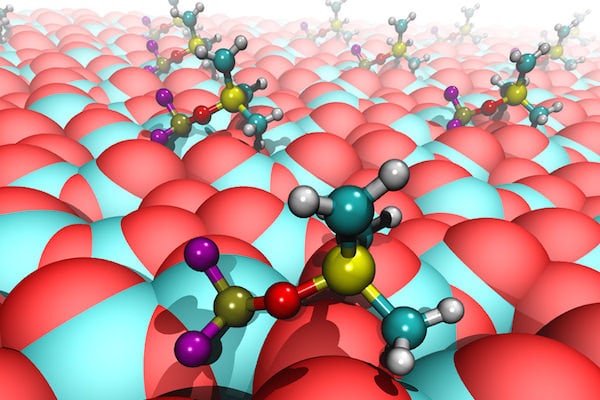
Researchers discovered that a chemical reaction that takes place when a performance-enhancing additive is mixed into a lithium battery’s electrolyte can suppress its decomposition—similar to the pickling process. This discovery could lead to higher-performing batteries.
Read MoreOcean’s 8 makes the case for ceramic engineering education
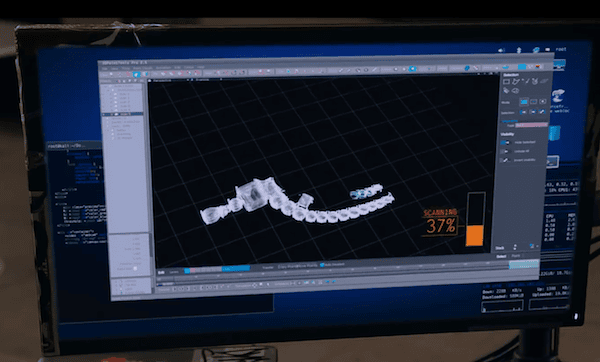
Eileen loves caper movies and had high hopes for Ocean’s 8, the fourth episode in the heist genre that began with Ocean’s 11. She claims the movie’s takeaway message is that we need more ceramic engineers!
Read MoreVideo: Watch a simple fabric wristband control small household appliances

Researchers have devised a simple electronic textile that uses carbon nanotubes to provide an electrical charge. The device enables users to control a computer or small appliance by swiping a finger over the fabric.
Read MoreLearning, networking, awards, brick plant tours highlight successful brick meeting

More than 90 attendees converged in Columbia, S.C. June 5–8 to take part in the combined meeting of the ACerS Structural Clay Products Division, ACerS Southwest Section, and Clemson University’s National Brick Research Center.
Read MoreOther materials stories that may be of interest

Bubble tracking method to predict the behavior of flows in nuclear reactors, flexible solar cells, and other materials stories that may be of interest for June 20, 2018.
Read MoreFly ash binder could eventually replace Portland cement in concrete
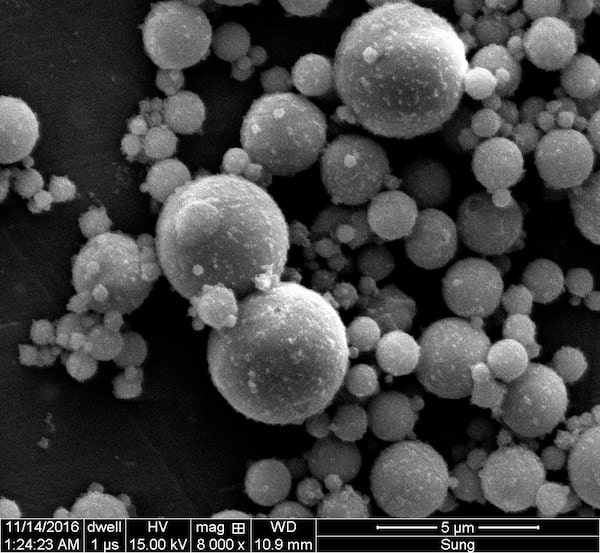
Scientists have developed an environmentally-friendly material that could eventually replace conventional Portland cement in concrete. The new composite, consisting mostly of fly ash, was found to be as structurally strong as Portland cement.
Read MoreUS DOE offers $3 million for solutions to advance solar manufacturing

The U.S. Department of Energy recently launched a $3 million competition to advance solar manufacturing in the U.S. The American-Made Solar Prize competition is open to all U.S.-based businesses and individuals.
Read MoreVideo: Tiny devices deliver drugs, treat diseases through wireless technology

Researchers have developed a technology to power tiny implantable devices that could be used to monitor medical conditions or treat diseases from inside the human body. The technology uses radio waves, rather than batteries, to power and communicate with the devices.
Read MoreOther materials stories that may be of interest
A new technique that uses computational neural networks to “learn” how a nanoparticle’s structure affects its behavior, unusual properties of bismuth that can be harnessed to help the environment, and other materials stories that may be of interest for June 13, 2018.
Read More