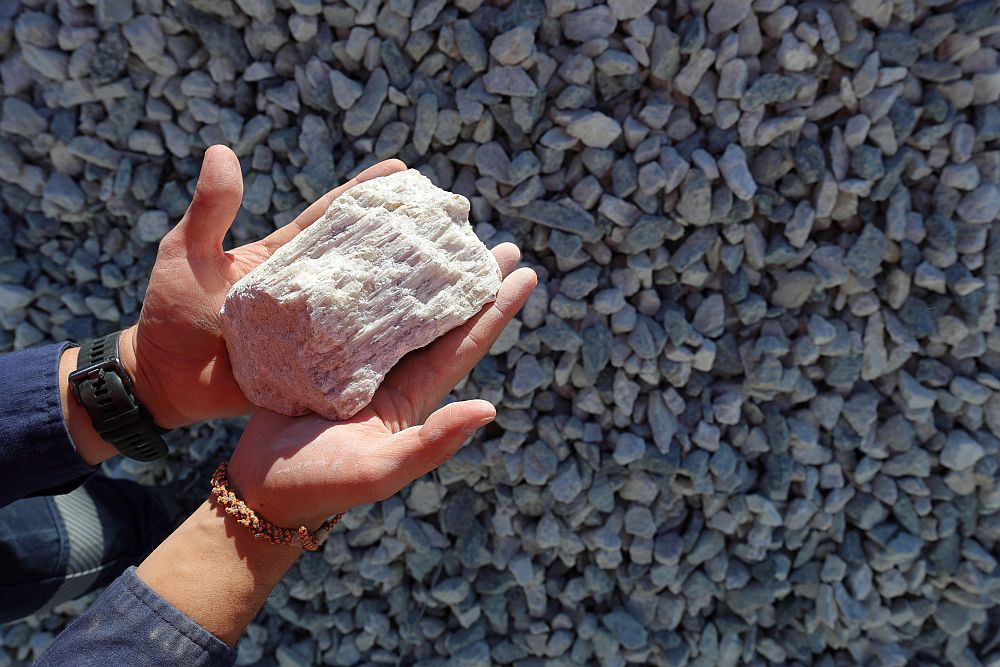
[Image above] Example of spodumene, the main hard-rock lithium-bearing ore. A new process developed at Massachusetts Institute of Technology extracts lithium from this ore more effectively. Credit: BJP7images / Shutterstock
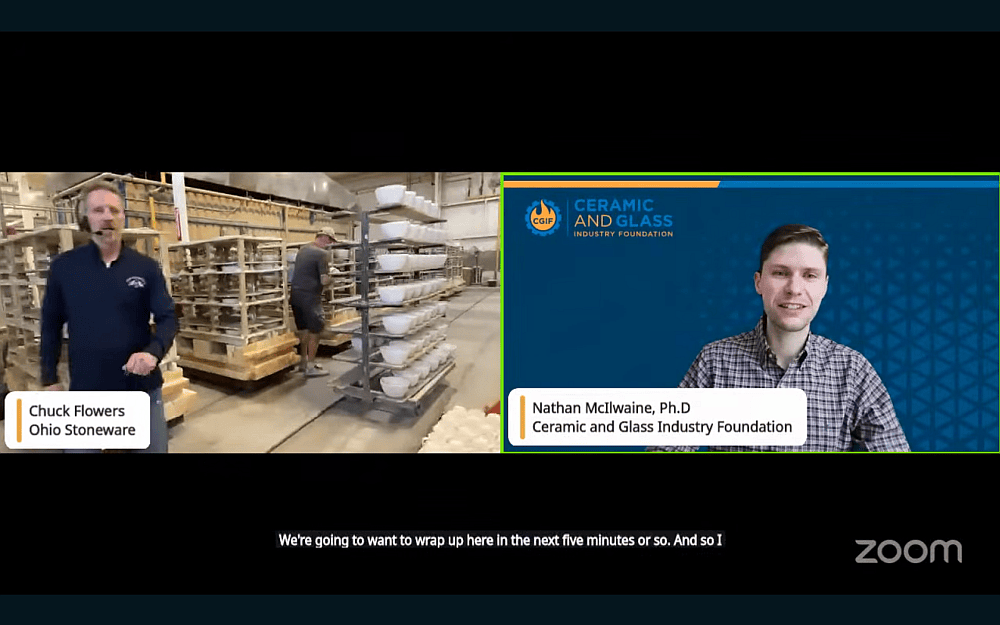
This past Tuesday, we had the chance to explore how ceramic and glass materials are contributing to the Top 10 Emerging Technologies of 2026, as chosen by the World Economic Forum. Through that exploration, we saw how ceramic- and glass-based devices could support those technologies tangentially, even when they are not the main components of the system.
Among this year’s top 10 emerging technologies, direct lithium extraction is on the top of my mind this week with the launch of the August 2026 Bulletin, which is our annual raw materials issue. The articles in this issue always focus on where and how we will source the raw materials necessary to manufacture our advanced technologies, with a yearly touch base on the U.S. minerals market specifically through the U.S. Geological Survey Mineral Commodity Summaries report.
While graphite is the focus of this year’s August issue, lithium stole the show a few years ago. Both these minerals are essential components in lithium-ion batteries, which serve as the heart of most modern electric vehicles and grid-scale energy storage systems.
Lithium is sourced from two primary sources: lithium-bearing ores (also called “hard-rock” mining) and brine deposits (typically found beneath desert salt flats). Ores currently make up about 60% of global lithium production, in contrast to 30–35% from brine deposits. However, salt flats and underground brines are estimated to contain up to 80% of the world’s total known lithium reserves. That is why direct lithium extraction technologies are receiving so much attention, as they can extract lithium from brine much faster than the traditional yearslong evaporation process.
Hard-rock mining remains the main source of lithium currently, however, so advancements in ore extraction technologies are still needed. Back in May, Massachusetts Institute of Technology researchers announced a development in this area, one inspired by the active chemical agents used in craft glass etching creams.
Their process, described in a Science article, uses the etching agent ammonium fluoride to simultaneously extract lithium from the hard-rock ore spodumene while converting the waste-stream silicates into valuable products including silica and alumina. Additional steps enable regeneration of the starting ammonium fluoride, thus making this method a closed-loop process.
What makes this process novel is that it dissolves the silica first when breaking down spodumene, the main hard-rock lithium-bearing ore. Even though spodumene consists mostly of silica, conventional chemistry-based ore extraction methods preferentially dissolve more reactive elements and leave behind a silica-enriched residue. But ammonium fluoride allows the silica to be dissolved first and at room temperature, which represents a breakthrough over traditional processes requiring extreme heat.
In a press release, senior author and ACerS Fellow Yet-Ming Chiang, Kyocera Professor of Materials Science and Engineering at MIT, says he knew about the potential of ammonium fluoride to break apart silica compounds due to a personal bathroom renovation project that required glass etching cream many years ago. But it was thanks to the hard work of his research team that this potential was turned into a commercially viable process.
“With their skill sets, it was just a matter of setting them loose on this problem,” Chiang says. “We went through all these steps, and for each one, I’d just say, ‘Can you do this next step?’ And a week or two later they’d say, ‘Okay, we’ve shown we can do that.’ That’s how this entire process got built.”
Chiang says that the team believes “this approach is the lowest-energy, lowest-cost way of getting lithium not only out of hard rock, but period.” They are now working with MIT’s Technology Licensing Office to spin out a company, Rock Zero, to scale up the system.
The paper, published in Science, is “Valorization of lithium hardrock concentrates into battery raw materials and commodity products” (DOI: 10.1126/science.aec4652).