
Posts by Lisa McDonald
Rapid sintering method takes step-wise approach to densify nanoceramics quicky and evenly

Researchers at Jožef Stefan Institute (Ljubljana, Slovenia), the National Institute of Chemistry (Ljubljana, Slovenia), and Stockholm University (Stockholm, Sweden) have developed a new method to rapidly and evenly densify nanoceramics, offering incredible potential to save a lot of time and energy in sintering processes.
Read MoreReducing grain boundary energy can help design ceramics with no grain growth

A team led by researchers at the University of California, Davis has published new research showing that diffusion isn’t the only consideration when it comes to controlling grain growth.
Read MoreEnergy-saving window films incorporate thermochromic nanoparticles to reflect, absorb heat

A partnership between a research laboratory and a manufacturer has resulted in a new thermochromic window material that would save energy and automatically change its tint based on temperature.
Read MoreVideo: Carbon nanotubes twist and coil to harvest energy from back and forth motions
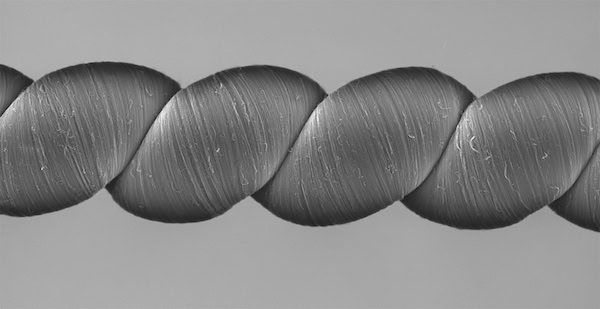
An international research team led by scientists at the University of Texas at Dallas and Hanyang University in South Korea has fashioned carbon nanotubes into “twistron” yarns that can generate electrical energy when pulled, stretched, tugged, or twisted.
Read MoreOther materials stories that may be of interest

Graphene gets closer to transistor applications, insect eyes inspire new perovskite solar cell design, and other materials stories that may be of interest for September 6, 2017.
Read MoreThe Value Builder

Thursday, October 19, 2017, at 11 am (Eastern US Time) Webinar Description ACerS Corporate Partners and Manufacturing Division Members…
Read MoreCan you prove who you are? Consider using these tools to digitally identify your research

As a researcher, author, reviewer, editor, etc., you want to get credit for your work. So what on earth can be done to make it easier to find your scholarly publishing record and not that of someone else with a similar name?
Read MoreElectronics, GOMD and NETD announce winners of Division awards
The Electronics, Glass & Optical Materials and Nuclear & Environmental Technology Divisions are pleased to announce the winners of various…
Read MoreParent investor company looking to sell CeramTec GmbH for 2.4B euro

Cinven—an international private equity firm—hopes to sell German-based CeramTec for 2.4 billion euro. Possible buyers include investors from Asia.
Read MoreWill our sweat someday power our electronic devices?
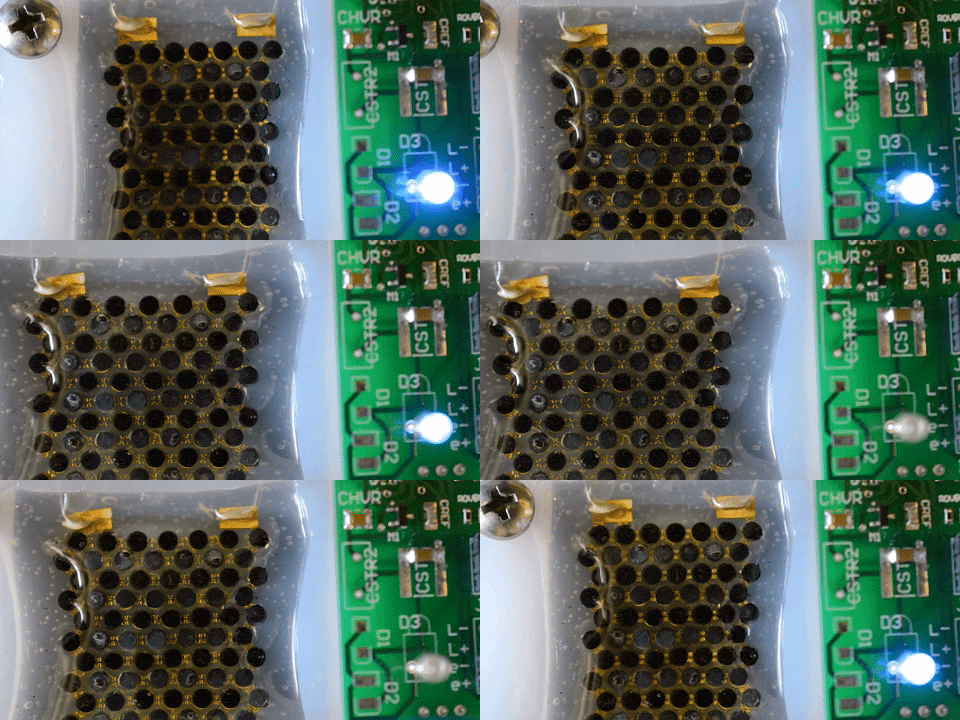
Our workouts may eventually serve a dual purpose—getting us in shape and powering our devices. Researchers developed a flexible biofuel cell for wearable devices that can power an LED and a Bluetooth radio, using sweat as a power source.
Read More