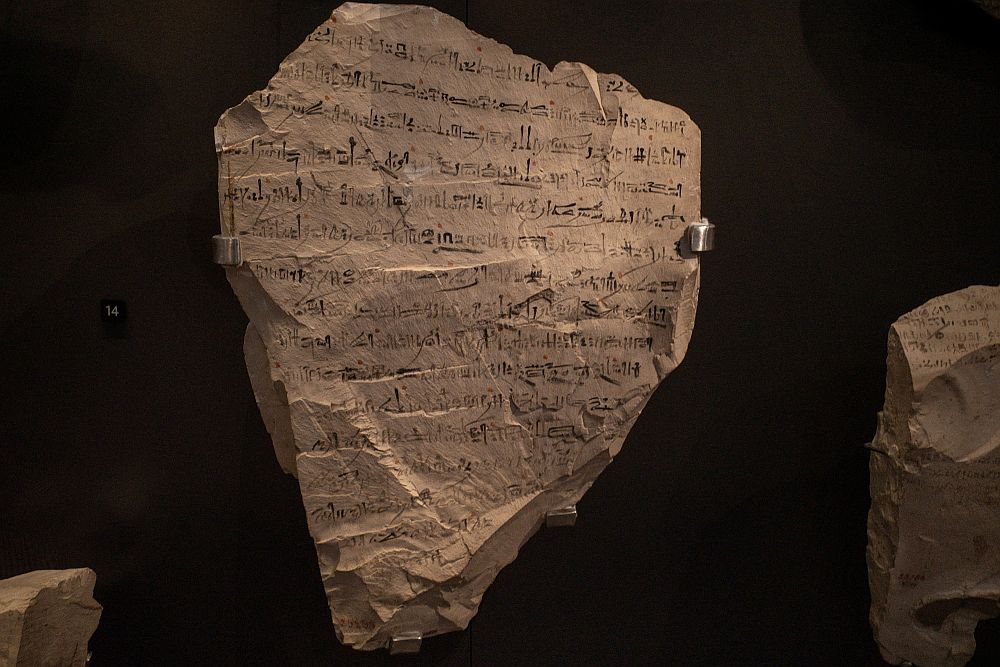
[Image above] Example of an Egyptian ostraca with hieratic script. Credit: Mohammed_Al_Ali / Shutterstock
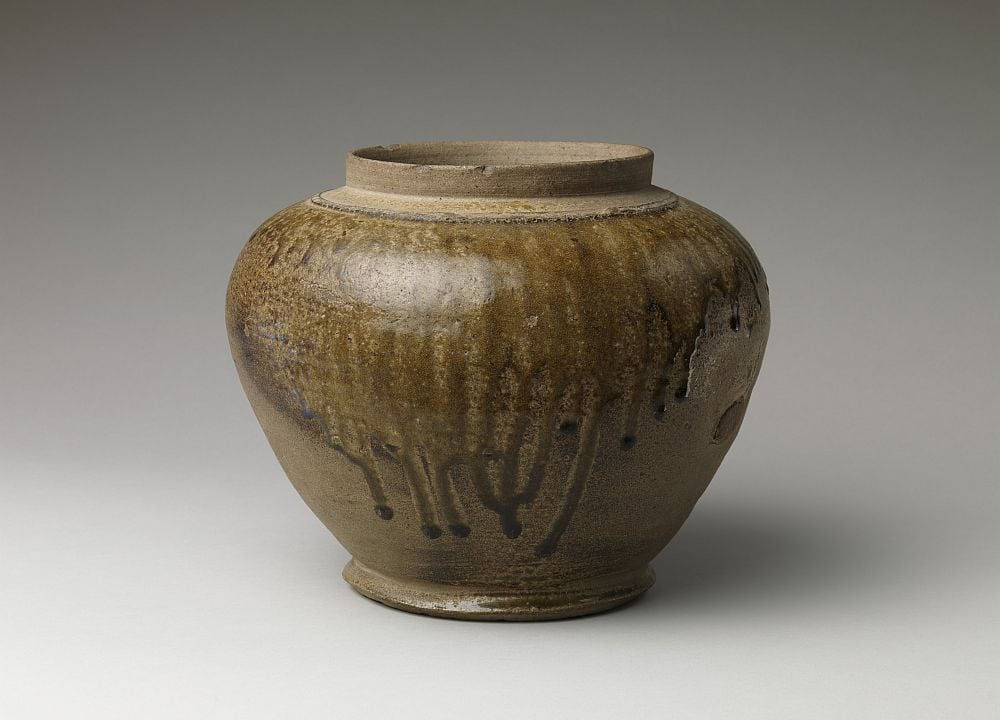
Clay is extremely versatile, serving as a material for traditional construction (bricks) and storage (pottery) applications to the more advanced functions of thermal regulation (evaporated cooling) and cultivated food production (hydroponics). Although it may not be the ideal choice for every circumstance, clay gets the job done in more situations than modern audiences may realize, including some roles currently fulfilled by paper.
For example, in ancient times, clay coins were used as a standardized form of currency. Although paper bills and metal coins are now the main forms of physical money in circulation around the world, ceramic coins still live on as collector’s items and challenge coins.
Clay was also the original medium for the written word. Cuneiform, developed by Sumerian scribes around 3200 BCE, involved pressing a reed stylus into damp clay tablets. These tablets were mainly sun-dried, making them susceptible to dissolving in water, but important records such as royal decrees or law codes were kiln fired to improve their durability.
Ironically, we likely would not have access to the poems of Mesopotamia if the Medes and Babylonians had not set the library of King Ashurbanipal ablaze in 612 BCE. The flames hardened the roughly 30,000 sun-dried clay tablets enough to last for the next two and a half millennia.
Why did Ashurbanipal have so many tablets? Claiming to be the only Assyrian king who could read and write cuneiform, Ashurbanipal wanted his own working library. So, he ordered scribes to collect and copy tablets from across the region.
Besides poetry, these tablets included medical texts, hymns, dictionaries, and even spells. The tablets, although broken during the fire, have played a major role in educating researchers about Assyrian and Babylonian literature, which the British Museum called one of the most important archaeological finds ever made.
Over the past few years, a similar treasure trove of clay-based documentation has been uncovered near the ancient Egyptian city of Athribis. Just like the Ashurbanipal tablets, archaeologists believe these artifacts will help them develop a comprehensive social history of the region.
Broken pottery becomes scrap paper
Although the mantra “reduce, reuse, recycle” may not have been part of their vocabulary, the ancient civilizations of Egypt, Greece, and Rome knew how to be resourceful. Although papyrus paper was available, it was expensive. Thus, those who could not afford it turned to broken pieces of pottery, otherwise known as ostraca (singular ostracon), to use as a writing medium.
Text was either scratched into the clay or painted on using a brush and carbon-based ink. The scripts found on ostraca vary depending on the region and era. For example, Demotic was an Egyptian administrative script used during the reign of Ptolemy XII, father of the famous queen Cleopatra. He ruled from 81 to 59 BCE and later from 55 to 51 BCE. Coptic was a mix of Greek and Egyptian languages that appeared after Demotic, and it is closely associated with Christianity.
At the Athribis site in Upper Egypt, archaeologists from the Tübingen Athribis Project, a collaboration between the University of Tübingen and Egypt’s Ministry of Tourism and Antiquities, have discovered more than 43,000 ostraca during excavations between 2005 and 2026. The majority were discovered in the past eight years alone. The university states in a press release that Athribis is now the most productive site for ostraca to date, surpassing Deir el-Medina, a former workers’ village in the Valley of the Kings.
The ostraca date from the 3rd century BCE all the way to the 11th century CE. The text recorded on the pottery pieces include tax lists and deliveries, short notes about everyday activities, exercises by schoolchildren, religious texts, and priestly certificates attesting the quality of sacrificial animals. Although most of the ostraca texts were written in Demotic, Greek inscriptions have also been found, as well as Arabic on some newer ostraca samples. Figurative and geometric designs were also found, depicting people, gods, and animals.
“This everyday content gives us a direct insight into the lives of the people of Athribis,” says Christian Leitz, professor at the University of Tübingen and project director of the Tübingen Athribis Project, in the press release. “We expect to find many more ostraca.”
The need for document oversight in modern times
As the Ashurbanipal tablets and Egyptian ostraca show, the everyday notes and papers that we often discard as temporary can be more valuable than official records to archaeologists working to piece together the life of ancient cultures. With the rise of the internet, physical documentation is becoming an increasingly rare breed, and it requires us to intentionally implement procedures to preserve such records for future historians.
Some of these procedures are facing unprecedented political challenges in the United States. But through the work of dedicated individuals, new avenues for preserving our knowledge for future generations can and will be achieved.
Further information
Learn how to write cuneiform, the oldest form of writing in the world, at the links here and here.
Read how chemistry helps identify the origin of clay tablets at this link.
Learn about the West Semitic Research Project, which has uncovered ostraca from biblical times, at this link.
Take a dive into the history of receipts in this Penn Museum article.
Learn about an ostracon from more than 3,000 years ago, which may be one of the earliest Hebrew texts found, at this link.